
What Materials Should You Choose for Medical Device CNC Machining?

Choosing the wrong material for medical devices is incredibly risky. This mistake can lead to device failure or even harm patients. Let's explore the best material options for CNC machining.
Stainless steel, particularly grades like 316/316L, and titanium alloys (like Ti-6Al-4V) are top choices for medical CNC machining. They offer excellent biocompatibility, strength, corrosion resistance, and can be readily sterilized, meeting critical requirements for many medical applications.
Selecting the right material is one of the most critical decisions you'll make when developing a medical device. It impacts everything from how the device performs in the body to how easily and cost-effectively it can be manufactured. Get it wrong, and you face redesigns, regulatory hurdles, or worse. Let's dive into the specifics to help you choose wisely.
What is the best material for medical CNC machining?
Picking just one "best" material for medical devices feels impossible. Choosing incorrectly means wasting valuable time, resources, and potentially delaying your product launch. Let's look at which materials truly excel for specific needs.
There isn't a single "best" material; the ideal choice depends heavily on the specific medical device's function. Factors like required strength, biocompatibility, sterilization compatibility, longevity, and cost dictate the selection. Stainless steel and titanium are frequent top contenders due to their balanced properties.
The concept of a single "best" material doesn't really apply in the demanding world of medical devices. Every application has unique requirements. What works perfectly for a temporary surgical instrument might be completely unsuitable for a permanent implant. We need to think about the specific job the part needs to do.
Key Material Considerations:
-
Biocompatibility: This is usually non-negotiable. The material must not cause harmful reactions when interacting with the human body. Standards like ISO 10993 guide this. Stainless steel 316L and Titanium alloys are well-known for their excellent biocompatibility.
-
Mechanical Properties: Does the part need to be strong, resist fatigue, or handle impacts? A bone screw needs high strength (like Titanium Grade 5 or 17-4 PH Stainless Steel), while a handle might prioritize toughness or ergonomics.
-
Sterilizability: Medical devices must be sterilized, often repeatedly. Common methods include autoclaving (steam), gamma radiation, or EtO gas. The material must withstand the chosen method without degrading. PEEK and Ultem plastics, along with metals, generally handle common sterilization well.
-
Corrosion Resistance: Exposure to bodily fluids requires materials that won't corrode. Titanium and 316L stainless steel excel here.
-
Machinability: Some materials are easier and faster to machine than others, affecting manufacturing costs. While strong, Titanium can be more challenging (and thus costly) to machine than stainless steel or aluminum.
-
Cost: Material cost and machining cost both contribute to the final price. Balancing performance requirements with budget is always a factor.
As you can see, the "best" material is the one that best balances these factors for your specific medical device. Often, as my experience shows, Stainless Steel 316/316L and Titanium alloys (especially Grade 5, Ti-6Al-4V) hit a sweet spot for many applications demanding strength, biocompatibility, and corrosion resistance.
What is CNC machining in the medical industry?
Are you unclear about how CNC machining fits into creating medical parts? You might be overlooking its crucial role in achieving the necessary precision and quality. Let's clarify its importance in this field.
CNC (Computer Numerical Control) machining in the medical industry uses automated, computer-guided tools to subtract material precisely from a workpiece. This process creates highly accurate components like implants, surgical tools, and parts for diagnostic equipment, meeting strict tolerance and material requirements.
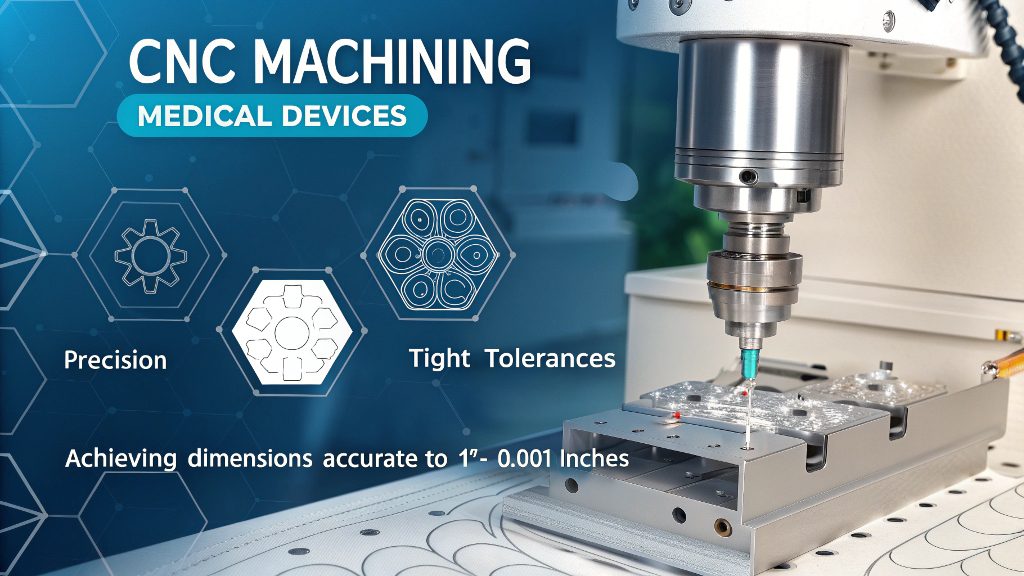
CNC machining is essentially a high-tech way of carving parts out of solid blocks of material, like metal or plastic. Think of it like an automated sculptor, but one that works with incredible precision guided by computer code (G-code). In the medical field, this precision is not just nice to have; it's often critical for safety and effectiveness.
Why CNC Machining is Vital for Medical Devices:
-
Precision and Tight Tolerances: Medical components often require extremely tight tolerances – meaning very little variation is allowed in their dimensions. Implants need to fit perfectly, and surgical instruments must function flawlessly. At Worthy Hardware, we regularly achieve tolerances down to +/- 0.001 inches (0.025 mm) or even tighter based on customer drawings, which is essential for many medical applications.
-
Complex Geometries: Many medical devices, especially implants designed to mimic natural body parts or complex tools, have intricate shapes. 5-axis CNC machining allows tools to approach the workpiece from multiple angles, enabling the creation of these complex geometries in a single setup, improving accuracy and efficiency.
-
Material Compatibility: CNC machining works with a vast range of materials suitable for medical use, from robust metals like titanium and stainless steel to advanced engineering plastics like PEEK and Ultem. We can handle over 100 different materials.
-
Repeatability: Once programmed, CNC machines can produce identical parts consistently, which is vital for quality control and scaling production from prototypes to high volumes.
-
Quality Control: The precision nature of CNC allows for reliable quality checks. We perform 100% inspection on all parts, which is crucial when dealing with components where failure is not an option.
From custom bone screws and dental implants to intricate parts for robotic surgery systems or housings for diagnostic machines, CNC machining provides the accuracy and reliability the medical industry demands.
What factors should you consider when selecting materials for medical CNC machining?
Feeling overwhelmed by the material selection process for your medical device? A poor choice can lead to device failure, patient safety issues, or regulatory nightmares. Let's focus on the critical factors you absolutely must consider.
The most crucial factors are biocompatibility (ISO 10993 compliance), sterilizability (withstanding methods like autoclaving), mechanical properties (strength, fatigue life), corrosion resistance against body fluids, regulatory acceptance (FDA/CE), machinability impacting cost, and the overall cost-effectiveness.
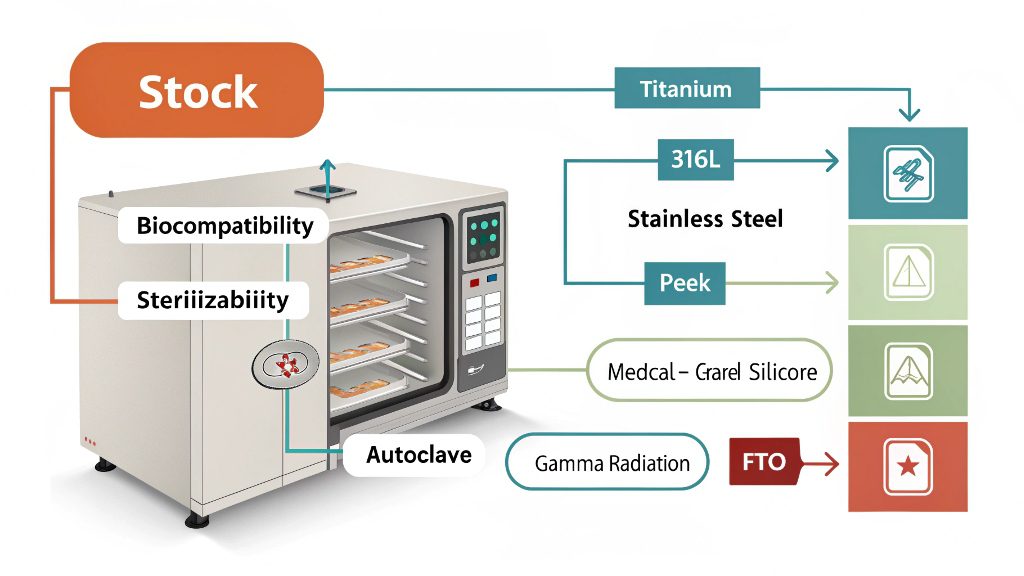
Choosing the right material, or 'stock', for a medical device isn't just about finding something strong enough. It involves a careful balancing act of several critical factors, especially when CNC machining is involved. Missing even one can derail a project. Here's a breakdown of what I always consider:
Deep Dive into Selection Factors:
-
Biocompatibility: This is paramount. Will the material cause an adverse reaction when in contact with human tissue or fluids? We look for materials with proven biocompatibility, often certified to standards like ISO 10993. The level of biocompatibility needed depends on the application (e.g., short-term skin contact vs. permanent implant). Metals like Titanium and 316L Stainless Steel, and plastics like PEEK and medical-grade silicone, are common choices.
-
Sterilizability: How will the device be sterilized? Common methods include autoclave (high-temperature steam), gamma radiation, and Ethylene Oxide (EtO). The material must maintain its integrity and properties after single or multiple sterilization cycles. For instance, some plastics might degrade under gamma radiation, while metals generally handle most methods well.
-
Mechanical Properties: What physical demands will be placed on the part? Consider tensile strength, yield strength, fatigue resistance (for cyclic loading), hardness, and wear resistance. An orthopedic implant needs high strength and fatigue resistance (Titanium, Cobalt-Chrome), while a diagnostic device housing might prioritize impact resistance (Polycarbonate).
-
Corrosion Resistance: Body fluids can be surprisingly corrosive. Implants and reusable surgical instruments must resist degradation over their intended lifespan. Titanium offers exceptional corrosion resistance, closely followed by 316L stainless steel.
-
Machinability: How easily can the material be cut and shaped using CNC machines? Materials like Aluminum or brass are easy to machine, keeping costs down. Harder materials like Titanium or certain high-strength steels are more challenging, requiring specialized tools and slower cutting speeds, increasing machining time and cost. This directly impacts the part's final price.
-
Regulatory Requirements: Does the material meet FDA, CE, or other regulatory body requirements for the specific device classification and intended use? Using materials with established regulatory acceptance can streamline the approval process.
-
Cost & Availability: While performance is key, budget constraints are real. Consider both the raw material cost and the cost associated with machining it. Sometimes, a slightly more expensive material that machines faster can result in a lower overall part cost.
Thinking through these factors systematically helps ensure the chosen material is safe, effective, and manufacturable for its intended medical application.
What specific materials are commonly CNC machined for medical devices?
Need some concrete examples of materials used in medical CNC machining? Generic lists often fall short when you need specifics for demanding medical applications. Let's explore the go-to materials trusted in the industry.
Commonly machined medical materials include Stainless Steel (especially 316/316L for corrosion resistance, 17-4 PH for strength), Titanium alloys (Grade 5 Ti-6Al-4V for implants), PEEK (metal replacement), Ultem (strength/sterilizability), Delrin (moving parts), and medical-grade Polycarbonate (housings).
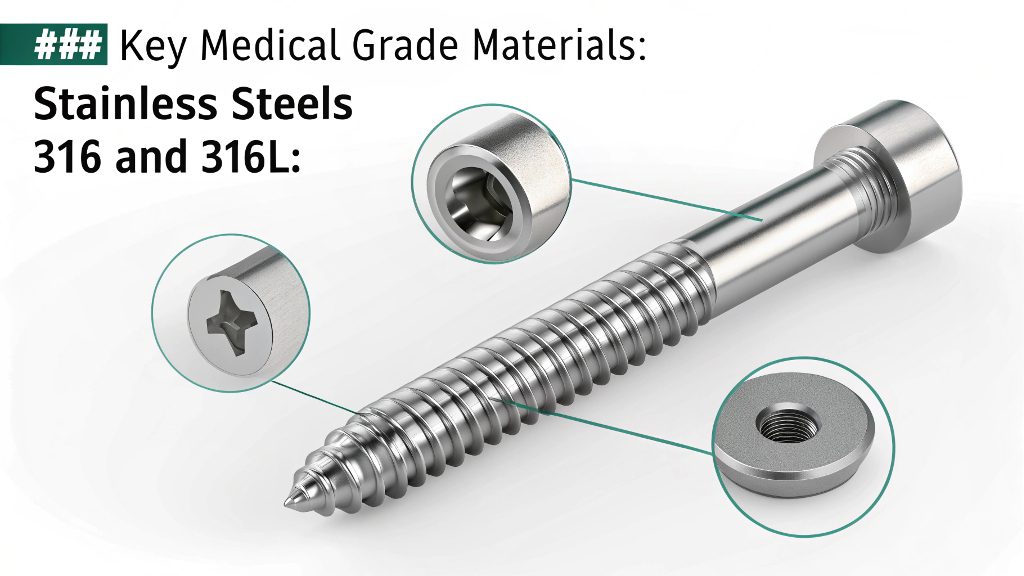
While we can machine over 100 different materials at Worthy Hardware, a specific subset consistently appears in medical device manufacturing due to their unique combination of properties suitable for healthcare applications. Here are some of the most frequently requested materials for CNC machining in this sector:
Key Medical Grade Materials:
-
Stainless Steels:
-
316 and 316L: These are perhaps the most common stainless steels in medical applications. The 'L' signifies low carbon, which improves corrosion resistance, especially after welding. They are widely used for surgical instruments, orthopedic fixation devices, and some non-permanent implants due to their good biocompatibility, excellent corrosion resistance, and decent strength. They are readily machinable.
-
17-4 PH: This is a precipitation-hardening stainless steel offering much higher strength and hardness than 316/316L, while still maintaining good corrosion resistance. It's often used for surgical tools requiring sharp edges or high durability.
-
-
Titanium Alloys:
-
Grade 5 (Ti-6Al-4V): This is the workhorse of medical titanium. Its high strength-to-weight ratio, excellent biocompatibility, and superior corrosion resistance make it ideal for load-bearing implants like hip and knee joints, bone screws, and dental implants. It's more challenging to machine than steel.
-
Grade 23 (Ti-6Al-4V ELI): ELI stands for Extra Low Interstitials. This version of Grade 5 has enhanced purity, offering better ductility and fracture toughness, often preferred for critical implant applications.
-
Commercially Pure Titanium (Grades 1-4): Less strong than alloys but highly corrosion-resistant and biocompatible. Used where extreme strength isn't the primary need, like pacemaker casings or some dental components.
-
-
Medical Grade Plastics (Thermoplastics):
-
PEEK (Polyetheretherketone): An advanced plastic with excellent mechanical strength (often comparable to metals), chemical resistance, inherent purity, and stability at high temperatures (good for autoclaving). It's radiolucent (doesn't show on X-rays), making it suitable for certain implantable devices or fixtures used during imaging.
-
Ultem (PEI - Polyetherimide): Offers high strength, rigidity, and broad chemical resistance. It withstands repeated sterilization cycles (autoclave, EtO, gamma). Often used for reusable instrument handles, trays, and components.
-
Delrin (Acetal / POM): Known for its strength, stiffness, low friction, and dimensional stability. Often used for moving parts, connectors, or handles in medical devices.
-
Polycarbonate (PC): Offers transparency, impact resistance, and good rigidity. Frequently used for housings, connectors, and single-use devices. Requires specific grades for biocompatibility.
-
Choosing among these depends heavily on the factors discussed earlier – matching the material's strengths to the device's specific needs. My experience confirms that Stainless Steel 316 and Titanium alloys are requested very frequently for their robust performance in demanding medical environments.
Conclusion
Selecting the right material, like Stainless Steel 316 or Titanium, is vital for medical CNC parts. Always balance biocompatibility, mechanical needs, sterilizability, and cost for safe and effective devices.