
What Material Properties Are Most Important for CNC Machining Parts?

Choosing the wrong material can wreck your CNC project. This wastes time, money, and leaves you with unusable parts. Understanding key material properties is the first step to getting it right.
The most important material properties for CNC machining include machinability, hardness, tensile strength, thermal stability, and chemical resistance. These directly impact tool life, cutting speeds, surface finish, and the final part's suitability for its intended use.
Selecting the right material is one of the most critical decisions in any CNC machining project. It affects everything from how easily the part can be made to how well it performs in its final application. Let's dive deeper into the specifics you need to consider to ensure your project's success.
What is the best material for CNC machine?
Feeling lost in the sea of material options? Picking incorrectly leads to frustrating setbacks and budget overruns. Knowing the "best" depends entirely on your project's unique demands.
There isn't one single "best" material for CNC machining. The ideal choice hinges on application requirements like desired strength, weight, heat resistance, chemical compatibility, and budget. Popular choices include aluminum alloys, various steels, stainless steel, brass, titanium, and plastics like Delrin or PEEK.
The "best" material is always relative to the specific job. As someone who works with manufacturers like Mark Chen from Canada, I know that balancing quality and cost is key. He needs reliable parts, but pricing matters. That's why we work with over 100 materials here at Worthy.
Think about these factors:
-
Application Needs: What will the part do? Does it need to be strong, lightweight, resist heat, or withstand chemicals? An aerospace part has very different needs than a consumer product housing.
-
Machinability: How easily can the material be cut? This affects machining time and cost. Softer metals like Aluminum 6061 are generally easier to machine than tough materials like Stainless Steel 316 or Titanium.
-
Cost: Raw material prices vary significantly. Balancing performance requirements with budget is crucial. Plastics are often cheaper than metals, but might not offer the same strength.
-
Availability: Can you get the material easily and quickly? Standard materials are usually readily available, while exotic alloys might have longer lead times.
Here's a quick comparison of some common choices:
| Material | Key Features | Common Uses |
|---|---|---|
| Aluminum (e.g., 6061) | Lightweight, good strength-to-weight, machinable | Aerospace, automotive, consumer electronics |
| Mild Steel (e.g., 1018) | Strong, machinable, cost-effective | General fabrication, fixtures, machinery parts |
| Stainless Steel (e.g., 304, 316) | Corrosion resistant, strong, durable | Medical devices, food processing, marine parts |
| Brass | Good machinability, corrosion resistant, aesthetic | Plumbing fittings, musical instruments, décor |
| Delrin (Acetal) | Stiff, low friction, dimensionally stable | Gears, bearings, jigs, electrical insulators |
| PEEK | High temp resistance, chemical resistant, strong | Aerospace, medical implants, semiconductor |
Ultimately, the best material is the one that meets your performance needs reliably and cost-effectively.
What materials are used in CNC machines?
Are you limiting your designs because you're unsure what can be machined? This can needlessly restrict your innovation. The good news is CNC machines are incredibly versatile with materials.
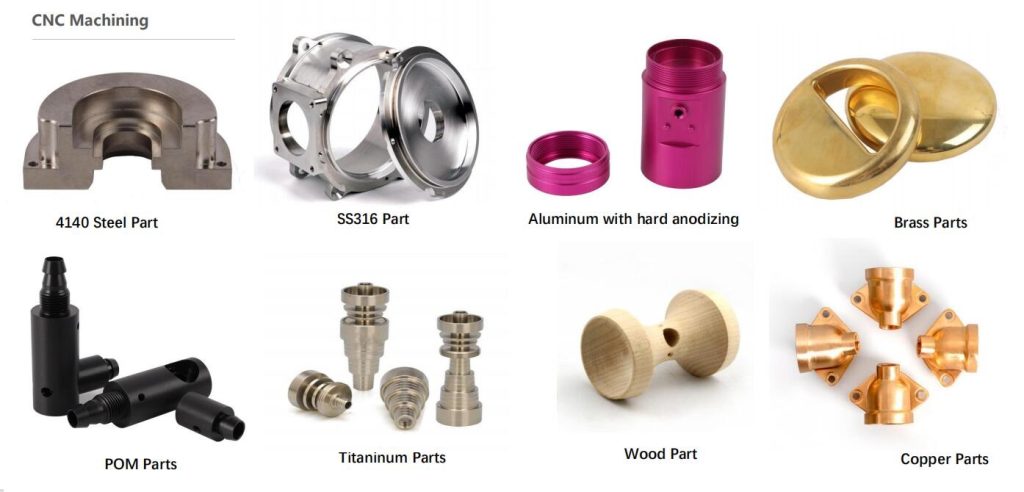
CNC machines can process a vast range of materials. Common categories include metals (like aluminum, steel, stainless steel, brass, copper, titanium), plastics (like ABS, Nylon, Polycarbonate, PEEK, Delrin), wood (hardwoods, softwoods, engineered wood), and composites like carbon fiber.

At Worthy, we handle a huge variety of materials because our customers, from hardware startups to established industrial companies, need diverse solutions. We regularly machine parts from over 100 different metals and plastics, plus wood and carbon fiber.
Let's break down the common groups:
-
Metals: This is a huge category.
-
Aluminum Alloys: 6061, 7075, 2024 – popular for their light weight and strength.
-
Steels: Mild steel, alloy steel, tool steel – chosen for strength, hardness, and durability.
-
Stainless Steels: 303, 304, 316, 17-4 PH – selected for corrosion resistance and strength.
-
Brass & Copper: Good electrical conductivity and corrosion resistance.
-
Titanium: High strength-to-weight ratio, excellent corrosion resistance, biocompatible.
-
Others: Zinc, Bronze, Magnesium alloys.
-
-
Plastics: Versatile and often cost-effective.
- ABS: Common, good impact resistance.
- Nylon: Strong, good wear resistance.
- Polycarbonate (PC): High impact strength, transparent option.
- Delrin (Acetal): Stiff, low friction.
- PEEK: High-performance, heat and chemical resistant.
- Others: Acrylic, HDPE, PTFE (Teflon), UHMW PE, PVC, ULTEM.
-
Wood: Both hardwoods (like oak, maple) and softwoods (like pine) can be machined, as well as engineered woods like MDF or plywood. Often used for prototypes, jigs, or aesthetic components.
-
Composites: Materials like carbon fiber reinforced polymers offer high strength and low weight but require specific machining techniques due to their abrasive nature.
The specific grade within each material type also matters, as properties can vary significantly.
What factors should be taken into consideration when selecting stock for CNC machining?
Choosing stock material seems easy, but getting it wrong is costly. Using unsuitable stock leads to machining problems or parts that fail later. Consider several key factors beyond just the material name.
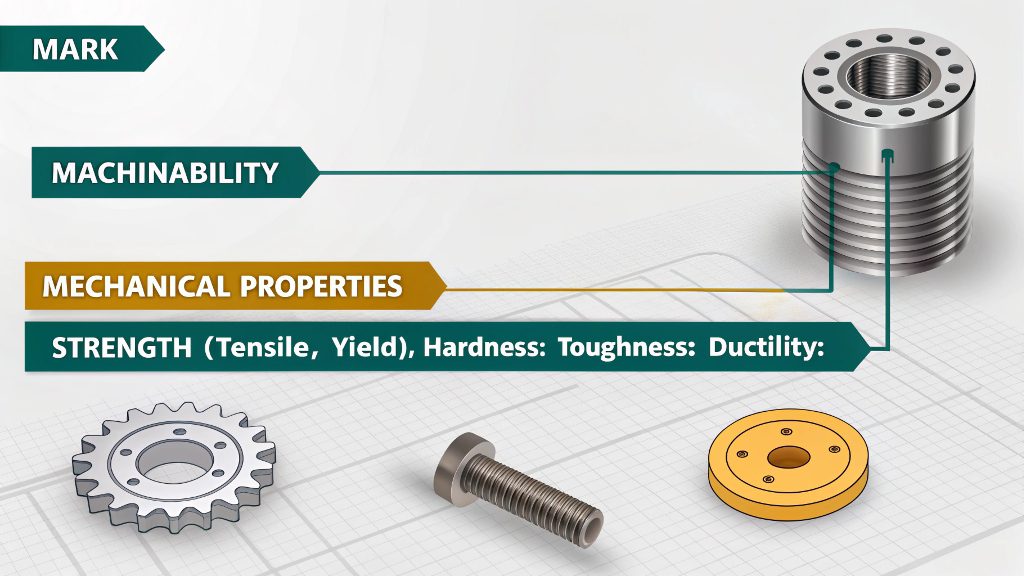
Key factors for selecting CNC stock include machinability rating, required final properties (strength, hardness, corrosion resistance), thermal stability, overall cost and budget constraints, material availability and lead time, and the specific CNC operations planned.
When helping clients like Mark, who needs reliable parts sourced efficiently from China, considering these factors upfront prevents headaches later. Delays or quality issues are major pain points, often stemming from poor initial material choices.
Here’s what I always consider:
-
Machinability: This is crucial. How easily can the material be cut, drilled, milled, or turned? Poor machinability means slower speeds, increased tool wear, higher costs, and potentially a worse surface finish. Materials have ratings, but experience helps know the nuances. We leverage our engineers' experience to optimize tool paths and parameters for even challenging materials.
-
Mechanical Properties: What does the final part need to endure? Consider:
- Strength (Tensile, Yield): How much force can it take before stretching or breaking?
- Hardness: Resistance to scratching or indentation.
- Toughness: Ability to absorb energy without fracturing.
- Ductility: Ability to deform without breaking.
-
Thermal Properties: Will the part be exposed to high or low temperatures? Will heat generated during machining affect the material's stability or dimensions? Materials expand and contract with temperature changes.
-
Chemical & Environmental Resistance: Does the part need to resist corrosion, chemicals, UV light, or moisture? Stainless steel, titanium, and many plastics excel here.
-
Cost and Availability: Does the material fit the project budget? Is it readily available, or will sourcing it cause delays? Standard materials are usually cheaper and faster to get.
-
Stock Form & Size: Is the material available in the size and shape (bar, sheet, plate) needed to efficiently produce the part? This impacts waste and machining time. Our capacity handles large parts (milled up to 80", turned up to 62" length), so stock size is important.
-
Material Composition: As mentioned in my insights, impurities, alloy content, and non-metallic elements significantly impact machining. Higher impurities often reduce machinability. Complex alloys can be harder to cut. Specific elements might be added to improve machinability (like sulfur in free-machining steels), but need careful control.
Considering these factors holistically leads to better parts, smoother production, and happier clients.
What materials cannot be CNC machined?
Do you assume CNC can handle absolutely anything? Designing with unmachinable materials wastes valuable time and effort. Knowing the practical limits helps avoid these pitfalls.
While CNC is highly versatile, some materials are generally avoided. These include extremely hard ceramics or hardened tool steels that destroy cutters, very brittle materials like glass that shatter, extremely soft/gummy materials (like soft rubber) that clog tools, and some hazardous materials.
We pride ourselves on machining over 100 materials at Worthy, but there are practical boundaries. Trying to machine certain things is either impossible, incredibly inefficient, or unsafe.
Here’s why some materials pose significant challenges:
-
Extreme Hardness: Materials significantly harder than standard cutting tools (like hardened tool steels, silicon carbide, alumina ceramics) cause rapid tool wear or immediate breakage. Specialized grinding processes are often used instead.
-
Extreme Brittleness: Materials like glass, granite, or some ceramics lack ductility. The cutting forces can easily cause them to chip, crack, or shatter rather than form a clean chip. Waterjet or laser cutting might be alternatives.
-
Softness / Gummy Texture: Very soft, pliable materials like silicone rubber or low-durometer plastics don't chip cleanly. They tend to deform, melt, or clog the cutting tool, resulting in a very poor finish and inaccurate dimensions. Specialized cutting methods or molding might be better.
-
High Abrasiveness: Some composites containing hard fillers (like glass-filled nylon or some metal matrix composites) act like sandpaper on cutting tools, leading to extremely rapid wear. Polycrystalline diamond (PCD) tooling might be required, increasing costs.
-
Hazardous Nature: Materials that produce toxic dust or fumes during machining (like beryllium or some composites) require specialized ventilation and handling procedures, making them impractical for many shops without the right safety infrastructure.
While technology constantly evolves, these categories generally represent the main materials that are considered unsuitable or highly challenging for standard CNC machining processes. Focus on the wide range of metals, plastics, and woods that are readily machinable.
Conclusion
Choosing the right material means considering machinability, strength, cost, and application needs. Understanding these properties ensures successful CNC parts. Worthy helps navigate these choices for optimal results.