
Galvanized Steel Vs. Aluminum: Which Material Should You Choose For CNC Machining?
Choosing the wrong material for your CNC parts wastes time and money. It can lead to parts that don't perform well or cost too much to make. Let's clarify the best choice.
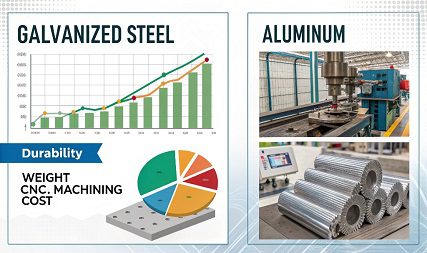
For most CNC machining projects, aluminum is the preferred choice due to its excellent machinability, lighter weight, and natural corrosion resistance. Galvanized steel is stronger and often cheaper initially, but it's harder to machine, and the zinc coating can cause issues.
Understanding the specific strengths and weaknesses of each material is crucial before starting any project. Making the right choice early saves headaches later. Let's look deeper into how these materials stack up against each other for different situations, so you can choose wisely for your next CNC machined part.
Which is better, aluminum or galvanized steel?
Are you stuck deciding between the strength of steel and the lightness of aluminum? Choosing incorrectly means your part might fail under stress or be unnecessarily heavy and costly. Let's compare them directly.
Aluminum generally machines much easier and is significantly lighter than galvanized steel. Galvanized steel offers higher strength and potentially lower raw material cost but presents machining challenges. The "better" material truly depends on your specific needs for strength, weight, corrosion resistance, and budget.
Choosing between aluminum and galvanized steel often comes down to the specific requirements of your part. Based on my 15 years running Worthy Hardware, about 80% of our customers needing custom machined parts choose aluminum. This is mainly because aluminum is much easier and faster to machine. Faster machining means lower labor costs and quicker turnaround times, which our customers like Mark Chen appreciate.
However, galvanized steel has its advantages. It's fundamentally steel, which is stronger and stiffer than aluminum. The galvanizing process adds a layer of zinc, giving it good corrosion resistance, though maybe not as good as aluminum in some environments. If maximum strength or rigidity is your top priority, and the part geometry isn't overly complex, galvanized steel might seem appealing, especially given its lower raw material cost. But remember, the difficulty in machining can increase the final part cost. Machining galvanized steel can also damage the protective zinc coating near the cut edges, potentially requiring secondary processes to restore corrosion protection.
Here's a simple breakdown:
| Feature | Aluminum | Galvanized Steel | My Experience Notes |
|---|---|---|---|
| Machinability | Excellent | Fair to Poor | Aluminum cuts faster, less tool wear, lower machining cost. |
| Strength | Good (Varies by alloy) | Very Good | Steel is stronger, but consider strength-to-weight. |
| Weight | Light | Heavy (approx. 3x Al) | Critical for aerospace, automotive, portable devices. |
| Corrosion Resist. | Excellent (Natural Oxide) | Good (Zinc Coating) | Aluminum often better long-term, especially near coasts. |
| Cost (Material) | Moderate | Low | Steel is cheaper per pound. |
| Cost (Machining) | Lower | Higher | Steel takes longer, more tool wear, potential coating repair. |
| Common Use (Machined Parts) | Very Common | Less Common | We machine aluminum far more often. |
So, while galvanized steel is strong, aluminum often wins for machined parts due to its blend of good strength, low weight, excellent corrosion resistance, and superior machinability.
Which is better, aluminum or galvanized flashing?
Confused about the right flashing material for a building project? Using the wrong one can lead to frustrating leaks or ugly corrosion stains down the line. Let's see which works best for flashing.
For building flashing, galvanized steel is often chosen for its durability and lower initial cost. Aluminum offers better corrosion resistance, especially in coastal or industrial areas, and its lighter weight makes installation easier. Your specific environment and budget are key factors.
While my company, Worthy Hardware, focuses on CNC machining parts rather than building materials like flashing, understanding material properties across applications is important. Flashing protects vulnerable joints in buildings from water damage. Both aluminum and galvanized steel are commonly used here, but they have different strengths.
Galvanized steel flashing is popular because it's tough and usually cheaper upfront. The zinc coating protects the steel from rust. It holds up well under normal conditions. However, if the zinc coating gets deeply scratched or if cut edges aren't properly sealed, rust can start. In very wet, salty (coastal), or polluted environments, the zinc coating might break down faster over time.
Aluminum flashing, on the other hand, is naturally resistant to corrosion. It forms a protective oxide layer instantly when exposed to air. This makes it an excellent choice for coastal homes or buildings in industrial areas with corrosive air. Aluminum is also much lighter than steel, which can make it easier for roofers and builders to handle and install, especially on large jobs. The main downside is usually cost – aluminum flashing tends to be more expensive than galvanized steel. It's also a softer metal, so it might dent more easily than steel if impacted, though this is less of a concern for typical flashing applications.
So, for flashing:
-
Choose Galvanized Steel if: Budget is tight, maximum toughness is needed, and the environment isn't overly corrosive.
-
Choose Aluminum if: You're in a coastal or industrial area, long-term corrosion resistance is paramount, and easier installation (due to weight) is a benefit.
This choice really highlights how the application dictates the best material, even when comparing the same two basic options.
What is the best aluminium for CNC machining?
So you've decided on aluminum, but now you see all these numbers like 6061 or 7075. Choosing the wrong aluminum alloy can make machining difficult or result in a part that isn't strong enough. Let's identify the top choices.
The most popular and often "best" all-around aluminum alloy for CNC machining is 6061-T6. It provides a great combination of good strength, excellent machinability, weldability, and corrosion resistance at a reasonable cost. Other alloys offer specific benefits like higher strength (7075) or better corrosion resistance (5052).
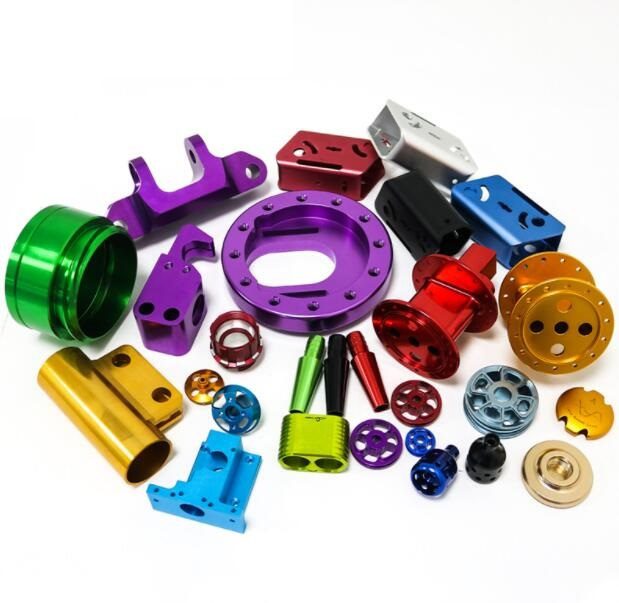
In my experience at Worthy Hardware, we machine a lot of aluminum, and 6061 is definitely the king. It hits the sweet spot for many applications. It's strong enough for many structural parts, machines beautifully (meaning we can produce parts quickly and with a good surface finish), and holds up well against corrosion. It's also readily available and cost-effective. If a customer doesn't specify an alloy, 6061-T6 is often the default suggestion unless the application clearly needs something else.
However, "best" depends on the job:
-
6061-T6: The Workhorse. Great machinability, good strength, weldable, good corrosion resistance. Used for everything from electronics enclosures and bike frames to structural components. This is what we machine most often.
-
7075-T6: The High-Strength Champ. Nearly as strong as some steels but much lighter. Excellent for high-stress applications like aerospace components or high-performance sporting goods. However, it's harder to machine (slower speeds, more tool wear), more expensive, and not easily welded. Its corrosion resistance is also lower than 6061.
-
2024-T3: Strength & Fatigue Resistance. Another high-strength alloy often used in aerospace structures. Good fatigue resistance. Machinability is fair. Its major drawback is poor corrosion resistance; it usually needs painting or cladding for protection.
-
5052-H32: The Marine Alloy. Doesn't have the high strength of 6061 or 7075, but it offers excellent corrosion resistance, especially in saltwater environments. Good formability and weldability. Often used for sheet metal parts, marine hardware, and tanks. Machinability is fair.
-
MIC-6 / ATP-5: Cast Tooling Plate. Known for its stability and flatness after machining. Excellent machinability. Often used for jigs, fixtures, base plates, and tooling where dimensional stability is key. Not typically used for high-strength structural parts.
Here's a quick comparison for machining:
| Alloy | Machinability | Strength | Corrosion Resistance | Relative Cost | Typical Use Case (Machined) |
|---|---|---|---|---|---|
| 6061-T6 | Excellent | Good | Good | Moderate | General Purpose, Structural, Housings |
| 7075-T6 | Fair | Very High | Fair | High | Aerospace, High-Stress Parts |
| 2024-T3 | Fair | High | Poor | High | Aerospace Structures |
| 5052-H32 | Fair | Moderate | Excellent | Moderate | Marine Parts, Sheet Metal work |
| MIC-6 | Excellent | Low-Moderate | Good | High | Tooling, Jigs, Fixtures, Stable Bases |
So, start with 6061 unless you have a specific need for extreme strength (7075), specific corrosion resistance (5052), or stability (MIC-6). We can machine all of these and help you choose the best fit for your project and budget.
Is galvanised the same as aluminium?
Are you thinking that galvanized steel and aluminum are basically interchangeable? This confusion can lead to significant mistakes in your design, material selection, and ultimately, your project's success. Let's clear this up simply.
No, galvanized steel and aluminum are completely different materials. Galvanized steel is regular steel (iron alloy) that has been coated with a layer of zinc to prevent rust. Aluminum is a distinct, non-ferrous metal element (Al) that is naturally lightweight and corrosion-resistant.

It's really important to understand this fundamental difference. Confusing them is like confusing iron and wood – they just have different basic makeups and properties.
Let's break down the core differences:
-
Base Material: Galvanized steel starts as steel, which is mostly iron mixed with carbon. Aluminum is a pure element on the periodic table (symbol Al), mined from bauxite ore.
-
How Corrosion is Prevented: Galvanized steel relies on a sacrificial coating of zinc. The zinc corrodes first, protecting the steel underneath. If the coating is damaged, the steel can rust. Aluminum protects itself naturally. When exposed to air, it instantly forms a very thin, tough layer of aluminum oxide, which prevents further corrosion.
-
Weight: This is a big one. Steel is much denser than aluminum. For the same size piece, galvanized steel will weigh roughly three times as much as aluminum. This impacts everything from shipping costs to the final weight of your product.
-
Strength: Steel is generally stronger and harder than aluminum, though high-strength aluminum alloys like 7075 can approach the strength of some mild steels.
-
Machinability: As we discussed, aluminum is much easier and faster to machine than steel. Machining galvanized steel also has the added complication of potentially damaging the zinc coating.
-
Appearance: Aluminum typically has a uniform, dull silver to bright silver appearance depending on the finish. Galvanized steel often has a mottled or "spangled" pattern from the zinc coating process, although finishes can vary.
-
Conductivity: Both metals conduct heat and electricity, but aluminum is generally a better conductor for its weight than steel.
Understanding that they are fundamentally different is the first step in choosing the right material for your CNC machining project. One is a coated ferrous metal, the other is a non-ferrous elemental metal. Their distinct properties make them suitable for very different applications.
Conclusion
Aluminum is usually better for CNC machining because it's easy to cut, light, and resists rust naturally. Galvanized steel is stronger but harder to machine. Choose based on your project's specific needs.