
- Aluminum Grades For Sheet Metal Fabrication
- What is the best aluminum grade for sheet metal fabrication services?
- Aluminum Fabrication Process
- Advantages of Aluminum Sheet Metal Fabrication
- Disadvantages of Aluminum Sheet Metal Fabrication
- Finishing Options for Aluminum Sheet Metal Fabrication
- Conclusion
- FAQ

Aluminum Sheet Metal Fabrication 101: The Complete Guide
Table of Contents
Aluminum sheet metal fabrication is a cornerstone of modern manufacturing, offering unparalleled versatility and efficiency for producing durable, lightweight components. As an expert in the field, I understand the challenges and triumphs that come with manipulating this silvery-white metal.In this guide, I’ll delve into the essentials, ensuring you understand why and how aluminum can be the game-changer in your next project.
Aluminum sheet metal fabrication involves several processes that transform a basic aluminum sheet into precise parts and assemblies. The journey from raw material to finished product includes cutting, bending, punching, and assembling - processes that I have mastered over the years. Whether you're interested in the cost-effective 3003 series or the robust 7075 series, the right aluminum grade combined with skilled fabrication can result in parts that meet the highest standards of quality and durability.
Continuing on, it’s clear that the possibilities with aluminum are nearly endless. Stay tuned as we explore the best grades for specific applications and the advantages that come with choosing aluminum for your fabrication needs.
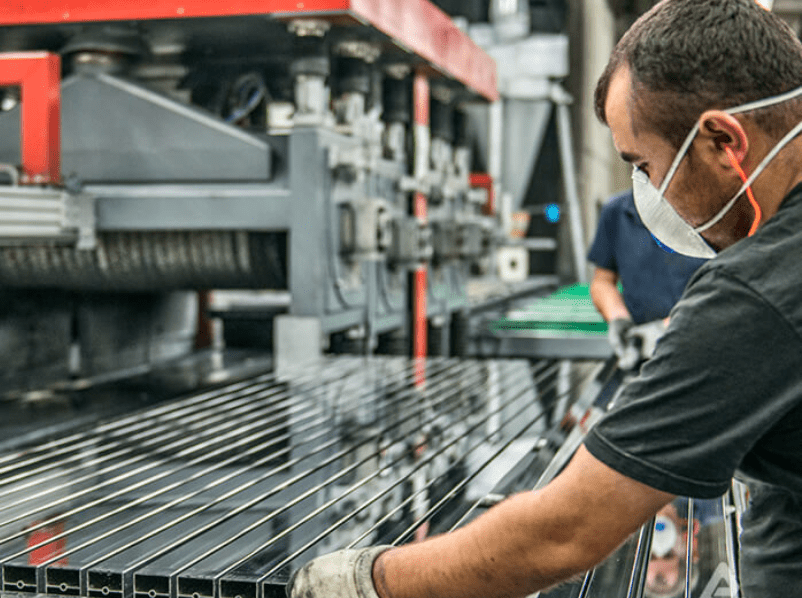
Aluminum Grades For Sheet Metal Fabrication
3003 Aluminum Alloy
The 3003 aluminum alloy is a popular choice in the world of sheet metal fabrication. Known for its excellent formability, weldability, and corrosion resistance, 3003 is a versatile alloy primarily composed of aluminum, manganese, and a small percentage of copper. This blend makes it perfect for applications requiring a combination of good mechanical properties and high resistance to corrosion.
Common Thicknesses of 3003 Aluminum Alloy
| Thickness (mm) | Thickness (inches) | Gauge Number |
| 0.5 | 0.0197 | 24 |
| 0.8 | 0.0315 | 22 |
| 1.0 | 0.0394 | 20 |
| 1.2 | 0.0472 | 18 |
| 1.6 | 0.0630 | 16 |
| 2.0 | 0.0787 | 14 |
| 3.0 | 0.1181 | 12 |
| 4.0 | 0.1575 | 10 |
Physical Properties of 3003 Aluminum Alloy
- Tensile Strength: Ranges from 130 to 290 MPa (19,000 to 42,100 psi), depending on the temper.
- Yield Strength: From 115 MPa (16,700 psi) in the softest H12 temper to 270 MPa (39,200 psi) in the hardest H18 temper.
- Density: Approximately 2.73 g/cm³, which is typical for aluminum alloys, offering a good balance between strength and lightweight.
- Elongation: Between 1% to 20%, allowing for significant deformation without failure, especially useful in deep drawing and spinning applications.
5052 Aluminum Alloy
5052 aluminum alloy is highly valued for its high strength and excellent corrosion resistance, particularly in marine environments. Its characteristics include good workability and weldability, making it suitable for extensive use in the marine, automotive, and architectural sectors. It is known for having better fatigue strength compared to other aluminum alloys.
Common Thicknesses of 5052 Aluminum Alloy
| Thickness (mm) | Thickness (inches) | Gauge Number |
| 0.5 | 0.0197 | 24 |
| 1.0 | 0.0394 | 20 |
| 2.0 | 0.0787 | 14 |
| 3.0 | 0.1181 | 12 |
| 4.0 | 0.1575 | 10 |
| 6.0 | 0.2362 | 7 |
| 10.0 | 0.3937 | 3 |
Physical Properties of 5052 Aluminum Alloy
- Tensile Strength: Approximately 228 MPa (33,000 psi).
- Yield Strength: Around 193 MPa (28,000 psi).
- Density: Roughly 2.68 g/cm³.
- Elongation: Up to 25% in thinner sheets, which is excellent for forming operations.
5754 Aluminum Alloy
The 5754 aluminum alloy is recognized for its excellent corrosion resistance, high strength, and outstanding workability. This makes it especially sought after for automotive applications and in chemical processing equipment. It is also particularly good for welding, resisting the formation of cracks.
Common Thicknesses of 5754 Aluminum Alloy
| Thickness (mm) | Thickness (inches) | Gauge Number |
| 0.8 | 0.0315 | 22 |
| 1.2 | 0.0472 | 18 |
| 1.6 | 0.0630 | 16 |
| 2.0 | 0.0787 | 14 |
| 3.0 | 0.1181 | 12 |
| 5.0 | 0.1969 | 6 |
Physical Properties of 5754 Aluminum Alloy
- Tensile Strength: Approximately 190 to 240 MPa (27,500 to 34,800 psi).
- Yield Strength: From 80 MPa (11,600 psi) up to 130 MPa (18,900 psi).
- Density: About 2.66 g/cm³.
- Elongation: Between 12% to 15%, providing good formability.
5083 Aluminum Alloy
5083 aluminum alloy is known for its exceptional performance in extreme environments. It is highly resistant to both seawater and industrial chemical environments. With its substantial strength and excellent thermal conductivity, it is often used in shipbuilding, rail cars, and pressure vessels.
Common Thicknesses of 5083 Aluminum Alloy
| Thickness (mm) | Thickness (inches) | Gauge Number |
| 1.0 | 0.0394 | 20 |
| 2.0 | 0.0787 | 14 |
| 5.0 | 0.1969 | 6 |
| 10.0 | 0.3937 | 3 |
| 20.0 | 0.7874 | 0 |
Physical Properties of 5083 Aluminum Alloy
- Tensile Strength: Ranges from 300 to 375 MPa (43,500 to 54,400 psi), which is extremely high.
- Yield Strength: Approximately 150 to 350 MPa (21,800 to 50,800 psi), depending on temper.
- Density: Approximately 2.65 g/cm³.
- Elongation: Up to 18%, which allows for significant bending and forming in manufacturing processes.
6061 Aluminum Alloy
6061 aluminum alloy is one of the most commonly used aluminum alloys in the industry, noted for its versatile application range and excellent mechanical properties. It combines good weldability, high strength, and corrosion resistance, making it ideal for structural applications and components where strength and durability are crucial.
Common Thicknesses of 6061 Aluminum Alloy
| Thickness (mm) | Thickness (inches) | Gauge Number |
| 0.8 | 0.0315 | 22 |
| 1.6 | 0.0630 | 16 |
| 3.0 | 0.1181 | 12 |
| 6.0 | 0.2362 | 7 |
| 10.0 | 0.3937 | 3 |
| 20.0 | 0.7874 | 0 |
Physical Properties of 6061 Aluminum Alloy
- Tensile Strength: Typically around 310 MPa (45,000 psi).
- Yield Strength: About 270 MPa (39,000 psi).
- Density: Approximately 2.70 g/cm³.
- Elongation: Between 12% to 17%, which provides flexibility for forming and machining.
7075 Aluminum Alloy
7075 aluminum alloy is known for its high strength, which rivals many steels, while maintaining the lightweight qualities of aluminum. It is used in applications that demand high stress and strain resistance, such as in aerospace and military applications. It is generally not recommended for welding due to its susceptibility to cracking.
Common Thicknesses of 7075 Aluminum Alloy
| Thickness (mm) | Thickness (inches) | Gauge Number |
| 1.0 | 0.0394 | 20 |
| 2.0 | 0.0787 | 14 |
| 5.0 | 0.1969 | 6 |
| 10.0 | 0.3937 | 3 |
| 15.0 | 0.5906 | 2 |
Physical Properties of 7075 Aluminum Alloy
- Tensile Strength: Ranges from 530 to 572 MPa (77,000 to 83,000 psi), making it one of the strongest aluminum alloys.
- Yield Strength: Approximately 503 MPa (73,000 psi), providing outstanding rigidity.
- Density: About 2.81 g/cm³.
- Elongation: Up to 11%, which is less than some other aluminum grades but still adequate for many high-performance applications.
What is the best aluminum grade for sheet metal fabrication services?
The best aluminum grade for sheet metal fabrication generally depends on the specific application requirements; however, 5052 and 6061 are widely recommended for their excellent formability, weldability, and corrosion resistance.
Aluminum Fabrication Process
CNC Machining
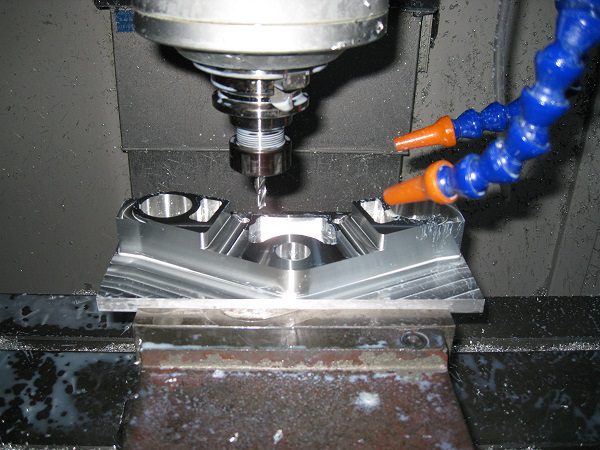
CNC (Computer Numerical Control) machining is a precise and versatile process used in aluminum fabrication to produce complex parts with high accuracy. The process begins with creating a CAD (Computer-Aided Design) model of the part. This digital design is then converted into a CNC program that instructs the machining tools on how to move and shape the aluminum material.
During the CNC machining process, the aluminum workpiece is securely clamped to the machine bed. High-speed cutting tools, such as drills, mills, and lathes, are controlled by the CNC system to remove material from the aluminum block. These tools follow the programmed paths with exact movements, which can include drilling holes, cutting shapes, and creating detailed features.
The CNC machining process can involve various techniques such as milling, turning, and drilling, depending on the part’s requirements. Milling involves the use of rotating cutting tools to remove material, creating flat surfaces, slots, and even complex contours. Turning, on the other hand, involves rotating the aluminum workpiece against a cutting tool to shape cylindrical parts.
One of the key advantages of CNC machining is its ability to produce parts with tight tolerances and excellent surface finishes, making it ideal for both functional prototypes and end-use components. The precision and repeatability of CNC machining make it a crucial technique in aluminum fabrication, especially where high dimensional accuracy and consistency are required.
Sheet Metal Forming
Sheet metal forming is a fundamental process in aluminum fabrication that involves bending and shaping flat sheets of aluminum into desired forms using various mechanical techniques.
The process begins with cutting the aluminum sheet to size and then shaping it using tools and machinery like press brakes, which create bends by clamping the metal between a punch and die.
Other techniques such as stamping, rolling, and stretching are also used to form complex shapes. This method is particularly useful for creating large quantities of parts with high precision and repeatability, making it ideal for applications in automotive, aerospace, and construction industries.
Die Casting
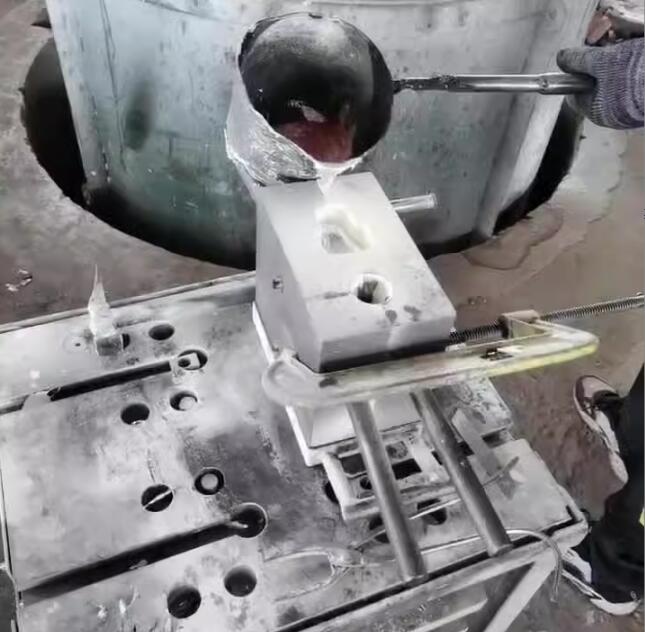
Die casting is a robust manufacturing process used to produce aluminum parts with complex shapes and detailed features. The process involves forcing molten aluminum under high pressure into a mold cavity.
The aluminum solidifies quickly in the shaped die, forming a precise and textured component once ejected. Die casting is favored for its ability to produce high volumes of parts with excellent dimensional accuracy and smooth surface finishes.
This process is widely used for making components that require high strength and rigidity, often seen in automotive, consumer electronics, and industrial applications.
Laser Cutting
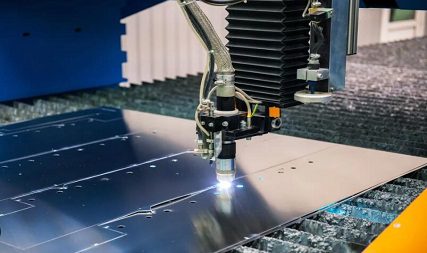
Laser cutting is a precise and efficient method used in aluminum fabrication to cut complex shapes with high precision.
The process utilizes a focused laser beam to melt, burn, or vaporize the aluminum, resulting in clean and precise cuts. Laser cutting is highly advantageous for its accuracy, speed, and flexibility in handling various thicknesses and designs.
It allows for intricate cuts without the need for tooling changes, making it ideal for prototypes and custom designs. This method is widely used in industries where precision and aesthetic quality are critical, such as in electronics, automotive, and decorative applications.
Plasma Cutting
Plasma cutting is another effective technique used in the cutting of aluminum. This process involves using a plasma torch to cut through aluminum by creating a high-speed jet of ionized gas heated to a plasma state.
The plasma melts the metal and blows the molten material away from the cut. Plasma cutting is recognized for its ability to cut thick materials quickly and economically. While it doesn't offer the same level of precision as laser cutting, it is highly efficient for larger scale and thicker aluminum sheets.
This method is commonly utilized in heavy industrial applications where speed and material thickness are more critical than the fine precision of the cuts.
Advantages of Aluminum Sheet Metal Fabrication
- Lightweight: Aluminum is renowned for its low density, which translates into lighter components. This is particularly advantageous in automotive and aerospace applications where reducing weight is crucial for fuel efficiency and payload capacity.
- High Strength-to-Weight Ratio: Despite its lightweight nature, aluminum offers a remarkable strength-to-weight ratio, providing robustness without the heft of steel.
- Corrosion Resistance: Aluminum naturally generates a protective oxide coating, making it resistant to corrosion. This characteristic is especially valuable for applications exposed to harsh environments, such as marine and outdoor architectural elements.
- Formability: Aluminum is highly malleable, allowing it to be formed into complex shapes without breaking or cracking. This makes it ideal for a wide range of applications, from intricate aerospace components to large automotive panels.
- Conductivity: It has excellent thermal and electrical conductivity, making it suitable for applications such as heat exchangers, radiators, and electrical connectors.
- Recyclability: Aluminum is 100% recyclable with no degradation in properties, making it a sustainable choice for environmentally conscious industries.
- Non-Toxicity: Being non-toxic, aluminum is suitable for use in contact with food and beverages, which is invaluable in packaging and container manufacturing.
- Aesthetic Qualities: Aluminum can be finished with a variety of techniques that enhance its appearance and can protect it from wear and environmental damage, making it attractive for consumer products and visible architectural elements.
Disadvantages of Aluminum Sheet Metal Fabrication
While aluminum sheet metal fabrication offers numerous benefits, it also presents certain challenges and limitations:
- Cost: Aluminum can be more expensive than other metals, such as steel, particularly when considering raw material costs and the processing involved in fabrication.
- Softness: Although it is generally a benefit, the softness of aluminum can be a drawback in applications requiring extremely high strength and wear resistance. It is more prone to denting and scratching compared to harder metals like steel.
- Thermal Expansion: Aluminum has a high coefficient of thermal expansion, which means it expands and contracts more than other metals when exposed to temperature changes. This can be problematic in precision assemblies where tight tolerances are necessary.
- Machinability: While aluminum is easy to machine, it can also be sticky, especially with certain alloys. This can lead to issues such as clogging the cutting tools and requiring more frequent tool changes.
- Lower Melting Point: The lower melting point of aluminum compared to other metals can limit its use in high-temperature applications and affect its performance under thermal stress.
- Galvanic Corrosion: When aluminum is in contact with certain other metals and exposed to an electrolyte, it can suffer from galvanic corrosion, which can compromise the integrity of the metal.
- Chemical Sensitivity: Aluminum is reactive with acidic and alkaline substances, making it unsuitable for certain chemical exposure scenarios without appropriate protective coatings.
- Weldability: Certain aluminum alloys are challenging to weld, and welding can weaken the aluminum by altering its microstructure.
Finishing Options for Aluminum Sheet Metal Fabrication
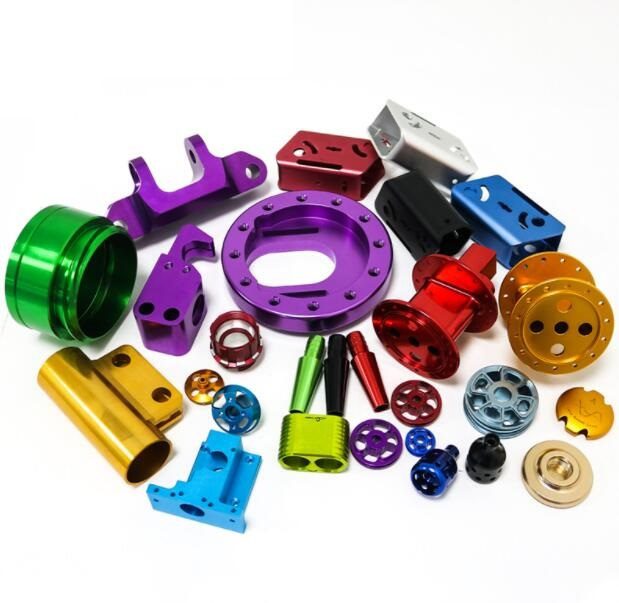
Finishing treatments for aluminum sheet metal not only enhance its appearance but also improve its durability and resistance to environmental factors.
Anodizing: This electrochemical process thickens the natural oxide layer on the aluminum surface, enhancing its corrosion resistance and allowing for dyeing in various colors. Anodizing is ideal for outdoor applications and where abrasion resistance is needed.
Powder Coating: Powder coating involves applying a polyester or epoxy powder to the aluminum surface, which is then cured under heat to form a tough, protective finish. This method offers excellent corrosion protection and is available in a wide range of colors and textures.
Painting: Similar to powder coating, painting provides a protective layer that prevents corrosion and allows for many aesthetic options. It is typically used when specific colors or finishes are required that are not achievable through anodizing or powder coating.
Chemical Film (Chromate Conversion Coating): Chemical film coating, also known as Alodine or Chromate conversion, offers good corrosion resistance and is a good base for paint. It involves applying a chromate or phosphate film that also enhances electrical conductivity, useful in electronic applications.
Sandblasting: Sandblasting involves propelling fine bits of material at high-velocity to clean or etch a surface. It provides a matte finish and helps to prepare the surface for further treatments such as painting or anodizing.
Conclusion
We hope this guide has enhanced your understanding of aluminum sheet metal fabrication and its extensive possibilities. If you're looking to leverage the benefits of aluminum for your projects, please don't hesitate to contact us. Our team is ready to deliver expert guidance and high-quality fabrication solutions tailored to your needs.
FAQ
Q: What is the best aluminum alloy for outdoor applications?
A: For outdoor applications, 5052 and 6061 alloys are recommended due to their excellent corrosion resistance and strength.
Q: Can aluminum be recycled after fabrication?
A: Yes, aluminum is 100% recyclable without degradation in quality, making it an environmentally friendly option.
Q: How does the thickness of aluminum affect its fabrication process?
A: Thicker aluminum requires more robust machinery and techniques for effective shaping and cutting, while thinner sheets are easier to bend and form.
Q: What are the limitations of anodizing aluminum?
A: Anodizing colors can vary based on the alloy and the thickness of the oxide layer, which might not always be consistent across different batches.
Q: Is aluminum suitable for high-temperature applications?
A: Aluminum's lower melting point makes it less suitable for high-temperature applications compared to metals like steel.