
Which Metal Stamping Materials Are Best For Electrical Components?

Struggling to find the right metal for your electrical parts? A wrong choice can cause product failure and harm your reputation. We help you choose the best material every time.
Copper and its alloys, like brass and bronze, are the best materials for stamping electrical components. Their superior electrical conductivity, corrosion resistance, and formability make them perfect for terminals, contacts, and shields. This ensures efficient, reliable, and durable performance for all electronic applications.
Choosing the right material is the most important decision for any electrical stamping project. The material directly impacts the component's performance, safety, and lifespan. While copper is the top choice for conductivity, other factors like strength, cost, and environment also play a big role. As a B2B supplier, I've worked with many clients like Mark from Canada, who need high-quality parts at a competitive price. We often have detailed discussions to find the perfect balance. Let's explore the key materials and find the right one for you.
What is the best material for metal stamping?
Unsure which metal to choose for your project? The wrong decision can be costly and delay production. We can guide you to the perfect material based on your specific needs.
There is no single "best" material for all metal stamping. The ideal choice depends on the part's function, strength requirements, and budget. Steel is great for strong, low-cost parts, aluminum is for lightweight needs, and copper alloys are unmatched for electrical conductivity.
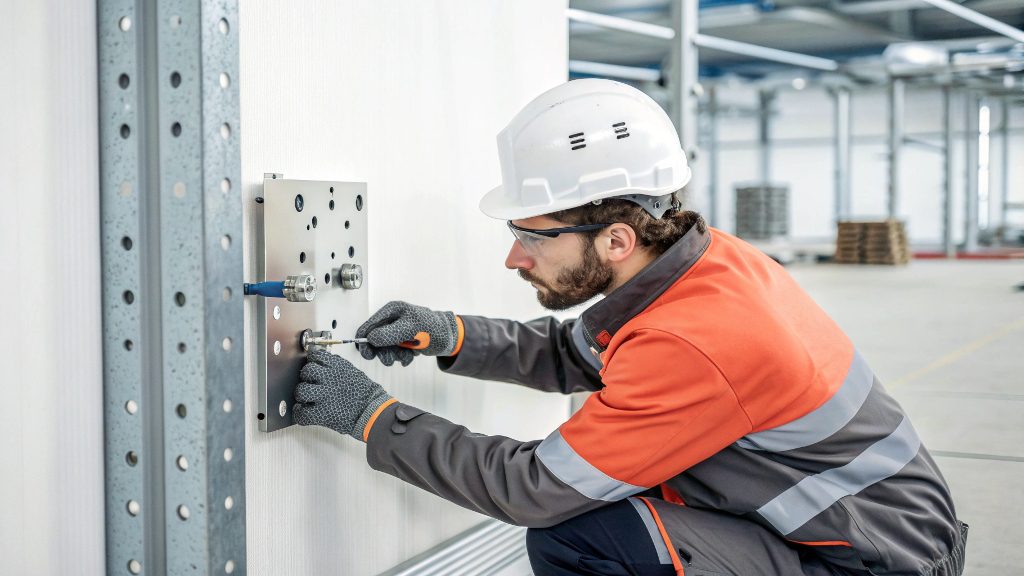
When a customer asks for the "best" material, my first question is always, "What is the part's job?" The answer dictates everything. A simple mounting bracket does not need the same properties as a high-performance electrical contact. We must consider several factors to make the right choice. My company, Worthy, has over 100 materials available because every project is unique. We look at the entire picture to find the most effective solution, not just the most expensive one.
Key Factors for Selection
- Function: What will the part do? Does it need to be strong, conduct electricity, or resist rust?
- Cost: What is your budget? Some materials like steel are very affordable, while others like titanium are more expensive.
- Workability: How easily can the metal be formed into your desired shape? Some hard metals are difficult to stamp.
- Environment: Where will the part be used? Will it be exposed to moisture, heat, or chemicals?
| Material | Primary Advantage | Common Application |
|---|---|---|
| Carbon Steel | Low Cost, High Strength | Brackets, Housings, Panels |
| Stainless Steel | Corrosion Resistance | Medical Devices, Food Equipment |
| Aluminum | Lightweight, Corrosion Resistant | Automotive Parts, Enclosures |
| Copper & Alloys | Excellent Conductivity | Electrical Terminals, Connectors |
What kind of steel is used for stamping?
Need to use steel for your stamped parts but don't know which type? Using the wrong steel alloy can lead to cracking during forming or rust later. We can help you pick the right grade.
Low-carbon steels, such as 1008 or 1010, are most commonly used for stamping. Their excellent ductility and formability allow them to be bent, drawn, and shaped without fracturing. For higher strength, high-strength low-alloy (HSLA) steels are used, offering durability for structural parts.
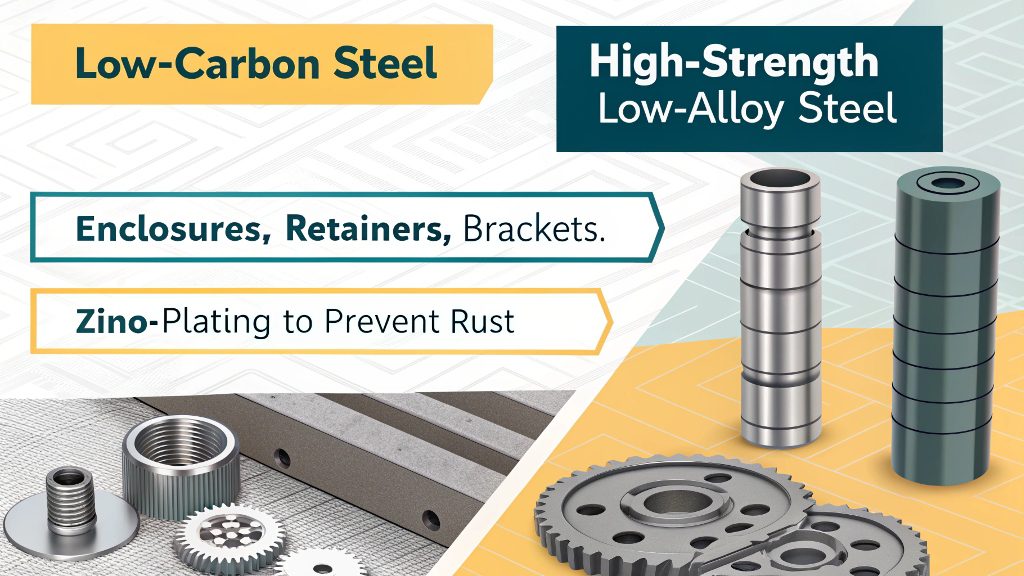
Steel is a fantastic, versatile material for stamping, but "steel" is a very broad term. At my factory, the most common request is for low-carbon steel because it is easy to work with and very cost-effective. It's perfect for general-purpose parts like enclosures, retainers, and simple brackets. However, when a client's design requires more toughness, we look at other options. For instance, for an automotive component that needs to withstand stress, we would suggest a high-strength low-alloy (HSLA) steel. It’s stronger without adding too much weight. The key is to match the steel's properties to the part's real-world demands. We always discuss the application to ensure the selected steel will not fail.
Common Steel Types for Stamping
- Low-Carbon Steel: This is the workhorse of the stamping industry. It is easy to form and affordable. It's great for products that don't need huge strength. We can add a surface finish like zinc plating to prevent rust.
- High-Strength Low-Alloy (HSLA) Steel: This steel contains small amounts of other elements to make it much stronger than low-carbon steel. It's used for automotive parts and industrial equipment where durability is critical.
- Stainless Steel: When a part must resist rust and corrosion, stainless steel is the best choice. It is common in medical, dental, and food-grade applications. It costs more, but its clean properties are essential for these industries.
What is electrical stamping?
Heard the term "electrical stamping" but not sure what it means? It's a specialized process for making precise parts for your electronics. Without it, modern devices would not work reliably.
Electrical stamping is a precision manufacturing process that uses a die to cut and form thin metal sheets into components for electrical applications. These parts include terminals, connectors, contacts, shields, and lead frames. The process is designed for high-volume, high-precision production.
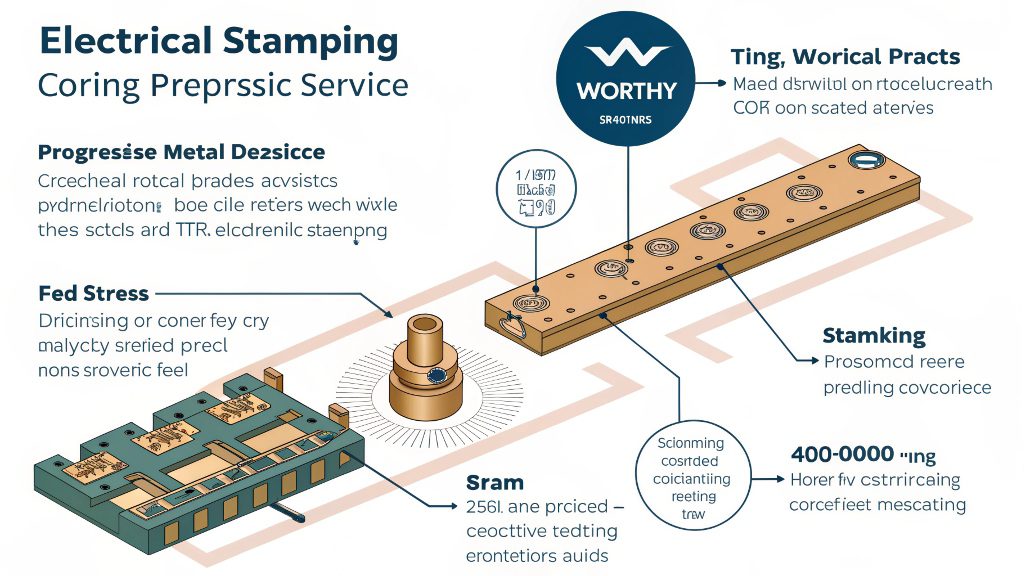
Electrical stamping is a core service we offer at Worthy. It is how we make the tiny, complex metal parts inside so many electronic devices. Think about the phone in your pocket or the computer on your desk. They are filled with small metal connectors and shields. We make these parts using a process called progressive die stamping. A long strip of metal, usually copper or brass, is fed through a press. The die has many stations, and at each station, the metal is cut, bent, or punched. With each stroke of the press, a finished part comes out. This method is incredibly fast and precise, allowing us to produce millions of identical parts with very tight tolerances, sometimes as fine as .001" (0.025mm). This precision is essential for ensuring a reliable electrical connection.
Key Aspects of Electrical Stamping
- Precision: Electrical connections require exact shapes and sizes. Our tooling and presses are monitored electronically to maintain consistency.
- Materials: We almost always use highly conductive materials like copper, brass, or beryllium copper.
- Volume: The process is ideal for mass production, from thousands to millions of parts, which helps keep costs low for our customers.
What material is used for stamping?
Confused about the vast number of materials you can use for stamping? Choosing from over 100 options seems impossible. Let’s simplify it to the most common and effective choices.
A wide variety of metals are used for stamping, but the most common are steel, aluminum, and copper alloys like brass. The choice depends on the final application's needs for strength, weight, conductivity, or corrosion resistance. We help you select the ideal one.
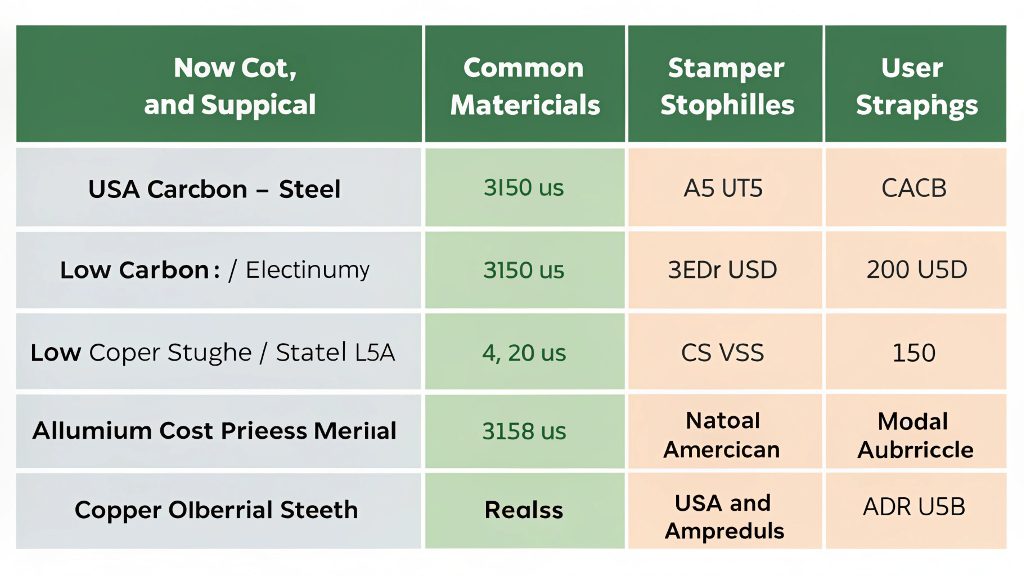
While we just discussed specific materials, it's helpful to see them all in one place. My company can stamp over 100 different metals, but most projects use one of a few key types. I’ve found that ninety percent of our jobs, whether for customers in North America, Europe, or Australia, fall into three categories. First is steel, for its strength and low cost. Second is aluminum, for when weight is a concern. Third, and most important for this article, are copper alloys, used for anything that carries an electrical current. I have worked with my four engineers to create systems that help customers choose wisely. We analyze their designs to see if a different material could improve performance or save them money. It’s part of our commitment to being a true partner, not just a supplier.
A Quick Guide to Common Materials
| Material Family | Specific Examples | Why We Use It |
|---|---|---|
| Steel | Low Carbon, Stainless Steel (304, 316) | For strength, structure, and durability. Can be plated for corrosion resistance. |
| Aluminum | 3003, 5052, 6061 | For lightweight, corrosion-resistant parts that don't need steel's strength. |
| Copper Alloys | Copper (C110), Brass (C260), Bronze | For excellent electrical and thermal conductivity. The top choice for electronics. |
| Specialty Metals | Titanium, Inconel | For extreme environments like aerospace, where heat and corrosion are high. |
Conclusion
In short, copper and its alloys are the best choice for electrical stamping. Always match your material to the part's specific job to ensure quality, performance, and value.