
Which Laser Cutting Technology Is Best For Sheet Metal Fabrication Projects?
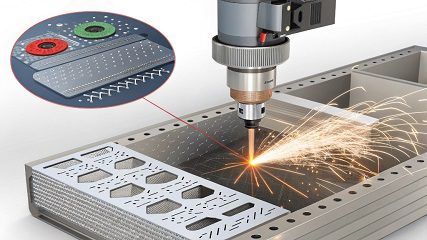
Struggling with slow, inaccurate metal cutting methods? The wrong choice costs time and money. Your project deserves precision and speed, but traditional tools often fail to deliver on complex designs.
For most sheet metal fabrication, fiber laser cutting is the best technology. It offers superior speed, especially on thinner materials, higher energy efficiency, and lower operating costs. It also handles reflective metals like aluminum, copper, and brass much better than older CO2 laser technologies.
Finding the right cutting method is a critical decision for any project. I talk to business owners like Mark from Canada all the time, and their biggest concerns are always quality, speed, and cost. The technology we use to cut parts directly impacts all three of these things. Let's break down the options so you can see why we at Worthy Hardware stand by fiber laser cutting as the top choice for our clients. It's important you have all the facts before starting your next fabrication project.
Can a laser cutter cut sheet metal?
Are old cutting methods slowing you down? Manual cutting is imprecise and plasma cutting leaves a rough edge. This can lead to extra finishing work, wasting valuable time and resources.
Yes, a laser cutter is one of the most effective tools for cutting sheet metal. It uses a high-powered, focused beam of light to melt or vaporize the material, creating clean, precise cuts with a very narrow kerf. This technology is ideal for a wide range of metals.
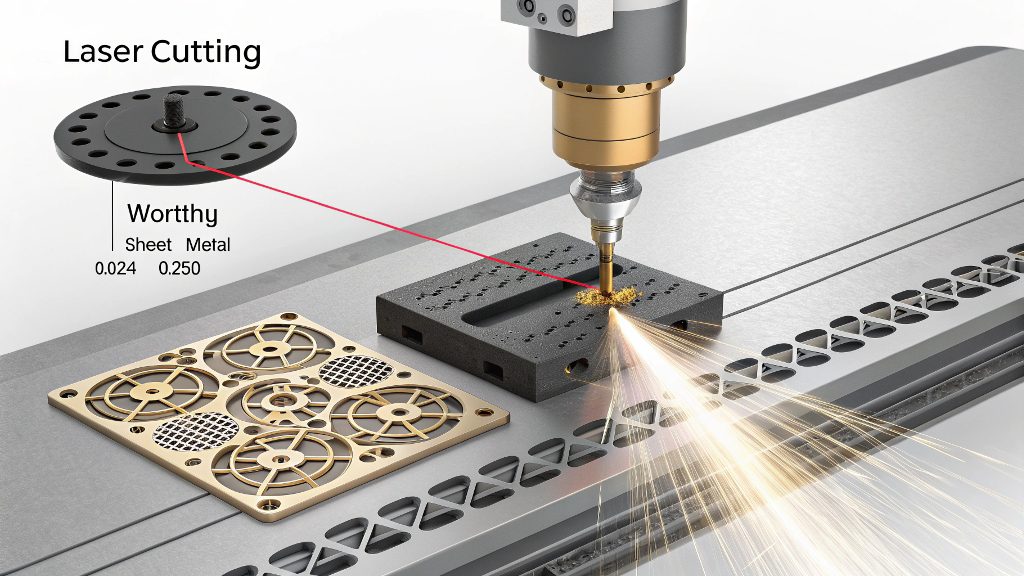
A laser cutter works by directing a very powerful laser beam through a nozzle onto the material. We often use an assist gas, like nitrogen or oxygen, which blows the molten metal away, leaving a clean edge. I remember a project for a client who needed intricate parts for electronic enclosures. Traditional punching would have been too complex and costly. Our laser cutters produced the parts perfectly in a fraction of the time. The process is amazingly good for cutting complex shapes and patterns that are nearly impossible with other methods. At Worthy, we handle sheet metal from 0.024” up to 0.250” thick every day using this process. It forms the foundation of modern sheet metal fabrication.
How Laser Cutting Compares to Other Methods
| Here's a simple breakdown of how laser cuttingstacks up against other common methods for cutting sheet metal. Speed (Thin Metal) |
Edge Finish | ||
|---|---|---|---|
| Laser Cutting | Excellent | Excellent | Excellent |
| Plasma Cutting | Good | Very Good | Fair |
| Waterjet Cutting | Excellent | Fair | Excellent |
| Mechanical Shearing | Fair | Very Good | Good |
As you can see, for a balance of speed, precision, and a great finish, laser cutting is hard to beat for most sheet metal applications.
Which is better, CO2 or fiber laser?
Choosing between different laser types can be confusing. You hear terms like CO2 and fiber, but it's not clear which one will deliver the best results and value for your specific project.
For sheet metal, a fiber laser is almost always better. It's much faster on thin to medium-gauge metals, more energy-efficient, and requires far less maintenance. CO2 lasers are still useful for very thick steel or non-metal materials like acrylic, but fiber technology now dominates metal fabrication.


The main difference comes down to how the laser beam is created. A CO2 laser uses a gas mixture, while a fiber laser uses diodes to create light that is amplified through fiber optic cables. This makes the fiber laser system much simpler and more stable. A few years ago, we upgraded our main cutting machines to fiber lasers. The change was incredible. Our electricity costs went down, and we could cut parts for clients almost three times faster on materials like 0.060" aluminum. This meant we could offer faster lead times, like our standard 3 business days, without compromising the quality our customers expect. For business owners who need parts quickly, that speed is a huge advantage.
Key Differences: CO2 vs. Fiber Laser
Let's look at the specific advantages of each technology.
| Feature | CO2 Laser | Fiber Laser | Why It Matters |
|---|---|---|---|
| Electrical Efficiency | ~10% | ~30-40% | Lower energy bills mean lower operating costs for us, which helps keep prices competitive for you. |
| Speed (Thin Metal) | Good | Excellent | Faster cutting means shorter lead times and higher throughput, getting your parts to you sooner. |
| Maintenance | High (gas, mirrors) | Very Low (no mirrors) | Less downtime for our machines means more reliable production schedules for your orders. |
| Reflective Metals | Risky (beam reflects) | Excellent | We can safely and efficiently cut brass, copper, and aluminum without risk of machine damage. |
Because of these benefits, we invest in fiber laser technology at Worthy Hardware to ensure we provide the best service possible.
Which laser is used for metal cutting?
Are you unsure which technology will be used for your metal parts? The type of laser determines the quality and cost. You need to know that your supplier is using the right tool for the job.
Both fiber and CO2 lasers are used for metal cutting, but fiber lasers are now the industry standard for most sheet metal fabrication. We also see Nd:YAG or disk lasers for specific applications like thick-plate cutting or high-precision welding, but fiber is the most common.
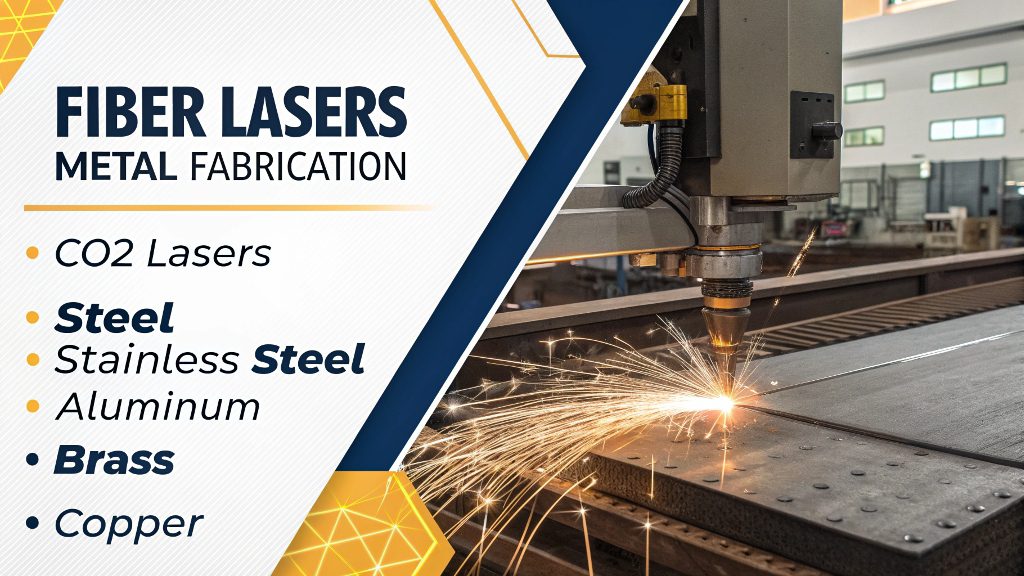
When you send us a design, our first step is to determine the best manufacturing process. For cutting metal sheets, the choice is almost always our fiber lasers. Their shorter wavelength is absorbed much better by metals, which is why they are so much more efficient than CO2 lasers. This absorption is especially important for reflective metals. Trying to cut copper with an older CO2 laser is difficult and dangerous because the beam can reflect back and damage the machine's optics. With our fiber lasers, we can cut copper, brass, and aluminum just as easily as steel. This capability allows us to serve a wider range of industries, from electronics to consumer products, and deliver consistent, high-quality results across over 100 different materials.
Common Lasers in Metal Fabrication
Here's where each type of laser excels:
-
Fiber Lasers:
- Best For: All-around sheet metal cutting (steel, stainless, aluminum, brass, copper).
- Strengths: Speed, efficiency, low maintenance, and cutting reflective metals. This is our go-to choice.
-
CO2 Lasers:
- Best For: Thick steel plates (over 1 inch) and non-metallic materials like wood, acrylic, and plastic.
- Strengths: Produces a very smooth edge finish on thick plates.
-
Nd:YAG Lasers:
- Best For: Very high-power applications, deep engraving, and welding.
- Strengths: Can deliver extremely high peak power pulses.
For 99% of the sheet metal parts we produce, fiber laser technology provides the perfect combination of speed, quality, and cost-effectiveness.
How accurate is laser cutting sheet metal?
Worried your parts won't fit together perfectly? Inaccurate cuts lead to assembly problems, scrap parts, and project delays. You need to trust that every single component is made exactly to spec.
Laser cutting is extremely accurate. At Worthy Hardware, we can consistently hold tolerances as tight as +/- 0.005 inches (0.127 mm). For special requests, we can review and achieve even tighter tolerances. This precision ensures every part is virtually identical from the first to the thousandth piece.
This high level of accuracy is possible because the entire process is computer-controlled. Your CAD file is sent directly to the machine, and the laser head follows the programmed path perfectly every time. The laser beam itself is very fine, often less than 0.010 inches in diameter, which allows us to create very detailed features with sharp, clean corners. I had a client in the medical industry, Mark, who needed parts with complex hole patterns. The alignment was critical for the final assembly. He was used to suppliers who had high rejection rates. When he saw our 100% inspection report and the consistency of our laser-cut parts, he was relieved. This repeatability is a key reason why so many industries, from aerospace to robotics, rely on laser cutting.
Factors Affecting Laser Cutting Accuracy
While the technology is precise, several factors contribute to the final tolerance.
- Machine Quality: A well-maintained, high-quality laser machine is the foundation of accuracy.
- Material Thickness: Thicker materials can have a slight taper on the cut edge, though this is minimal.
- Assist Gas: The type and pressure of the assist gas affect the edge quality and dross.
- Heat Distortion: The laser introduces heat, but the heat-affected zone (HAZ) is very small, minimizing warping compared to other methods.
We carefully control all these variables to guarantee that your parts meet the exact specifications of your design.
Conclusion
In short, fiber laser is the clear winner for modern sheet metal cutting. It delivers the speed, precision, and cost-efficiency that our clients need to succeed in today’s competitive market.