
Which is better for structural components: 1018 steel or A36 steel?

Choosing the right steel can be confusing. Making the wrong choice can lead to part failure or overspending. Understanding the difference between 1018 and A36 helps you decide wisely.
A36 is the standard for large-scale construction like buildings and bridges due to its good weldability. However, for precise structural components like machined parts, shafts, and brackets, 1018 steel is often the better choice because of its superior machinability, strength, and consistency.
The choice between these two common steels isn't always as simple as it seems. On paper, they look similar, but their performance in real-world applications is very different. As someone who has machined thousands of parts from both materials, I've seen firsthand where each one shines. The best choice really depends on what you are making and how you are making it. Let's dive deeper into the specifics so you can pick the perfect material for your next project.
Is 1018 better than A36?
Are you wondering if the higher cost of 1018 steel is justified over A36? This uncertainty can delay projects or cause you to choose a material that isn't quite right.
Yes, for applications requiring machining, 1018 steel is significantly better than A36. 1018 offers superior machinability for a smoother surface finish and tighter tolerances. A36 is for general welded fabrication, while 1018 is for high-quality, precision-engineered components where accuracy is key.
The main difference comes down to control. 1018 is a cold-rolled steel with a tightly controlled chemical composition. A36 is a hot-rolled steel where the properties can vary more. In my machine shop, this difference is obvious. When we machine 1018, the chips break cleanly, the tools last longer, and we can hold tolerances down to +/- 0.001" without a problem. Machining A36 is more difficult; it's gummier, the surface finish is rougher, and holding tight tolerances is a constant battle.
Here is a simple breakdown:
| Feature | 1018 Steel | A36 Steel | What It Means for You |
|---|---|---|---|
| Machinability | Excellent | Fair | 1018 provides a better finish, faster machining time, and higher precision. |
| Weldability | Good | Excellent | A36 is easier to weld, making it ideal for large, simple structures. |
| Strength | Higher & More Consistent | Lower & More Variable | 1018 offers more predictable performance for engineered components. |
| Case Hardening | Excellent | Not Recommended | 1018 can be heat-treated for a very hard, wear-resistant surface. |
For a client in Canada, we made a set of custom mounting plates. They initially specified A36 to save on material cost. But the assembly required very precise hole locations. After the first prototype, we switched to 1018 steel. The parts fit perfectly, and the improved finish gave their product a more professional look.
Is 1018 a structural steel?
You may think of 1018 as just for machine parts. This can make you hesitate to use it for anything that needs to bear a load, fearing it might not be strong enough.
Yes, 1018 is a carbon steel that is excellent for many structural applications. It's not used for building I-beams, but it is a top choice for structural components within machinery, vehicles, and equipment that require strength and precision.
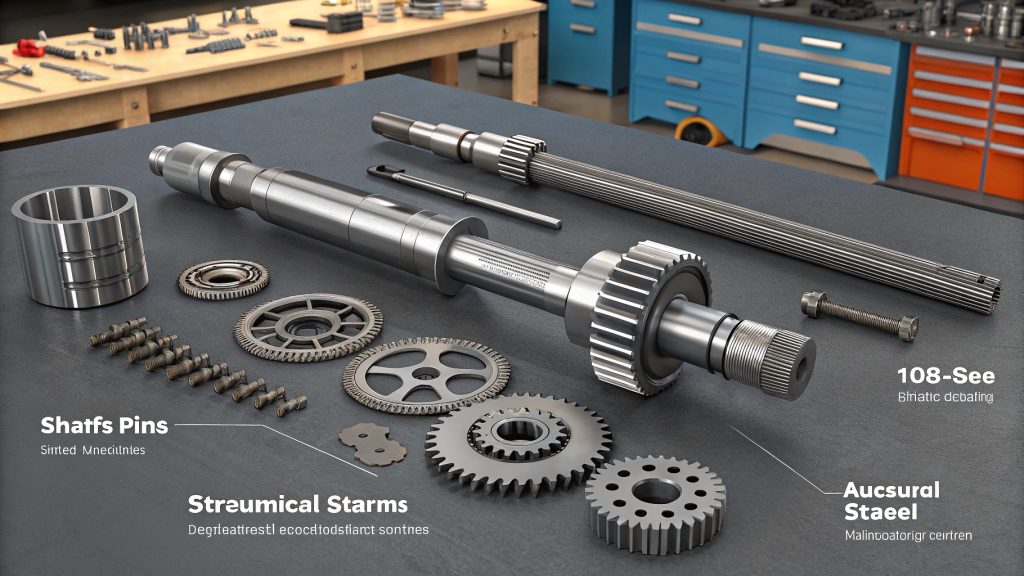
When people say "structural steel," they often picture the massive beams and columns used to build skyscrapers. That world is dominated by A36 steel. But a "structural component" is any part that supports a load and is critical to the integrity of an assembly. This includes a huge range of parts we make every day at my company, Worthy Hardware. Think about the parts inside a piece of industrial equipment, an automobile, or a robotic arm. These are all structural.
1018 steel is perfect for these applications. Its controlled chemistry gives it reliable and predictable strength. Its superior machinability allows us to create complex geometries and hold tight tolerances, which is impossible with A36. Furthermore, 1018 can be case-hardened. This process creates a super-hard outer skin while keeping the inner core tough and ductile. This makes it perfect for parts like shafts, pins, and gears that need to be both strong and wear-resistant. So while you won't build a bridge with 1018, it is absolutely a go-to material for high-performance structural components.
What grade of steel is used for structural steel?
Feeling lost in a sea of steel grades like A572, A992, and A36? Choosing the wrong one is a common and expensive error, impacting both safety and your budget.
The most widely used grade for general structural steel in construction is ASTM A36. For applications needing higher strength or other properties, engineers might specify grades like A572, A588, or A992. The choice depends entirely on the project's specific demands.
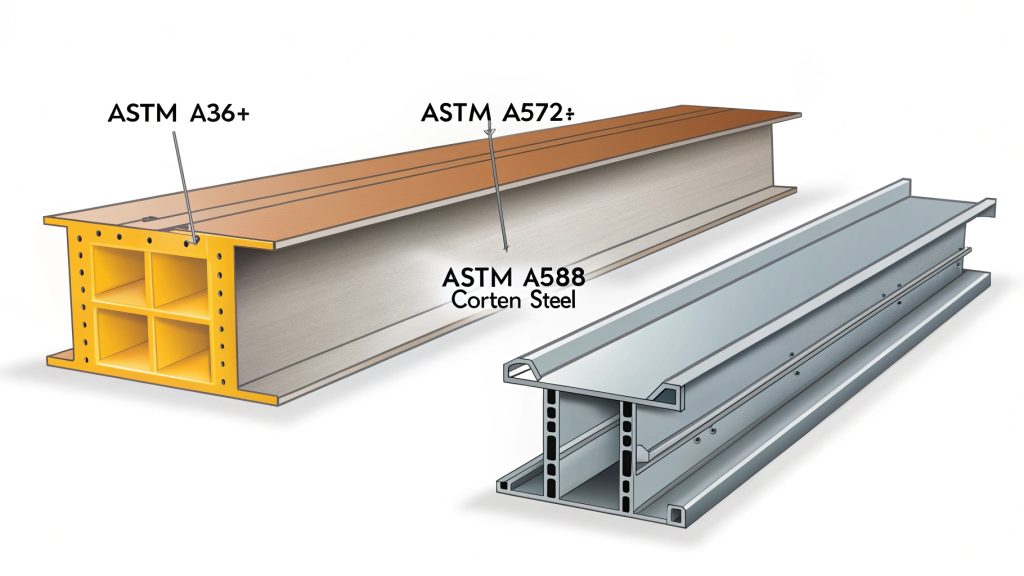
While A36 is the king of general construction, it's not the only option. Different projects have different needs, from load capacity to environmental exposure. Engineers select from a family of structural steels to meet these specific challenges. Here at Worthy, we can source and machine many of these, but it's good to know the main players.
Here are the most common grades you'll encounter:
-
ASTM A36: This is the workhorse. It's relatively low-cost, has enough strength for most buildings, and is very easy to weld and form. If a project doesn't have special requirements, A36 is usually the default choice for beams, plates, and angles.
-
ASTM A572 Grade 50: This is a High-Strength Low-Alloy (HSLA) steel. It has a higher yield strength than A36, which means you can design a stronger part with the same amount of steel, or an equally strong part with less steel. This is great for saving weight in applications like crane booms or trailers.
-
ASTM A588 (Corten Steel): This is a "weathering steel." When exposed to the elements, it forms a stable, rust-like outer layer that protects the steel from further corrosion. You often see this on bridges or outdoor art where painting is not practical.
-
ASTM A992: This is the modern standard for wide-flange beams used in buildings in North America. Its chemical and mechanical properties are more tightly controlled than A36, making its performance more predictable for structural engineers.
What is better than A36 steel?
Is standard A36 steel falling short on strength or machinability for your parts? Using a material that is only "good enough" can hold back your product's performance and long-term durability.
What's "better" than A36 depends on your goal. For superior machinability and finish, 1018 steel is better. For higher strength-to-weight ratio, A572 Grade 50 is better. For corrosion resistance, A588 is better. You must match the material to the specific job.
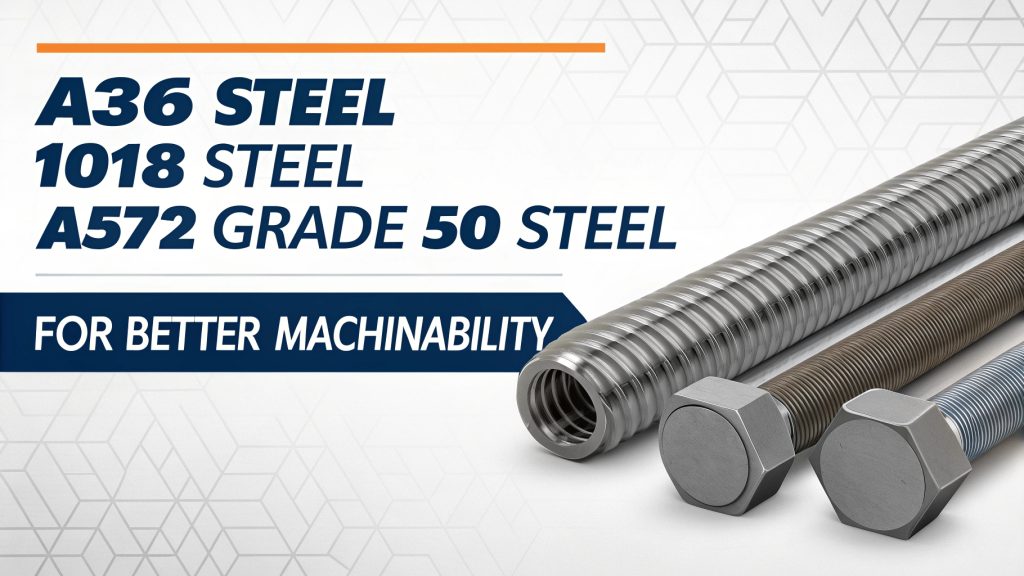
A36 steel is a fantastic, cost-effective material for its intended purpose: general structural fabrication. But when its limitations become a problem, there is always a better option available if you know what you're looking for. The key is to define what "better" means for your specific part.
Here’s how I guide my customers:
-
If you need better MACHINABILITY: The answer is 1018 steel. There is no contest here. If your part has threads, tight tolerance bores, or requires a smooth, clean surface finish, 1018 will save you time, money, and headaches during production. The slightly higher material cost is easily offset by the reduced machining time and improved quality.
-
If you need higher STRENGTH: Look at A572 Grade 50. It provides about a 40% increase in yield strength over A36. This allows you to make parts that are just as strong but lighter, or significantly stronger at the same weight. It's a smart upgrade for load-bearing components where performance is critical.
-
If you need better WEAR RESISTANCE: Again, 1018 steel is the winner because it can be case-hardened. A36's chemistry does not allow it to be properly hardened. For any part that slides, rotates, or experiences friction, a case-hardened 1018 component will last dramatically longer than one made from A36. I've seen this make a huge difference for clients making parts for conveyor systems and agricultural machinery.
Conclusion
Choosing the right steel is simple. For large welded structures, A36 is fine. For high-quality, precision-machined structural parts, 1018 steel is the superior choice. Need help deciding? Contact us.