
Which Aluminum Grade Is Best For CNC Machining?
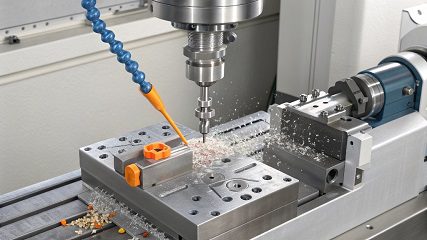
Choosing the right aluminum grade feels overwhelming with so many options. Picking the wrong one can lead to failed parts and wasted money. Here is a simple guide.
For general CNC machining, 6061 aluminum is often the best choice. It provides an excellent, cost-effective balance of strength, machinability, and corrosion resistance. For higher strength needs, 7075 is superior, though it is more challenging to machine. The best grade always depends on your specific application requirements.
Now you have a quick answer, but the "best" choice really depends on what you need your part to do. Does it need to be super strong? Does it need a beautiful anodized finish? Or is cost the most important factor? Let's dive deeper into the most common aluminum alloys to help you select the perfect one for your project. Understanding these details will save you time and money.
What grade aluminum is used in machining?
You see many aluminum numbers like 6061, 7075, and 5052. Using the wrong one can ruin your project and budget. Let's look at the most common grades.
The most common aluminum grades for machining are from the 6xxx and 7xxx series, especially 6061 and 7075. Other grades like 5052, 6063, and 2024 are also frequently used for specific properties like corrosion resistance, finish quality, or high strength-to-weight ratios.
When we talk about aluminum for CNC machining, we are usually talking about a few key players. Each series, identified by the first digit, has different main alloying elements which give it unique properties. The 6xxx series, alloyed with magnesium and silicon, is the workhorse of the industry. The 7xxx series, with zinc as its main element, is the high-performance option.
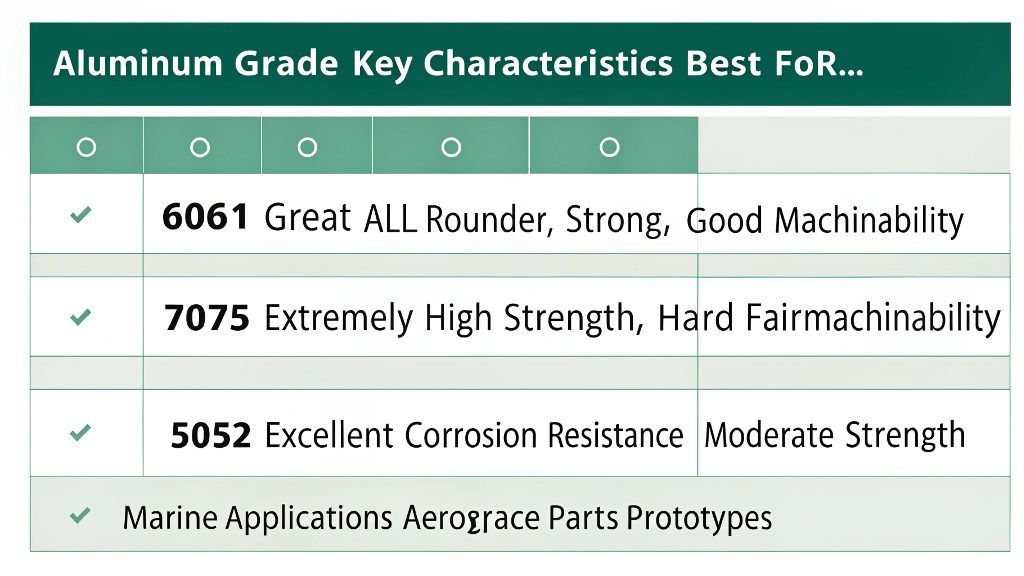
To help you understand the differences, let's break down the most popular choices in a simple table.
| Aluminum Grade | Key Characteristics | Best For... |
|---|---|---|
| 6061 | Great all-rounder, strong, good machinability | Structural parts, electronics, prototypes |
| 7075 | Extremely high strength, hard, fair machinability | Aerospace parts, high-stress applications |
| 5052 | Excellent corrosion resistance, good formability | Marine parts, sheet metal, tanks |
| 6063 | Excellent surface finish, good for anodizing | Architectural trim, decorative parts, extrusions |
| 2024 | High strength-to-weight, fatigue resistance | Aircraft structures, high-performance parts |
Choosing between these comes down to your priorities. For most of my customers, 6061 hits the sweet spot. But for a client making parts for a marine environment, we'd immediately recommend 5052instead.
Is aluminum 6061 good for machining?
You have probably heard about 6061 aluminum everywhere in the CNC world. But is it actually the right fit for your specific part? Let's find out why it's so popular.
Yes, 6061 aluminum is excellent for machining. It is arguably the most popular machining alloy in the world. Its properties allow for high cutting speeds, good surface finishes, and predictable chip formation. This makes it easy and cost-effective to work with for a huge range of applications.
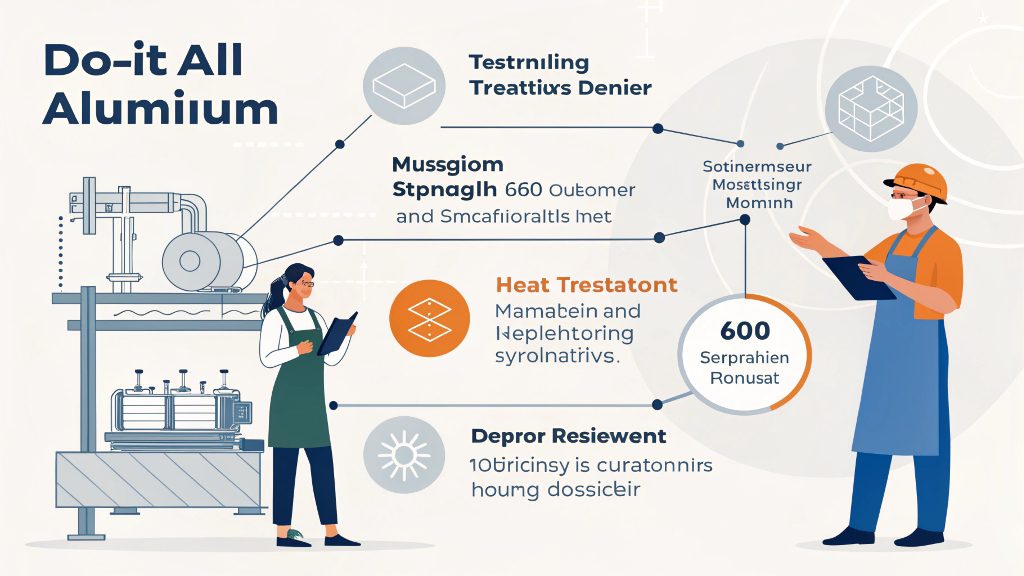
I often call 6061 the "do-it-all" aluminum, and for good reason. Its main alloying elements are magnesium and silicon, which give it good mechanical strength and make it highly resistant to corrosion. We almost always machine 6061 in the T6 temper (often written as 6061-T6). This means it has been solution heat-treated and artificially aged, which significantly increases its strength and hardness, making it perfect for machining.
I remember a customer, Mark, who was developing a new consumer electronic device. He needed a housing that was strong, lightweight, and could be produced in high volume. He was thinking about 6063 because he wanted a beautiful anodized finish. I explained that while 6063 offers a slightly better finish, 6061 is significantly stronger and more durable for a handheld device. We made prototypes in both, and he saw that the strength of 6061 was critical. The anodized finish on 6061 was still excellent, and it gave him the robust product he needed. This is a perfect example of why 6061 is my default recommendation for most projects.
What is the best aluminum alloy for milling?
CNC milling puts specific demands on a material. Choosing the wrong alloy can lead to a poor surface finish, excessive tool wear, or parts that don't hold tolerance.
For general-purpose CNC milling, 6061-T6 aluminum is the best and most widely used alloy. It cuts cleanly, allows for tight tolerances, and produces a great surface finish. It offers the best combination of cost, strength, and ease of milling for the majority of applications.
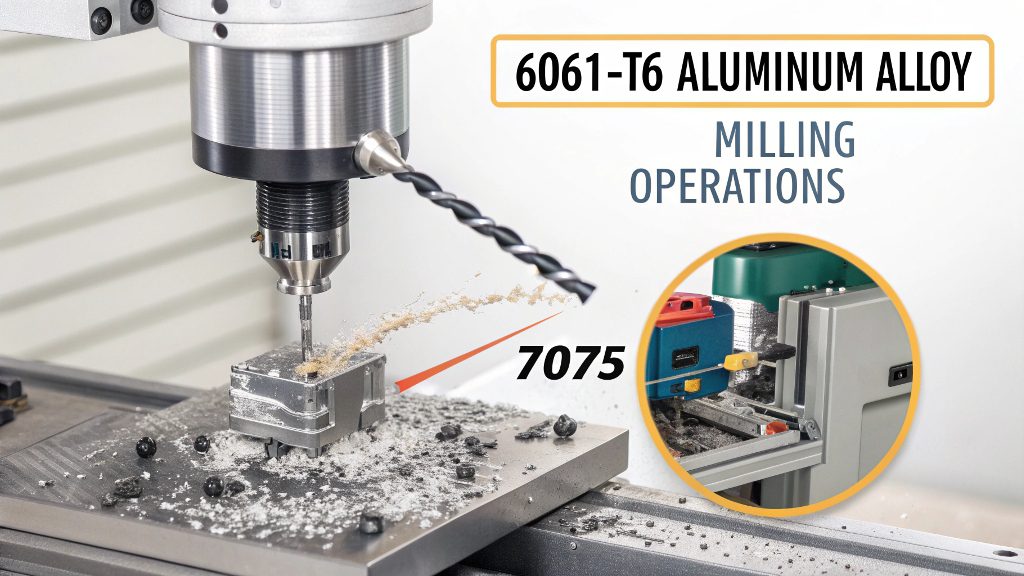
When we use a milling machine, we want a material that behaves predictably. The key is how the material forms chips when it's cut. Softer aluminum alloys can get "gummy," meaning they stick to the cutting tool, which ruins the surface finish and can even break the tool. 6061-T6 is not gummy at all. It produces small, brittle chips that break away cleanly from the part and the tool. This keeps the cutting area clear and allows for faster, more efficient milling.
This is why it's a favorite in our shop at Worthy Hardware. Our engineers can program the machines to run at high speeds with 6061, which lowers the cycle time and saves our customers money. While other alloys might be stronger, they often require slower speeds and more careful handling. For example, 7075 is much harder, which is great for the final part's strength but means we have to slow down our milling operations to prevent excessive tool wear. For 90% of milling jobs, 6061 provides the perfect balance to get great parts made quickly and affordably.
Is 7075 aluminum easy to machine?
You need a part with the highest possible strength from aluminum. But then you hear that 7075, the strongest common alloy, is difficult and expensive to machine. Let's look at the reality.
No, 7075 aluminum is not considered easy to machine, especially when compared to 6061. Its high hardness and strength create more resistance against the cutting tool. This results in increased tool wear, requires slower machining speeds, and demands more rigid machine setups to achieve good results.

![]()![]()![]()![]()
Machining 7075 aluminum is a trade-off. You get incredible performance, but you have to work for it. This alloy's primary alloying element is zinc, which gives it a strength-to-weight ratio that rivals some steels. This makes it a top choice for high-stress applications in the aerospace, defense, and high-performance sports equipment industries.

However, that same strength makes it tough on our tools. When a client from North America needed a critical component for a drone frame, 7075 was the only option that met their stress requirements. We knew we had to adjust our process. We used specialized carbide tools, reduced our cutting speeds, and increased the flow of coolant to manage the heat and pressure. The machining time was longer than it would have been with 6061, and the material itself is more expensive. But the result was a part that was incredibly strong and lightweight, exactly what the client needed. So, while it's not "easy," it is very "machinable" with the right expertise and equipment. It's the material you choose when performance cannot be compromised.
Conclusion
Choosing the right aluminum is about matching the grade to your needs. 6061 is a fantastic all-rounder for most jobs, while 7075 offers ultimate strength. Contact us at Worthy Hardware for expert advice.