
What’s the Difference Between Horizontal and Vertical Machining for Large Parts?
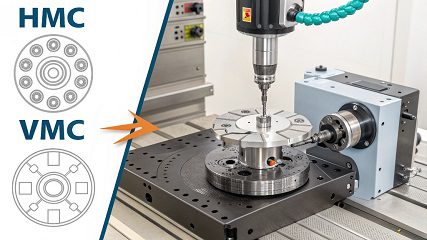
Struggling to choose the right machining for your large parts? The wrong choice can lead to lower quality and higher costs. I can help clear up the confusion.
The key difference lies in the spindle's orientation. Horizontal machining centers (HMCs) have a spindle parallel to the worktable, ideal for large, boxy parts needing work on multiple sides. Vertical machining centers (VMCs) have a perpendicular spindle, suited for flatter parts like plates and molds.
Understanding this basic difference is just the start. The real value comes from knowing which one suits your specific project, especially when dealing with large, complex components. I’ve worked with many clients, like Mark from Canada, who need to make this choice to get the best value and avoid production delays. Choosing correctly is critical for efficiency and budget. Let's dig deeper into the specific advantages and uses of each machine to help you make an informed decision for your next project.
What is the primary advantage of using a horizontal machining center (HMC) over a vertical machining center (VMC)?
Facing production bottlenecks with multi-sided parts? Constant re-fixturing on a VMC wastes time and introduces errors. There's a much more efficient way to machine complex components.
The biggest advantage of an HMC is its ability to machine multiple sides of a part in a single setup. This is possible because it uses a rotary table. This boosts efficiency, improves accuracy by reducing setup changes, and allows for better chip evacuation.
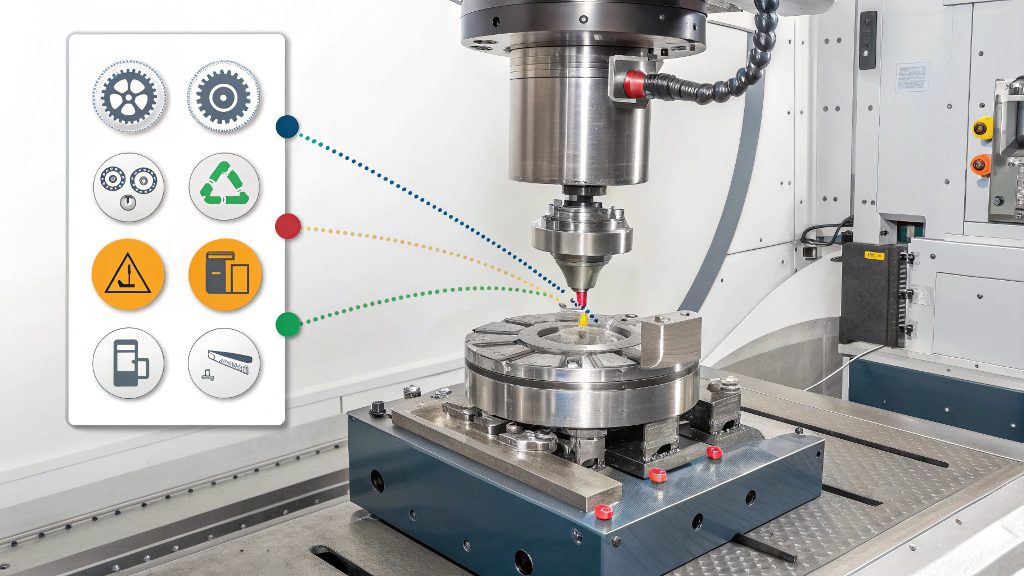
The key to an HMC's power is its setup. Let me break it down for you.
Single Setup Efficiency
On a Vertical Machining Center (VMC), if you have a part that needs work on four sides, you typically have to stop the machine and manually reposition the part four times. Each time, you risk small errors that can add up. With an HMC, you clamp the part once on a rotary table. The table then rotates automatically to present each new side to the cutting tool. I remember a large aluminum housing project for a client. On a VMC, it would have required at least four separate setups. Our HMC at Worthy Hardware completed it in one clamping, which cut down setup time and ensured all features were perfectly aligned.
Improved Accuracy and Chip Control
Fewer setups mean higher accuracy. There's less chance for human error. Also, gravity is on your side with an HMC. As the machine cuts, the metal chips fall away from the part and the work area. On a VMC, chips can pile up on top of the workpiece, which can damage the surface finish or break the cutting tool. This makes HMCs great for deep cuts or large-volume material removal.
| Feature | Vertical Machining Center (VMC) | Horizontal Machining Center (HMC) |
|---|---|---|
| Setups for 4-sided part | Multiple (often 4) | One |
| Chip Evacuation | Chips can pile up | Gravity-assisted, chips fall away |
| Operator Intervention | High (for multiple setups) | Low (often unattended operation) |
| Accuracy on multiple sides | Good, but risk with each setup | Excellent, due to single setup |
What are horizontal milling machines good for?
Are you making large, cube-shaped parts? Machining these components on the wrong machine can be slow and costly. You need a solution designed specifically for this type of geometry.
Horizontal milling machines excel at producing large, heavy, or box-like parts that require machining on multiple faces. Think of gearbox housings, engine blocks, or complex aerospace components. Their setup supports high-volume production and continuous, unattended operation.
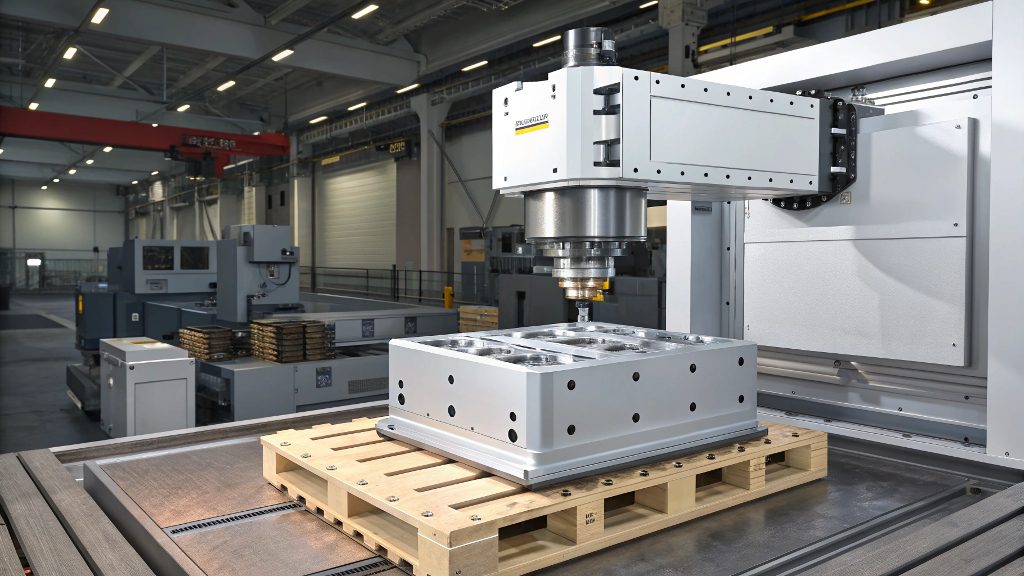
When I get an inquiry for a part that looks more like a cube than a plate, I immediately think of our HMCs. Their design is perfect for parts that have features on many sides.
Ideal Part Geometries
The strength of an HMC is unlocked when dealing with specific types of parts. Here are some examples of what they are best for:
- Box-Type Components: This includes parts like transmission cases, engine blocks, and large pump housings. These parts are often heavy and require precise features on four, five, or even six sides.
- Palletized Production: HMCs are often equipped with automatic pallet changers (APCs). This means you can have one part being machined while an operator sets up the next part on a separate pallet. When the first part is done, the machine swaps them automatically. This drastically reduces downtime and is perfect for high-volume orders.
- Large, Heavy Workpieces: Because the workpiece is mounted on a sturdy tombstone fixture supported at both ends, HMCs can handle much heavier parts than VMCs of a similar size. At Worthy Hardware, our HMCs can work on parts up to 2,032 mm long.
I once helped a client in the automotive industry who needed thousands of identical gearbox housings. Using our HMC with a pallet changer, we could run production nearly 24/7 with minimal operator intervention, hitting their tight delivery schedule.
What are the disadvantages of vertical machining centers?
Are you thinking a VMC is always the simpler, cheaper choice? For certain jobs, especially with large parts, its limitations can cause major production headaches and hidden costs.
The main disadvantages of a vertical machining center are poor chip evacuation, limited access to the workpiece for multi-sided jobs, and constraints on part size and weight. Gravity works against you, causing chips to accumulate and potentially ruining the part's finish or tool.
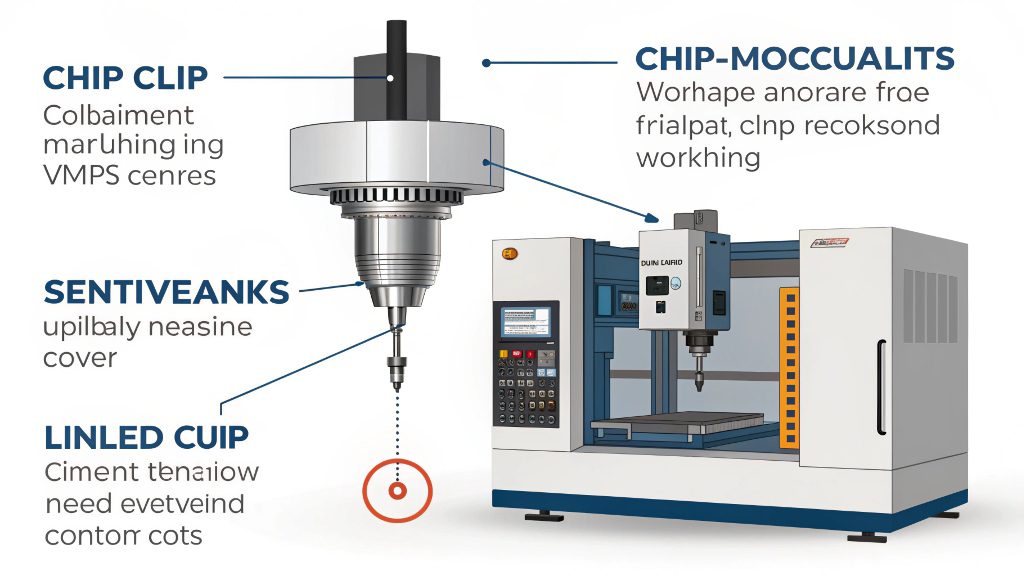
While VMCs are fantastic workhorses for many jobs, it's important to understand their limits, especially when you're deciding on the best process for large components.
The Problem with Gravity and Access
On a VMC, the spindle is directly above the part. This gives the operator a great view of what’s happening, which is a plus. But it creates two main problems:
- Chip Buildup: As the tool cuts, chips fall directly onto the workpiece. If they are not cleared away constantly by high-pressure coolant, they can be re-cut by the tool. This heats the part, causes poor surface finishes, and can lead to tool breakage. This problem gets worse with deep pockets or complex features.
- Limited Job Versatility: Machining more than one side of a part requires stopping the machine and re-clamping the part. For a simple cube, that’s at least three or four additional setups. This downtime adds up quickly, increasing labor costs and the risk of error. This is a major pain point for procurement managers like Mark, who need to avoid production delays.
Size and Weight Constraints
VMCs have a physical limit to the size and weight of the parts they can handle. The workpiece sits on a table that moves in the X and Y directions. A very heavy part can strain the machine's mechanics, affecting speed and accuracy. An HMC, by contrast, moves the tool around a stationary part, allowing it to handle much heavier loads more effectively.
What are vertical machining centers typically but not always used for?
Think a VMC is only for small, simple parts? While they excel at plate work, their versatility might surprise you. They are often the best choice for specific complex jobs.
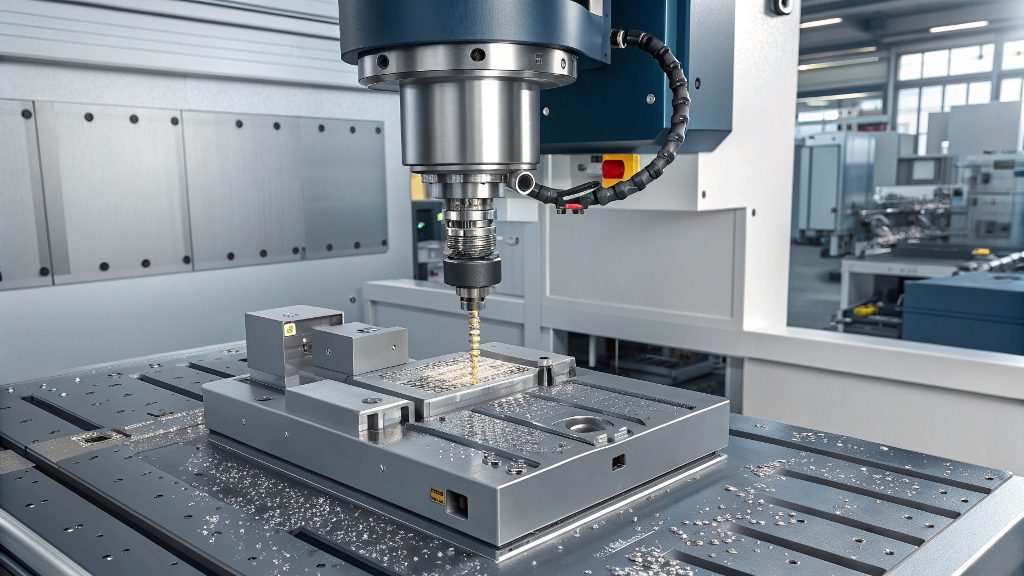
Vertical machining centers are typically used for parts that are flat or require most of the work to be done on one side. This includes jobs like plates, molds and dies, and simpler, smaller shell-like parts. Their visibility and easy setup make them ideal for prototypes.
![]()![]()![]()![]()
VMCs are the most common type of CNC machine for a reason. They are incredibly versatile and are the go-to solution for a wide range of jobs. I find them perfect for customers who need prototypes quickly or are working with specific types of parts.
Strongest Applications
Here is where a VMC truly shines:
- Plate Work and Face Milling: Any job that is mostly flat and needs features on a single face is perfect for a VMC. This includes base plates, faceplates, and shallow enclosures. The setup is simple, and the machine can execute the cuts quickly and accurately.
- Molds and Dies: Many molds have complex cavities on one primary face. The open design of a VMC gives the operator a clear view, which is critical for the detailed work required in mold making. The precision of a VMC is more than enough for the tight tolerances needed.
- Prototyping and One-Offs: When my customers need a single prototype, I often turn to a VMC. It is faster to program and set up for a simple, one-sided job. This quick turnaround is essential for design agencies and hardware startups that need to test their ideas quickly.
The key is that the part geometry lends itself to a "top-down" approach. While an HMC is superior for multi-sided boxy parts, a VMC is often faster, more cost-effective, and simpler for parts where the majority of the features are on a single plane.
Conclusion
Choosing between horizontal and vertical machining depends on your part's size, complexity, and quantity. HMCs are better for large, multi-sided parts, while VMCs excel at flatter, single-sided jobs.
At Worthy, we have both advanced Horizontal and Vertical Machining Centers to handle any project, big or small. If you're unsure which is right for you, contact me at [email protected]. Let my team and I find the most efficient and cost-effective solution for your needs. Visit us at www.worthyhardware.com to learn more.