
What’s The Difference Between CNC Wood Turning And Traditional Wood Turning?

Are you trying to decide between modern CNC and traditional methods for your wood project? Choosing the wrong one can lead to wasted time, inconsistent quality, and higher costs.
The main difference is control and automation. CNC wood turning uses computer programs for precise, automated control, making it perfect for complex and high-volume jobs. Traditional wood turning relies entirely on a skilled operator's hands to guide the tools manually, suiting simpler, smaller-batch projects.
Choosing the right manufacturing process is crucial. As someone who has managed countless custom parts orders, I've seen how this choice impacts the final product's quality, cost, and delivery time. Both CNC and traditional turning have their place, but they serve very different needs. Understanding these differences will help you make an informed decision that saves you money and gets you the exact part you envisioned. Let's break down the details so you can see which method is the best fit for you.
What is the difference between CNC and turning?
Are you trying to understand the basic concepts of CNC and turning? This technical jargon can be confusing. This confusion might make you overlook the best technology for your needs.
Turning is the manufacturing process of shaping material by rotating it against a cutting tool. CNC, or Computer Numerical Control, is the method of automating that turning process with a computer. So, CNC is not a different process, but a modern way to control a turning machine.
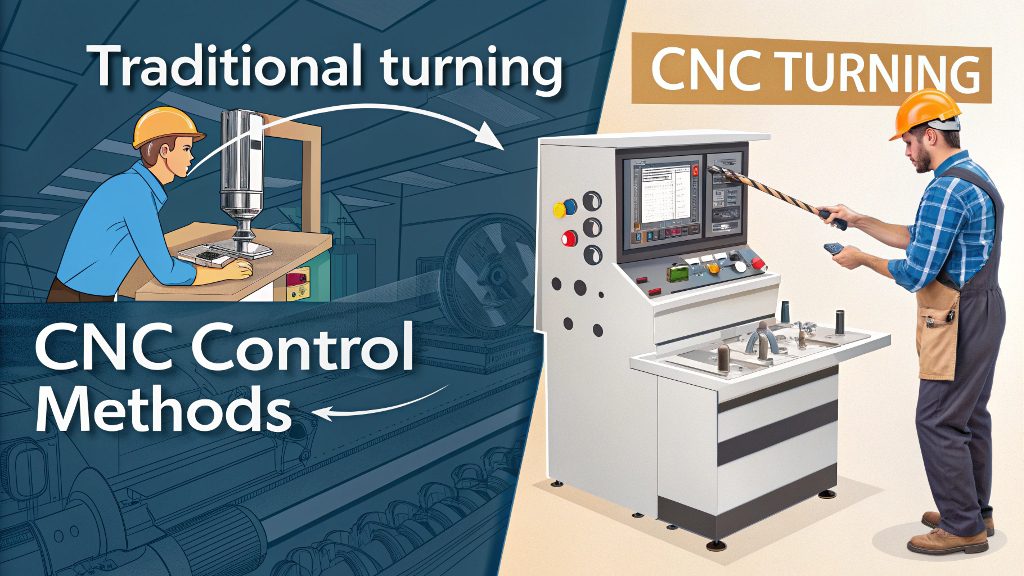
To dive deeper, think of it like this: "turning" is the verb, and "CNC" is the adverb that describes how the turning is done. For centuries, turning was a manual craft. An operator would stand at a lathe and use their strength and skill to press cutting tools against a spinning piece of wood or metal. The quality of the part depended entirely on the operator's steady hand and sharp eye.
CNC changed all of that. It replaced the operator's hands with a computer program. We create a digital design of the part, and a program translates that design into specific instructions for the machine. These instructions control the exact movement, speed, and angle of the cutting tool. The result is automation and incredible precision. At my company, Worthy Hardware, we can hold tolerances as tight as +/- 0.005 inches because of CNC.
Here’s a simple breakdown:
| Aspect | Turning (The Process) | CNC (The Control Method) |
|---|---|---|
| What it is | A method of shaping material by rotation. | A system for automating machine tools. |
| Core Action | Removing material from a spinning workpiece. | Reading code and directing motors. |
| Origin | Ancient (manual lathes). | Modern (computer-driven). |
| Example | Shaping a wooden leg on a lathe. | Using a program to automate shaping the leg. |
So, when we talk about CNC turning, we are talking about the modern, automated version of the age-old turning process.
What is the difference between a CNC lathe and a traditional lathe?
Are you choosing between a CNC lathe and a traditional one? The machines can look similar but work very differently. Picking the wrong machine can directly affect your project's speed and precision.
A traditional lathe needs a skilled operator to control the cutting tools manually with handwheels and levers. A CNC lathe, however, follows instructions from a computer program. The operator sets up the job, but the machine executes the cutting path automatically, ensuring high precision and perfect repeatability.


Let's look closer at the machines themselves. A traditional wood lathe is a relatively simple machine. It has a motor that spins the wood, a tool rest to support the operator's chisel, and handwheels to make small adjustments. The operator is the "computer." Their experience dictates the part's accuracy and finish. It’s a very hands-on process that is great for artistic pieces or simple, one-off jobs.
A CNC lathe is a more complex and robust machine. Instead of handwheels, it has a control panel where an operator loads a program (G-code). Instead of human muscle, it uses powerful servo motors and precise ball screws to move the cutting tools. Once I hit 'start,' the machine can produce hundreds or thousands of identical parts without getting tired or making a mistake. For clients like Mark in Canada, who order large batches of aluminum parts, this is the only way to guarantee every single piece is exactly the same and meets the quality standards he expects.
| Feature | Traditional Lathe | CNC Lathe |
|---|---|---|
| Control System | Manual (Levers, Handwheels) | Automated (Computer Program, G-code) |
| Precision | Dependent on operator skill. | Highly precise and repeatable (e.g., +/- 0.127 mm). |
| Best For | One-off items, prototypes, artistic work. | High-volume production, complex parts. |
| Operator Skill | Manual dexterity, craftsmanship. | Programming, setup, and process monitoring. |
| Speed | Slower per part. | Much faster for production runs. |
What are the different types of wood turning?
Do you think all wood turning is the same? There are different techniques for different projects. Not knowing them can limit what you can create or lead to poor results for your specific part.
The two main types are spindle turning and faceplate turning. Spindle turning shapes wood between the lathe's centers to create long items like table legs. Faceplate turning involves attaching a block of wood to a plate to make wide items like bowls and platters.
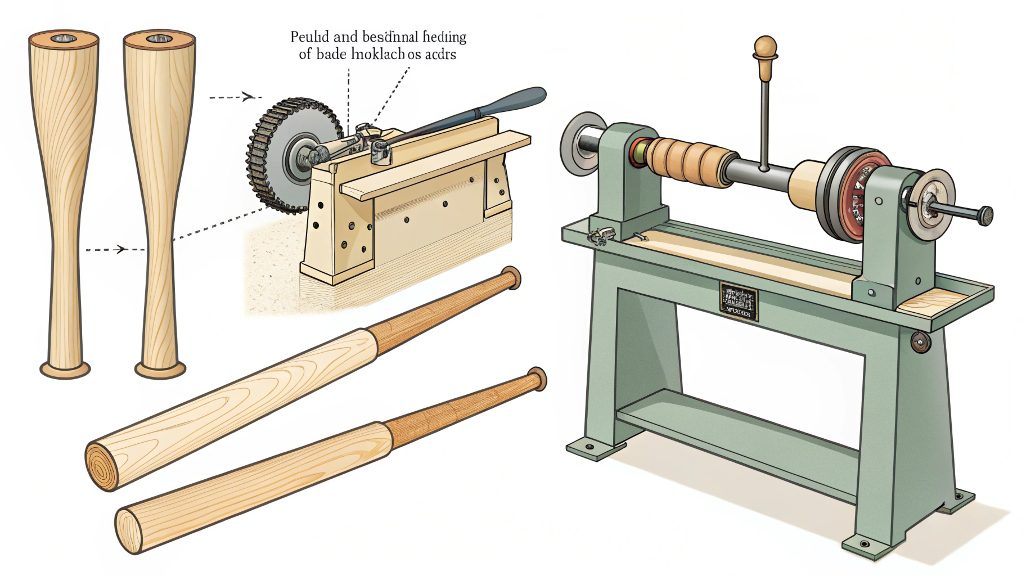
Let's explore these two methods more.
1. Spindle Turning
In spindle turning, the piece of wood is mounted so that its grain runs parallel to the lathe bed. The wood is held securely between two points: the headstock and the tailstock. This setup is ideal for creating long, cylindrical objects. Think about products like furniture legs, stair balusters, baseball bats, and pens. When a customer needs a set of four identical legs for a table, CNC spindle turning is the perfect solution. The program ensures every curve, taper, and detail is exactly the same on all four legs, something that is very difficult to achieve by hand.
2. Faceplate Turning
In faceplate turning, the wood grain runs perpendicular to the lathe bed. Instead of being held between two points, a block of wood is screwed onto a metal disk called a faceplate, which then attaches to the headstock. This method is used for creating wide, open objects. Common examples include bowls, plates, platters, and clock faces. With CNC, we can not only shape the outside of a bowl perfectly but also engrave intricate patterns or designs onto its surface with extreme precision, an advantage that opens up many design possibilities.
Both techniques can be done on traditional or CNC lathes, but the application determines which is better. For a single, artistic wooden bowl, traditional faceplate turning is great. For 500 identical wooden lids with a company logo, CNC faceplate turning is the only efficient way.
What are the disadvantages of CNC turning?
Do you think CNC is the perfect solution for every job? It has powerful benefits, but it also has downsides. Overlooking these disadvantages can lead to unexpected costs, especially for small or simple projects.
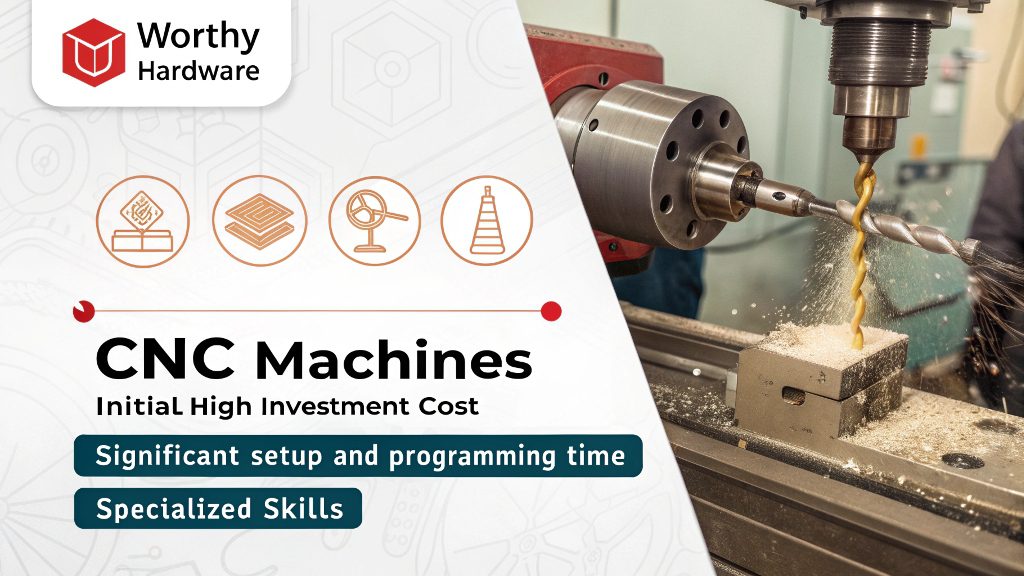
The main disadvantages of CNC turning are the high initial machine cost and the need for skilled programmers. It is often not cost-effective for single custom pieces or very simple jobs, because the programming and setup time costs more than the quick cutting time saves.
While I rely on CNC for most of the work at Worthy Hardware, I'm always honest with customers about its limitations. It's not always the best tool for every single job.
First, the initial investment is very high. A CNC lathe can cost many times more than a traditional one. This cost has to be factored into the price of the parts we produce. Second, there is significant setup and programming time. Before we can cut a single chip, an engineer has to create a CAD model and then write the G-code program. This can take several hours. If a customer only wants one simple part, that setup cost can make the project too expensive. In those cases, a traditional machinist might be faster and cheaper.
Finally, CNC machining requires a different skill set. You don't just need someone who understands wood and tools; you need someone who can program and operate complex machinery. This can make finding qualified staff more challenging.
Here’s a breakdown of the key disadvantages:
| Disadvantage | Description | When It Matters Most |
|---|---|---|
| High Initial Cost | CNC machines are expensive to buy and maintain. | For small businesses or hobbyists. |
| Programming Time | Creating the digital design and toolpath takes time. | For one-off prototypes or very small orders. |
| Reduced Flexibility | Making a quick change requires editing the program. | For artistic projects that evolve during creation. |
| Loss of "Human Touch" | The machine produces perfect, identical parts. | For customers who want unique, handcrafted items. |
Because of these factors, CNC turning truly shines in production environments where precision, repeatability, and speed across many parts are the most important goals.
Conclusion
CNC wood turning offers automated precision for complex, high-volume jobs. Traditional turning provides manual artistry for simpler projects. Your best choice depends on your project's needs for consistency, complexity, and quantity.
At Worthy Hardware, we specialize in high-precision CNC machining for customers worldwide. If you need reliable, high-quality custom parts, from prototypes to high-volume production, send your design to me, Sandra Gao, at [email protected]. Let's build something great together.