
What’s the Difference Between 316 and 316L Stainless Steel?
Choosing the wrong stainless steel can lead to project failure and costly rework. This choice between 316 and 316L seems small, but it has a big impact on your final product.
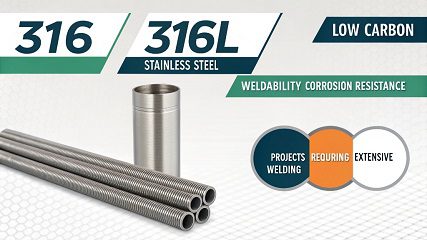
The main difference between 316 and 316L stainless steel is the carbon content. The "L" in 316L stands for "Low Carbon." This lower carbon content gives 316L superior weldability and better corrosion resistance, especially in applications that require extensive welding, preventing a problem called weld decay.
The "L" makes a significant difference, but there's a bit more to understand when selecting the right material. This small detail can affect your project's strength, longevity, and overall cost. Let's break down which one is truly the best fit for your specific CNC machining needs.
Which is better, 316 or 316L?
Picking between 316 and 316L can be a tough choice. You want the best performance, but you also need to manage costs. A wrong decision can mean weaker parts or unexpected corrosion.
"Better" really depends on your specific application. If your project involves a lot of welding, 316L is the superior choice because its low carbon content prevents weld decay. For parts that need slightly higher strength and hardness without welding, standard 316 is often a better option.

When I work with clients like Mark from Canada, we always focus on the application first. The choice is not just about the material name, but about how it will be used. For welded assemblies, especially those in marine or chemical environments, 316L is the clear winner. The low carbon level stops harmful carbides from forming during the welding process, which maintains corrosion resistance. However, standard 316 is slightly harder and stronger. This makes it a good choice for bolts, fasteners, and machined components where strength is a top priority and welding is not required. The cost difference is usually minimal, so the decision should always be based on the technical requirements of the part.
Key Application Differences
| Feature | 316 Stainless Steel | 316L Stainless Steel |
|---|---|---|
| Welding | Good, but can be prone to weld decay. | Excellent, highly resistant to weld decay. |
| Strength | Slightly higher strength and hardness. | Slightly lower strength and hardness. |
| Corrosion | Excellent general corrosion resistance. | Excellent, especially post-welding. |
| Best For | High-strength, non-welded applications. | Welded structures, corrosive environments. |
Which stainless steel is best for corrosion resistance?
Are you worried about your parts rusting or corroding in harsh environments? It's a common fear for engineers and procurement managers. Corrosion can ruin projects and damage your company's reputation.
Both 316 and 316L offer excellent corrosion resistance because they contain molybdenum. However, 316L has a slight advantage, particularly after welding. Its lower carbon content prevents a process called sensitization, which can lead to corrosion along the weld lines in standard 316 steel.
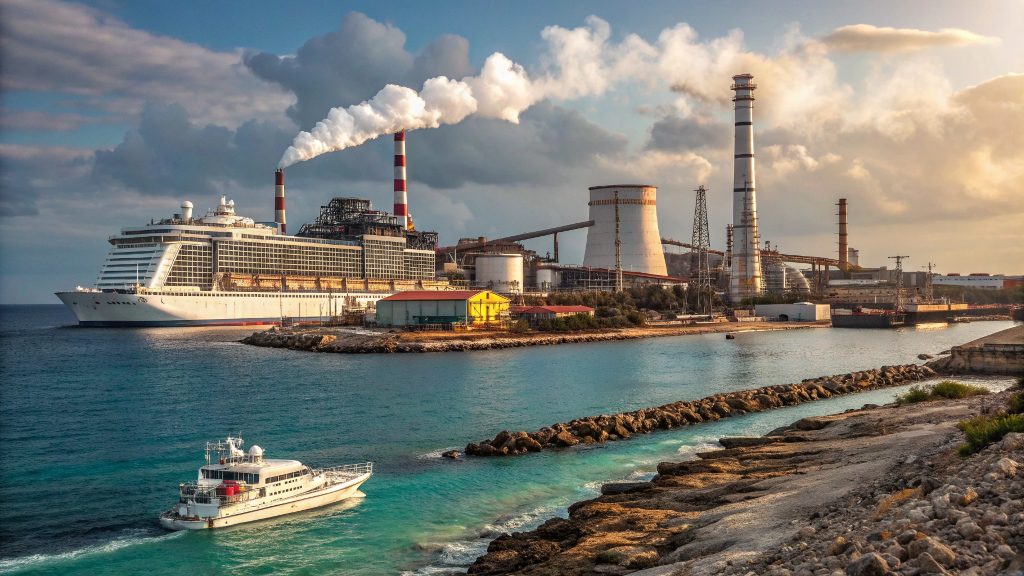
Many of my clients, especially those making parts for the marine or medical industries, need top-tier corrosion resistance. The secret to the 316 family's success is molybdenum. This element provides superior resistance to chlorides, like salt water and de-icing salts, which would quickly destroy other metals. Both 316 and 316L perform nearly identically in most situations. The real difference appears when you introduce heat from welding. In that case, 316L is the safer bet to ensure the part's integrity. For any non-welded item, you can trust both materials to stand up to tough conditions.
Understanding Corrosion Mechanisms
The main enemy in welded 316 steel is "sensitization." Here's how it works:
- Heating: During welding, the steel is heated to high temperatures.
- Carbide Formation: In standard 316, the carbon atoms bond with chromium atoms, forming chromium carbides along the grain boundaries of the metal.
- Chromium Depletion: This process "steals" chromium from the surrounding area, leaving it vulnerable to corrosion.
- Result: The weld seam can rust or fail over time, even though the rest of the part is fine.
Because 316L has very little carbon, this process is almost completely avoided. The chromium stays where it's needed, protecting the entire part, including the weld.
What does the L stand for in 316L stainless steel?
You see "L" on material specifications, but what does it actually mean? It’s a simple detail that has huge implications. Choosing to ignore it can lead to a critical part failing unexpectedly.
The "L" in 316L simply stands for "Low Carbon." This designation means the material has a maximum carbon content of 0.03%, which is significantly lower than the 0.08% maximum for standard 316 stainless steel. This one change is why 316L is so good for welding.
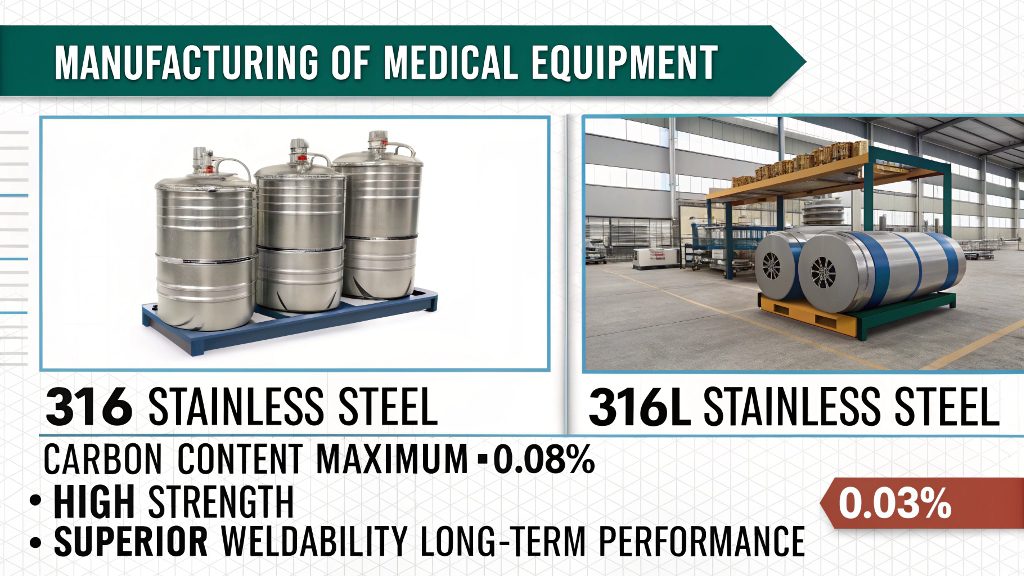
I remember a project with a client making medical equipment. They needed components that were both strong and could be welded without losing their corrosion-resistant properties. The initial design just called for "316 stainless." I immediately contacted them to ask about welding. Once they confirmed the parts would be welded together, I recommended we switch to 316L. This small suggestion prevented a potential disaster down the line where the welded joints could have corroded after sterilization. That "L" is more than just a letter; it is a guarantee of weldability and long-term performance in critical applications. It's a key piece of information that we, as manufacturers, pay close attention to.
Carbon Content Comparison
| Material | Maximum Carbon % | Key Advantage |
|---|---|---|
| 316 Stainless Steel | 0.08% | Higher strength |
| 316L Stainless Steel | 0.03% | Superior weldability |
This table clearly shows the difference. While it looks small on paper, the impact on fabrication and performance is enormous, especially when heat is involved.
Can 316 stainless steel corrode?
Many people believe stainless steel is completely rust-proof. This is a common misconception. Choosing 316 with the assumption it will never corrode can lead to serious problems in certain applications.
Yes, 316 stainless steel can corrode under specific, highly aggressive conditions. While it has excellent resistance to general corrosion, it can be susceptible to pitting in high-chloride environments, crevice corrosion in tight spaces, and intergranular corrosion after welding if it's not the "L" grade.

At Worthy, we believe in being realistic with our customers. While we produce thousands of 316 stainless steel parts for applications from aerospace to industrial hardware, we always discuss the operating environment. For example, a part constantly submerged in warm saltwater is under extreme stress. In such cases, the molybdenum in 316 offers great protection, but design is also critical. We can help improve designs to eliminate tight crevices where saltwater can become stagnant and cause crevice corrosion. For welded parts in these environments, using 316L is not just a suggestion; it's a requirement for long-term reliability. Understanding a material's limits is just as important as knowing its strengths.
When 316 Might Corrode
Here are the conditions to watch out for:
- High Chloride Environments: Constant exposure to saltwater, bleach, or other chloride solutions can cause localized pitting.
- High Temperatures: Elevated temperatures can accelerate corrosion rates, especially in chemical processing applications.
- Low Oxygen Settings (Crevices): In gaps between fasteners or under gaskets, oxygen can be depleted, preventing the passive protective layer from reforming and leading to crevice corrosion.
- Welded Joints (Standard 316): As we've discussed, the area around a weld on standard 316 is a prime spot for rust if not properly treated.
Conclusion
The main difference is carbon content: 316L has less. This makes 316L excel in welded applications, while standard 316 offers slightly higher strength for non-welded parts.