
What Surface Finishes Can Be Achieved Through CNC Machining?
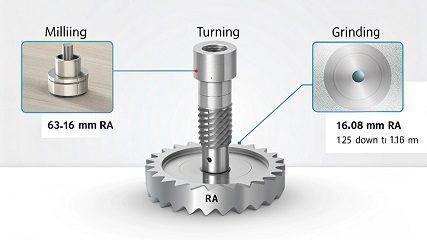
Tired of parts that don't look or feel right? A bad surface finish can ruin a great design. Let's explore the CNC options that guarantee a perfect result every time.
CNC machining can achieve a wide range of surface finishes. These include standard as-machined finishes, bead blasting, anodizing, powder coating, and even mirror polishing. The choice depends entirely on your part’s final application, material, aesthetic requirements, and budget for the project.
The finish on your part is more than just looks; it affects everything from durability to performance. I've seen how the right finish can transform a project from good to great. But before we get into the specific types, it's important to understand what we mean by "surface finish" in the first place. Let’s break it down so you can make the best choice for your next project.
What is the surface finish of a CNC machine?
Confused by technical terms like 'Ra' and 'μM'? Misunderstanding surface finish can lead to expensive errors. Let's define what we mean by a CNC machine's surface finish.
Surface finish in CNC machining refers to the texture of a part's surface after it has been machined. It is measured by the average roughness (Ra) and describes the tiny peaks and valleys left by the cutting tool. A lower Ra value means a smoother, finer finish.
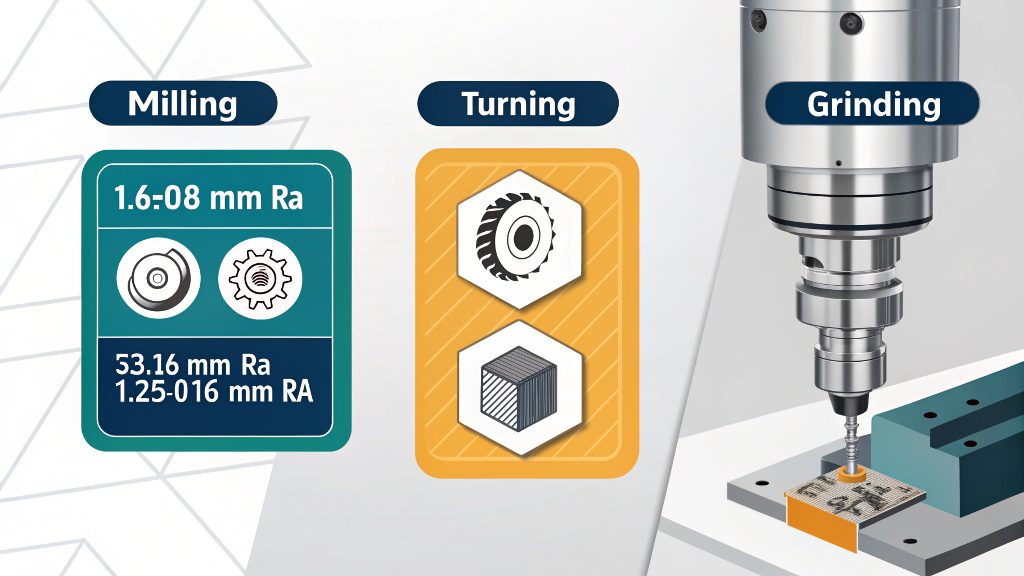
When we talk about surface finish, we are discussing the microscopic texture of a part. Think of it as the fingerprint left by the machine. This texture is critical because it impacts how a part wears, how it interacts with other components, and even its resistance to corrosion. At Worthy, our standard "as-machined" finish is typically 125 Ra or better. However, different machining processes naturally produce different finishes.
Based on my experience, here are some typical values you can expect:
- Milling: The general surface finish is around 6.3-1.6 μM Ra. This is a very common and cost-effective finish.
- Turning: CNC turning on a lathe often produces a finer finish, typically between 1.6-0.8 μM Ra. The continuous cutting action creates a smoother surface.
- Grinding: For applications needing very smooth surfaces, grinding is used. It can achieve an excellent finish, generally from 1.25 down to 0.16 μM Ra.
Understanding these numbers helps you specify exactly what you need for your part's function.
What are the types of surface finishes?
Choosing a finish can feel overwhelming with so many options available. Having too many choices can lead to delays or picking a finish that isn't quite right. Let's simplify the most common types.
There are two main categories of surface finishes. The first is the "as-machined" finish left by the cutting process itself. The second category includes post-processing treatments like bead blasting, polishing, anodizing (for aluminum), and powder coating to further alter the surface properties and appearance.
Let's dive deeper into these types. The "as-machined" finish is the most basic and cost-effective. It has visible tool marks and is perfect for parts where function matters more than looks. If you need something more, we move to post-processing.
Here is a breakdown of common post-processing finishes we offer:
| Finish Type | Description | Best For |
|---|---|---|
| Bead Blasting | Creates a uniform, matte, or satin surface by impacting it with fine glass beads. | Hiding tool marks, reducing glare, creating a textured grip. |
| Anodizing | An electrochemical process that adds a durable, corrosion-resistant oxide layer. | Aluminum parts needing protection and color. |
| Powder Coating | A dry powder is applied and cured under heat to form a hard, protective layer. | Parts needing high impact resistance and a wide color choice. |
| Polishing | A process of rubbing the surface to achieve a smooth, shiny, mirror-like finish. | Aesthetic parts, reducing friction, improving cleanability. |
Each of these finishes changes the part's look, feel, and performance characteristics.
What is the surface finish process of machining?
Are you wondering how we actually control the finish during machining? The process can seem like a black box, making it hard to communicate your needs. Let's open it up and see how it works.
The surface finish process in machining is controlled by several key factors. These include the cutting speed, feed rate, depth of cut, and the type and condition of the cutting tool. By carefully adjusting these parameters, machinists can directly influence the final surface texture.
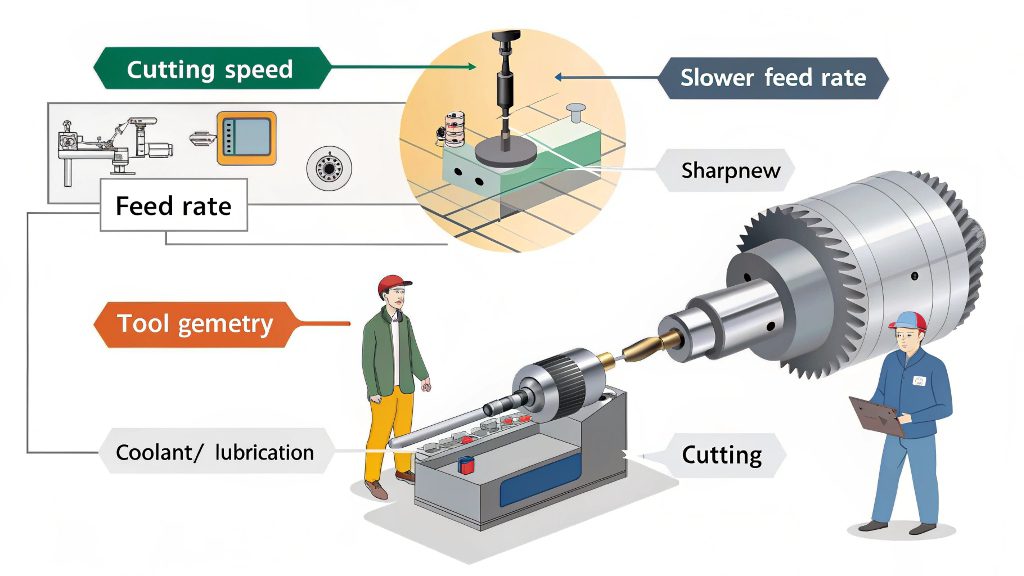
Achieving a specific surface finish is a science. Our engineers and machinists are constantly making adjustments to get it just right. For example, a slower feed rate and a sharp, new cutting tool will generally produce a much smoother finish. Conversely, a faster feed rate with an older tool will create a rougher surface but will be much quicker and more cost-effective. This is a trade-off we often discuss with clients like Mark from Canada, who value both quality and competitive pricing.
Here’s how different factors play a role:
- Cutting Speed: The speed at which the workpiece rotates or the tool moves.
- Feed Rate: How fast the tool advances along the workpiece.
- Tool Geometry: The shape and sharpness of the cutting tool's edge have a huge impact. A tool with a larger nose radius leaves a smoother finish.
- Coolant/Lubrication: Using the right fluid helps reduce friction and heat, which prevents material from sticking to the tool and marring the surface.
We combine these elements to deliver the precise Ra value your drawing specifies.
What type of material can be machined using CNC?
Do you feel limited by material choices for your projects? Thinking that only certain metals can be machined is a common mistake. Let's explore the wide range of possibilities available to you.
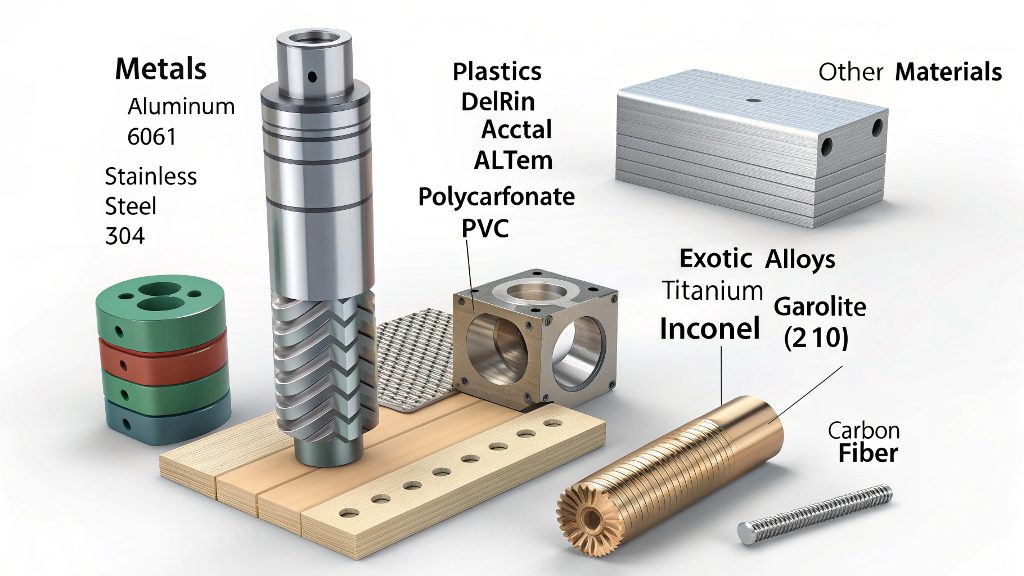
Virtually any material that is rigid enough can be machined using CNC. This includes a vast selection of metals like aluminum, steel, brass, and titanium. It also includes various plastics like ABS, PEEK, and Nylon, and even wood and carbon fiber composites.
![]()![]()
At Worthy, we pride ourselves on our material versatility. We handle over 100 different materials because we know every project has unique requirements for strength, weight, conductivity, or chemical resistance. The material you choose will also influence the achievable surface finish. For example, softer metals like aluminum are easier to machine to a very smooth finish compared to harder materials like tool steel.
Here’s a look at some of the material families we work with:
- Metals: We machine everything from common Aluminum 6061 and Stainless Steel 304 to more exotic alloys like Titanium and Inconel.
- Plastics: Our capabilities cover a wide spectrum, including engineering plastics like Delrin (Acetal) and ULTEM, as well as common ones like Polycarbonate and PVC.
- Other Materials: We also have experience with composites such as Garolite (G-10) and Carbon Fiber, and even different types of wood for specific applications.
No matter your material needs, from prototype to mass production, we have the expertise to machine it to your exact specifications.
Conclusion
Choosing the right CNC surface finish is key to your part's success. By understanding the processes, types, and materials, you can make an informed decision for quality and performance.