
What Materials Can Fiber Lasers Cut That CO2 Lasers Cannot?
Choosing the wrong laser for your project can be a costly mistake. It wastes time, ruins expensive materials, and hurts your bottom line. Let's make sure that never happens.
Fiber lasers excel at cutting reflective metals like brass, copper, and aluminum, materials that pose a significant risk to CO2 lasers. The CO2 laser's wavelength is easily reflected by these metals, which can damage the machine. Fiber lasers absorb much better, making the cut cleaner and safer.
I've seen many projects come to us at Worthy Hardware after a different shop failed to cut a material properly. The problem is almost always a mismatch between the material and the machine. It’s a simple but critical detail that separates a successful project from a failure. Understanding this difference is the first step. Let's dive deeper into what makes each laser unique and which materials you should absolutely avoid with a CO2 laser.
What materials are never ever safe to cut in a CO2 laser?
Using a CO2 laser on the wrong material is more than just a mistake; it's a danger. It can release toxic fumes or even start a fire, risking your health and your equipment.
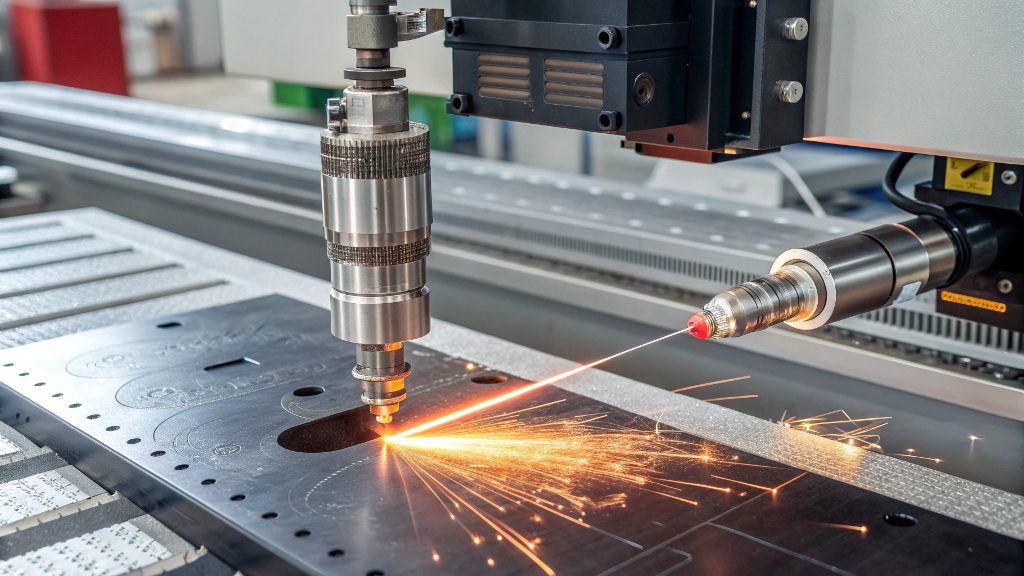
You should never cut materials containing chlorine, like PVC, in a CO2 laser because they release toxic chlorine gas. Also avoid highly reflective metals like untreated copper and brass, as the reflected beam can permanently damage the laser's optics. Polycarbonate is another material to avoid completely.
 "Materials Unsafe for CO2 Laser Cutting")
Let's break down exactly why these materials are on the "do not cut" list for CO2 lasers. The core issue is chemistry and physics. When a CO2 laser beam hits a material containing chlorine, like PVC or vinyl, the heat causes a chemical reaction that releases hydrochloric acid gas. This gas is not only extremely toxic to breathe but is also highly corrosive. I’ve heard horror stories of it destroying the internal components of a laser cutter in a single run.
Reflective metals are a different kind of problem. A CO2 laser operates at a wavelength that shiny surfaces like copper and brass reflect very well. Think of it like shining a flashlight into a mirror. The beam doesn't cut; it bounces right back into the machine's optics, causing catastrophic and expensive damage. It’s a risk we never take.
Here is a simple table to help you remember.
| Material | Why it's Unsafe for CO2 Laser | What Happens |
|---|---|---|
| PVC (Vinyl) | Contains Chlorine | Releases toxic, corrosive gas |
| ABS Plastic | Releases Cyanide | Melts badly, toxic fumes |
| Polycarbonate | Absorbs IR light | Catches fire, discolors badly |
| Reflective Metals | High Reflectivity | Beam reflects, damages machine |
What materials can fiber lasers cut?
You need to cut a variety of metals for your product, but you're not sure which process gives the best results. Picking the wrong one leads to rough edges and wasted money.
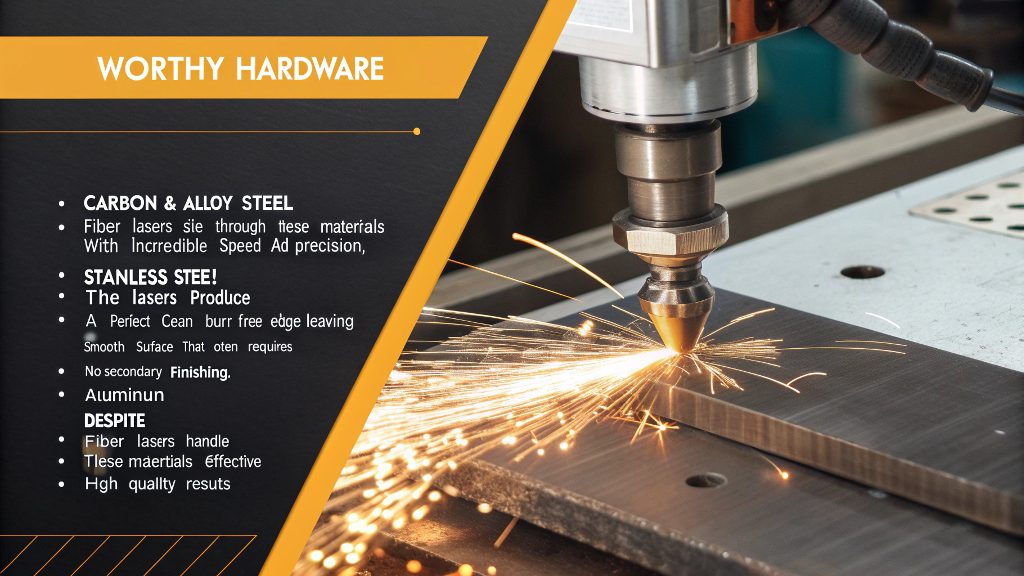
Fiber lasers are true metal-cutting specialists. They efficiently cut a huge range of metals, including carbon steel, stainless steel, aluminum, brass, copper, and even titanium. Their focused beam and high power make them perfect for both thick and thin sheet metal fabrication projects.
At my company, Worthy Hardware, fiber lasers are the workhorses of our operation. Their versatility with metals is unmatched. The magic is in their wavelength, which is about ten times shorter than a CO2 laser's. This shorter wavelength is absorbed much more efficiently by metallic materials, which means less power is wasted and the cutting process is faster and cleaner. This is especially true for those reflective metals I mentioned earlier.
Let's look at the specific metals we cut every day:
- Carbon & Alloy Steel: Fiber lasers slice through these with incredible speed and precision. This is one of the most common applications.
- Stainless Steel: We get a perfect, clean, burr-free edge every time. The cut surface is smooth and often doesn't need any secondary finishing.
- Aluminum: Aluminum is reflective and can be tricky, but fiber lasers handle it with ease, producing sharp, clean results.
- Brass & Copper: These were once very difficult to laser cut. Now, with modern fiber laser technology, we can cut them reliably, opening up new design possibilities for our customers in electronics and decorative applications.
This ability to handle such a broad metal catalog is why we invested heavily in our fiber laser capabilities. It allows us to serve clients from a wide range of industries, from aerospace to robotics.
Which is better fiber laser or CO2 laser cutting?
You have a design, but you're stuck on the manufacturing process. Choosing between a fiber laser and a CO2 laser feels confusing, and a wrong choice could affect your product's quality and cost.
Neither is "better" overall; they are simply better for different jobs. For cutting metals, especially reflective ones, the fiber laser is the clear winner due to its speed and efficiency. For organic materials like wood, acrylic, and leather, the CO2 laser is superior.
I often explain it to my clients like this: you wouldn't use a hammer to turn a screw. Both are great tools, but they have specific purposes. The key difference is the wavelength of the laser beam. The fiber laser's short wavelength is better absorbed by metals, making it faster and more energy-efficient for metal cutting. This translates to lower operating costs and faster lead times for our customers. For instance, on thin gauge stainless steel, a fiber laser can be two to three times faster than a CO2 laser of the same power.
On the other hand, the long wavelength of a CO2 laser is perfectly absorbed by non-metallic, organic materials. It produces a beautifully smooth, flame-polished edge on acrylic that a fiber laser just can't replicate. Since my business, Worthy Hardware, focuses exclusively on sheet metal fabrication, the choice for us was easy. We rely on fiber lasers to deliver the quality and speed our customers, like Mark from Canada, expect for their metal parts.
| Feature | Fiber Laser | CO2 Laser |
|---|---|---|
| Best For | Metals | Organic Materials (wood, plastic) |
| Speed (on metal) | Very Fast | Slower |
| Energy Efficiency | High | Low |
| Reflective Metals | Excellent | Poor/Dangerous |
| Maintenance | Low | High |
What are the disadvantages of fiber laser cutting?
You know fiber lasers are great for metal, but you're wondering about the catch. Every technology has its limits, and knowing them helps you make a fully informed decision for your project.
The main disadvantages of fiber laser cutting are a higher initial investment cost and limitations with non-metallic materials. It cannot cut wood, clear acrylic, or plastics effectively. Its beam is so precise that it can sometimes struggle with very thick metals compared to high-power CO2 lasers.
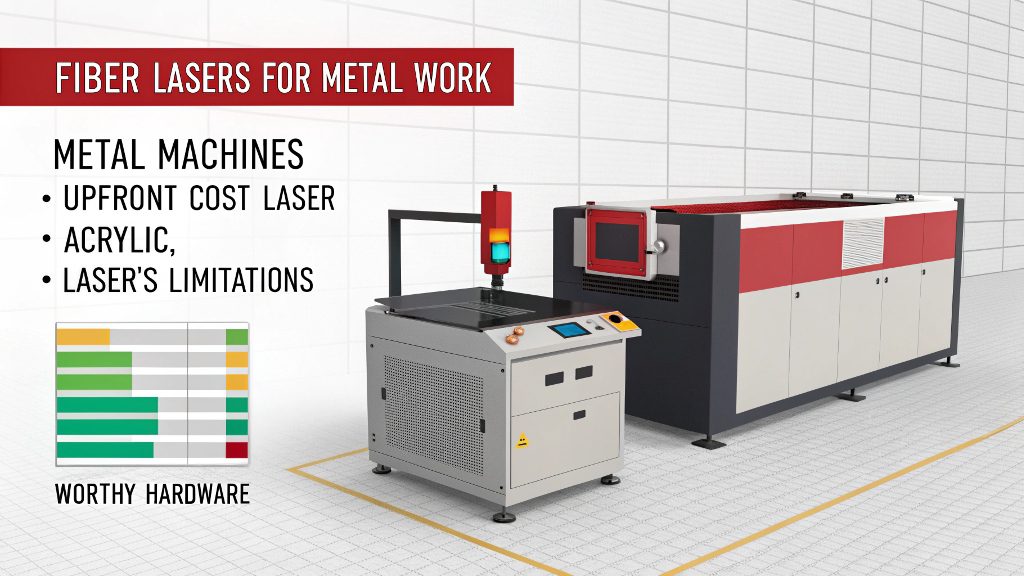
While we love our fiber lasers for metalwork, I am always honest with clients about their limitations. The upfront cost for a high-quality fiber laser system is significant. This investment is reflected in the price of parts, although the machine's high speed and efficiency help offset this over time. The biggest practical disadvantage for a project is its inability to process most non-metals. The laser's wavelength passes right through clear materials like acrylic, and it tends to burn or melt rather than cut other plastics and woods cleanly.
So, if your project involves a mix of metal and, say, thick acrylic parts, you would need two different types of machines. At Worthy Hardware, we decided to specialize and become experts in metal. This focus means that for sheet metal projects up to our stated thicknesses, the fiber laser has no real disadvantages for our customers. We provide the speed, precision, and quality they need without the drawbacks they might face at a general-purpose shop.
Conclusion
Fiber lasers excel at cutting reflective metals that CO2 lasers cannot. For metal fabrication, fiber is superior; for organic materials, CO2 is the right choice for the job.