
What Makes Titanium So Special And How Is It Used In Manufacturing?
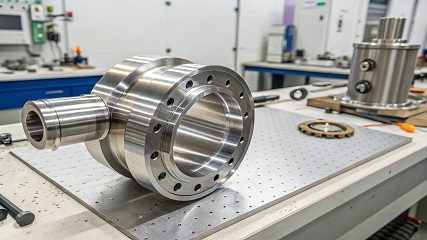
Struggling to find a material that's both strong and light? It feels impossible to get both. But titanium offers a unique combination of properties for demanding applications.
Titanium's specialty comes from its high strength-to-weight ratio, excellent corrosion resistance, and biocompatibility. This unique blend makes it much stronger than aluminum and nearly as strong as steel, but at about half the weight of steel, making it perfect for high-performance manufacturing applications.
When clients like Mark Chen from Canada ask me about materials, titanium always comes up. He needs parts that are top quality but also competitively priced. Understanding titanium helps him make smart decisions. It’s not just some exotic metal; it's a practical solution for very specific problems. Let’s look at why it’s so valued and how we at Worthy Hardware turn it into precision parts for our customers around the world. This information will help you see if it's the right choice for your next project.
What makes titanium so special?
Finding a material that is light but won't break under stress is a constant challenge. This search often leads to compromises. Titanium solves this problem without any compromise.
Titanium is special because it combines high strength with low density. It's also highly resistant to corrosion and is biocompatible, meaning it doesn't harm living tissue. This combination of features is not found in other common metals like steel or aluminum.
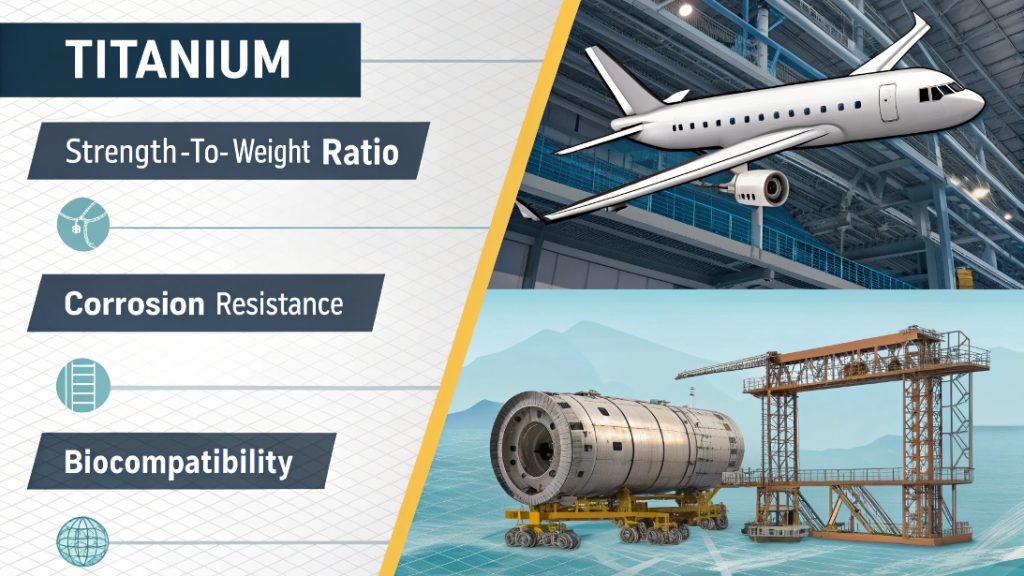
I often explain to my customers that titanium’s value comes from a few key areas. It's not just one thing, but how all its properties work together.
Strength-to-Weight Ratio
The most famous feature is its incredible strength-to-weight ratio. It’s as strong as some steels but 45% lighter. This is why the aerospace industry loves it. When we machine aerospace parts, we know that every gram we can save without losing strength means better fuel efficiency and performance. It’s a game-changer.
Corrosion Resistance
Titanium is extremely resistant to rust and corrosion from things like saltwater, acids, and other chemicals. I had a client in Australia who needed parts for marine equipment. Stainless steel wasn't holding up, but titanium parts worked perfectly and lasted for years without any issues.
Biocompatibility
This is a big one. The human body does not reject titanium. This makes it the top choice for medical implants like hip replacements, dental implants, and bone screws. It’s amazing to think that parts we manufacture here in China help people live better lives globally.
Workability
Finally, it’s a versatile material for manufacturing. At Worthy Hardware, we can cast, forge, weld, and CNC machine it. It’s also excellent for 3D printing. This flexibility allows us to create very complex custom parts for our clients.
How is titanium used in manufacturing?
You know titanium is a superior material, but how do you actually make things with it? Its toughness can seem intimidating. But modern manufacturing has several effective methods.
In manufacturing, titanium is shaped using processes like CNC machining, forging, casting, and 3D printing (additive manufacturing). These methods turn raw titanium bars, sheets, or powders into precise components for industries like aerospace, medical, and high-performance automotive.
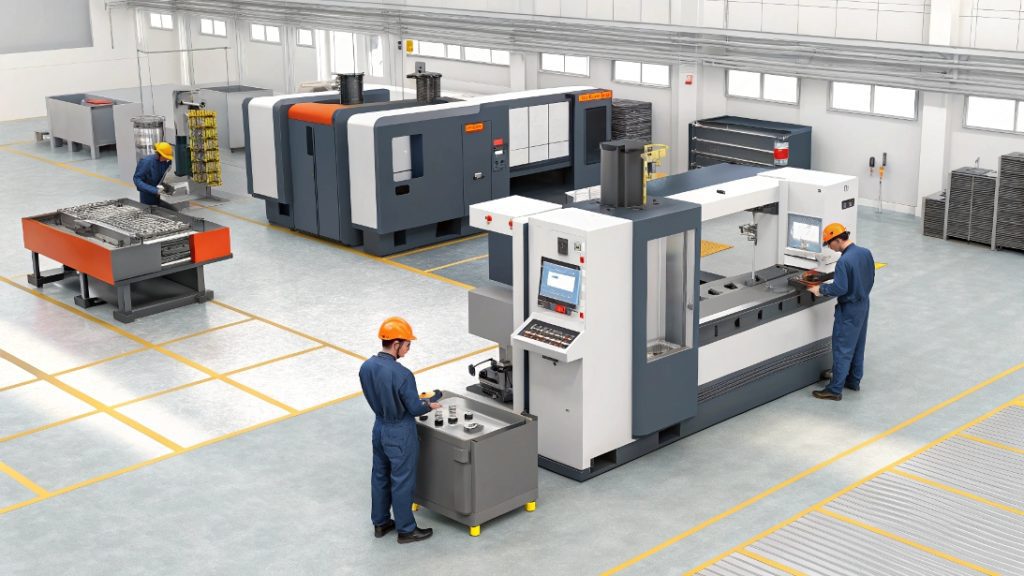
At my company, Worthy Hardware, we handle titanium every day. While it is tougher to work with than aluminum, we have the experience and the right tools for the job. CNC machining is our most common method. We use special cutting tools and coolants because titanium can generate a lot of heat. Our engineers are very experienced in programming the machines to cut titanium efficiently while holding tight tolerances, sometimes even below +/- 0.001 inches.
We also work with partners for other processes.
-
Forging: This involves shaping titanium with powerful hammers or presses. It aligns the metal's grain structure, making the final part incredibly strong. This is common for critical aircraft parts.
-
Casting: This is where molten titanium is poured into a mold. It's great for creating complex shapes that would be difficult or too expensive to machine from a solid block.
-
3D Printing (Additive Manufacturing): This is a newer, exciting field. We can use titanium powder to build parts layer by layer. It allows for designs that are impossible with traditional methods and reduces material waste, which is a big cost saver with an expensive material like titanium.
What is the Speciality of titanium metal?
With so many metals available, it's hard to know which one is best. Steel is strong, aluminum is light. So where does titanium fit in? Its specialty is simply being the best of both.
The specialty of titanium is its unique combination of properties. It offers the strength of steel at almost half the weight. It also has corrosion resistance that is far better than aluminum and stainless steel, making it a unique solution for extreme environments.
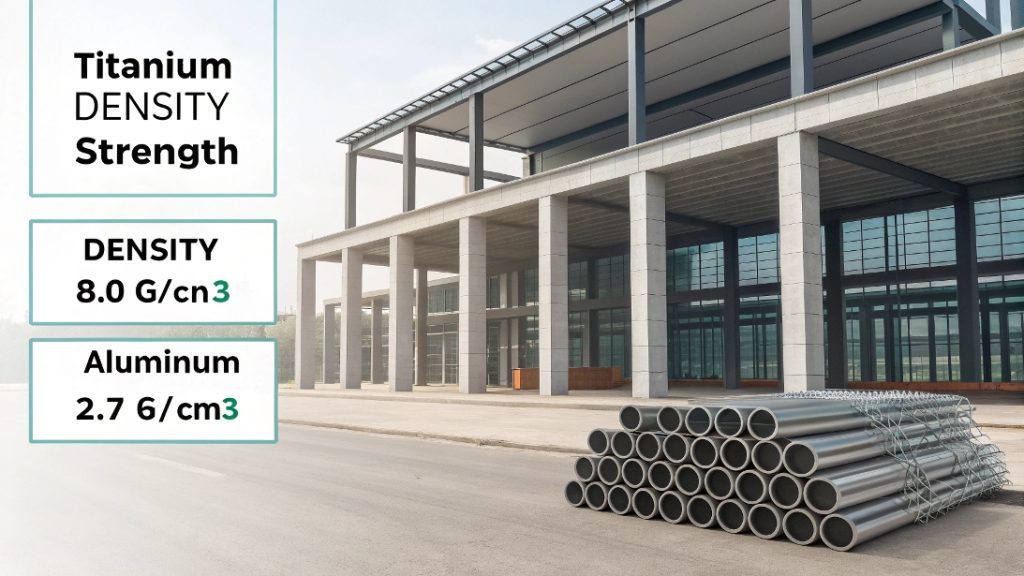
When a customer asks me why they should choose titanium over steel or aluminum, I often show them a simple comparison. It makes the choice very clear. Titanium isn't always the right answer because of its cost, but when performance is the most important factor, it's often the only answer. The specialty is not just one property, but the complete package. You get strength, low weight, and corrosion resistance all in one material. No other commercially available metal offers that.
Here is a simple table I use to explain it:
| Property | Titanium (Ti) | Steel (e.g., 304 Stainless) | Aluminum (e.g., 6061) |
|---|---|---|---|
| Density (g/cm³) | ~4.5 | ~8.0 | ~2.7 |
| Strength | High (similar to many steels) | Very High | Medium |
| Corrosion Resistance | Excellent (especially to saltwater/chlorides) | Good | Good (but can corrode) |
| Biocompatibility | Excellent | Poor | Poor |
| Cost | High | Low | Low |
As you can see, aluminum is light but not as strong. Steel is strong but very heavy. Titanium gives you the best of both worlds, plus other benefits.
What are 5 things titanium is used for?
You know titanium is a super-material, but where do you actually find it? Its use is more common than you think. It is in critical applications all around you.
Five common uses for titanium are: 1. Aerospace parts like jet engine components and airframes. 2. Medical implants like hip joints and dental fixtures. 3. High-performance sporting goods. 4. Consumer electronics frames. 5. Industrial equipment exposed to corrosive chemicals.
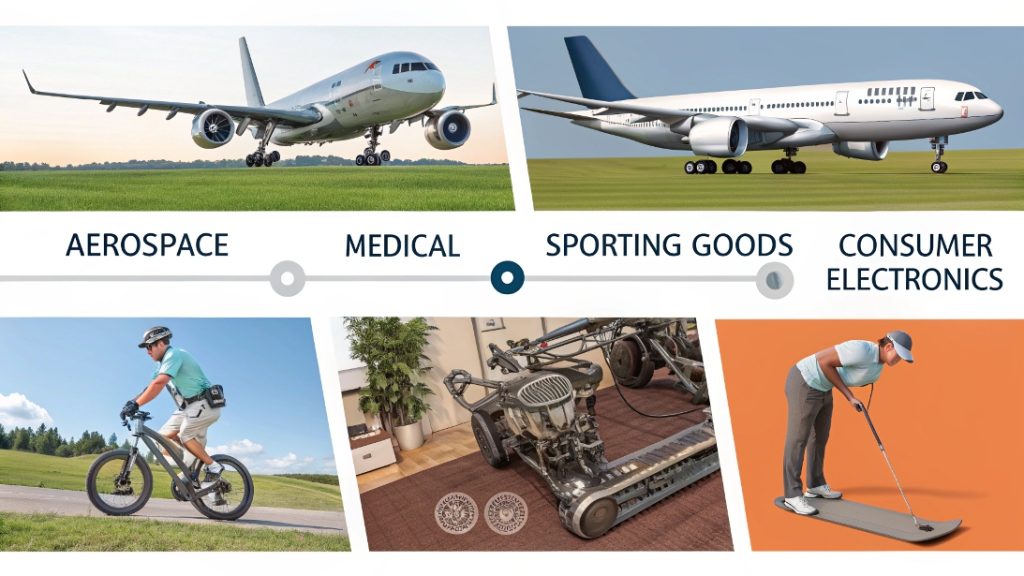
I've seen titanium used in so many interesting projects over the years. Its unique properties make it the perfect choice for specific jobs where other materials would fail. Here are five major areas where we see it all the time.
-
Aerospace: This is the biggest market. We make parts for landing gear, engine components, and the aircraft's frame. Here, the strength-to-weight ratio is everything. Less weight means more cargo or less fuel, which saves money and is better for the environment.
-
Medical: Because the body doesn't reject it, titanium is the standard for implants. We have machined parts for artificial hips, knee joints, bone plates, and dental implants. The parts we make help people walk again without pain.
-
Sporting Goods: High-end athletes need every advantage. Titanium is used in premium golf club heads, bicycle frames, and tennis rackets. It makes them light for speed but strong enough to handle powerful impacts.
-
Consumer Electronics: Premium brands like Apple use titanium in their watch cases and smartphone frames. It provides a strong, durable, and lightweight feel that customers associate with high quality.
-
Industrial Applications: In factories that use strong chemicals, steel pipes and tanks can corrode quickly. We've supplied titanium parts for chemical processing plants and marine equipment because titanium can withstand these harsh environments for a very long time.
Conclusion
In short, titanium's blend of lightness, strength, and resistance makes it a vital material. It is essential for manufacturing the most demanding and high-performance products across many industries.