
What Heat Treatment Methods Work Best For Alloy Steel Parts?
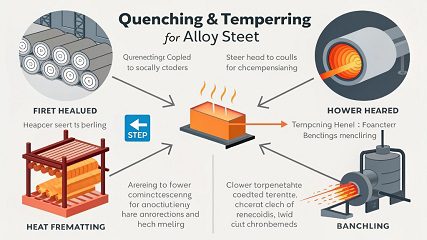
Choosing the wrong heat treatment can ruin your alloy steel parts. This mistake costs time and money, making parts fail under stress. Let's find the right method for your needs.
The most effective method for many alloy steel parts is quenching and tempering. This process first hardens the steel by heating and rapid cooling (quenching). Then, it tempers the part by reheating it to a lower temperature to improve toughness and reduce brittleness. This creates strong, durable parts.
You now know that quenching and tempering is a top choice. But what does that process actually look like, and what other options should you know about? Understanding the details is key to making the best choice for your project. Let's dive deeper and explore the essential heat treatment processes.
What is the heat treatment process for alloy steel?
The term "heat treatment" can sound very technical and complex. If you don't understand the basic steps, you risk making bad decisions for your parts. Let's break it down simply.
The heat treatment process for alloy steel involves three main stages: heating the metal to a specific temperature, holding it there for a period, and then cooling it at a controlled rate. This cycle changes the steel's internal structure to achieve desired mechanical properties like hardness and strength.
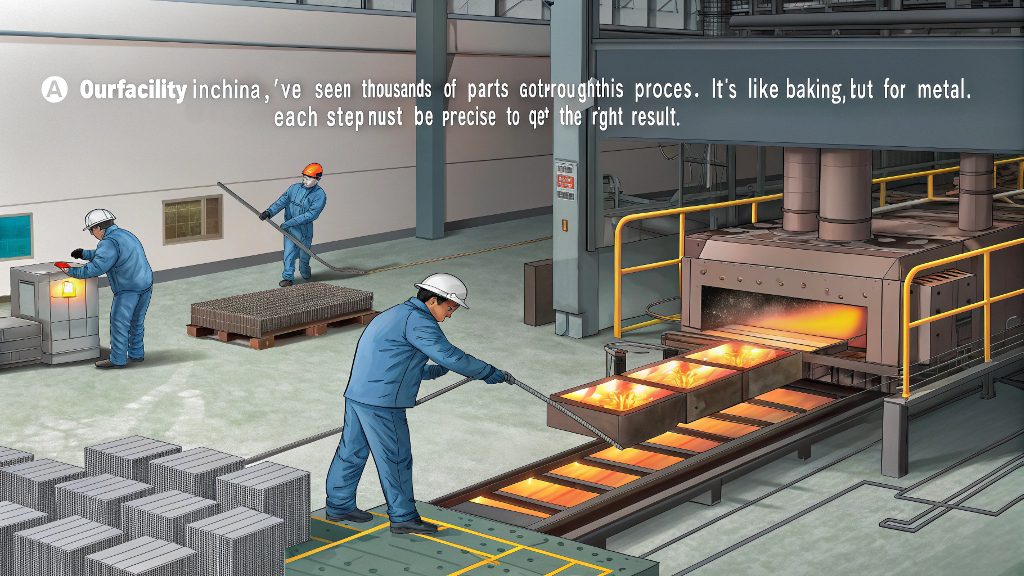
At our facility in China, I've seen thousands of parts go through this process. It's like baking, but for metal. Each step must be precise to get the right result. A client from North America once needed transmission shafts that could handle extreme torque. The success of those parts depended entirely on getting each stage of the heat treatment perfect.
Here’s a simple breakdown of the process:
The Three Core Stages of Heat Treatment
| Stage | Purpose | Why It's Important |
|---|---|---|
| Heating | To raise the steel's temperature above its critical transformation point. | This dissolves carbon and other elements into a new crystal structure called austenite. |
| Soaking | To hold the steel at that high temperature for a set duration. | This ensures the entire part, from surface to core, has a uniform austenite structure. |
| Cooling | To lower the temperature at a specific, controlled rate. | This is the most critical step. The cooling speed determines the final properties of the steel. |
Getting these three steps right is fundamental. It’s how we transform a standard machined part into a high-performance component ready for tough applications in aerospace, automotive, or industrial machinery.
What are the two types of heat treatment for alloys?
You might hear about many different heat treatments and feel overwhelmed. It seems like there are dozens of options, making it hard to know where to begin. Let's simplify things by grouping them.
The two main types of heat treatment are through-hardening and case hardening. Through-hardening treats the entire part to give it uniform properties all the way through. Case hardening, or surface hardening, creates a very hard outer layer while keeping the inside core softer and tougher.
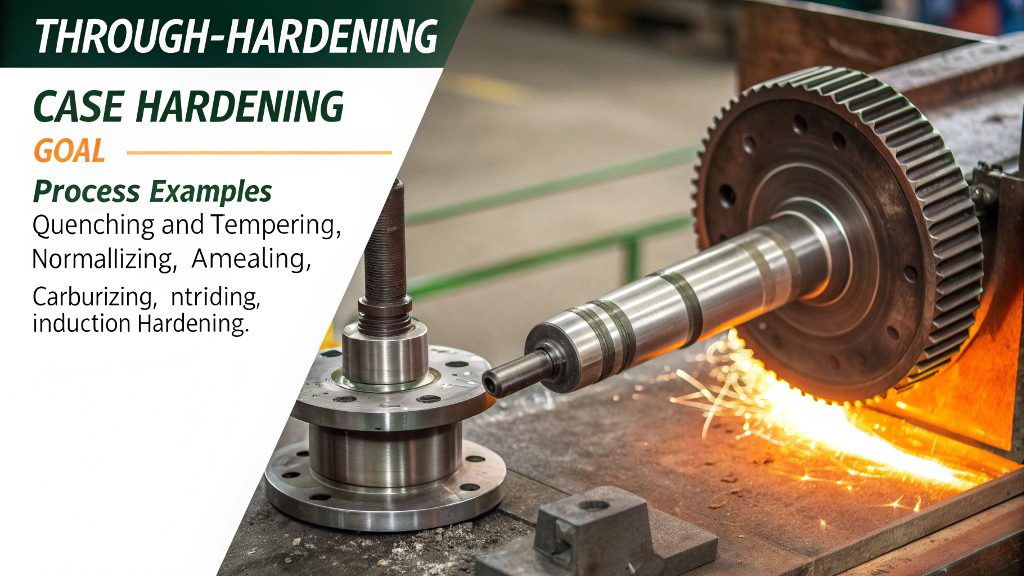
The choice between these two depends entirely on the part's application. For a project with a customer in Japan who needed durable gears, we had to make a careful decision. The gears needed a super wear-resistant surface to mesh with other gears, but they also needed a tough core to absorb shock without cracking. Case hardening was the perfect solution. On the other hand, for a structural component that needs uniform strength, through-hardening is the way to go.
Comparing Hardening Methods
| Feature | Through-Hardening | Case Hardening |
|---|---|---|
| Goal | Achieve uniform hardness throughout the part. | Create a hard surface with a tough, ductile core. |
| Process Examples | Quenching and Tempering, Normalizing, Annealing. | Carburizing, Nitriding, Induction Hardening. |
| Best For | Shafts, bolts, structural parts, springs. | Gears, bearings, camshafts, cutting tools. |
| Key Benefit | Consistent strength and toughness. | Excellent wear resistance and fatigue life. |
Understanding this distinction is the first step in selecting the right treatment. It helps you match the process to the real-world demands your part will face.
Which heat treatment process is used to improve the strength of aluminum alloys?
Alloy steel isn't the only material we work with that needs heat treatment. But you can't use the same methods on different metals. Applying a steel treatment to aluminum would be disastrous.
To improve the strength of aluminum alloys, the main heat treatment process is called precipitation hardening, or age hardening. This involves solution heat treating, quenching, and then aging the part to form tiny, hard particles within the metal's structure, which greatly increases its strength.
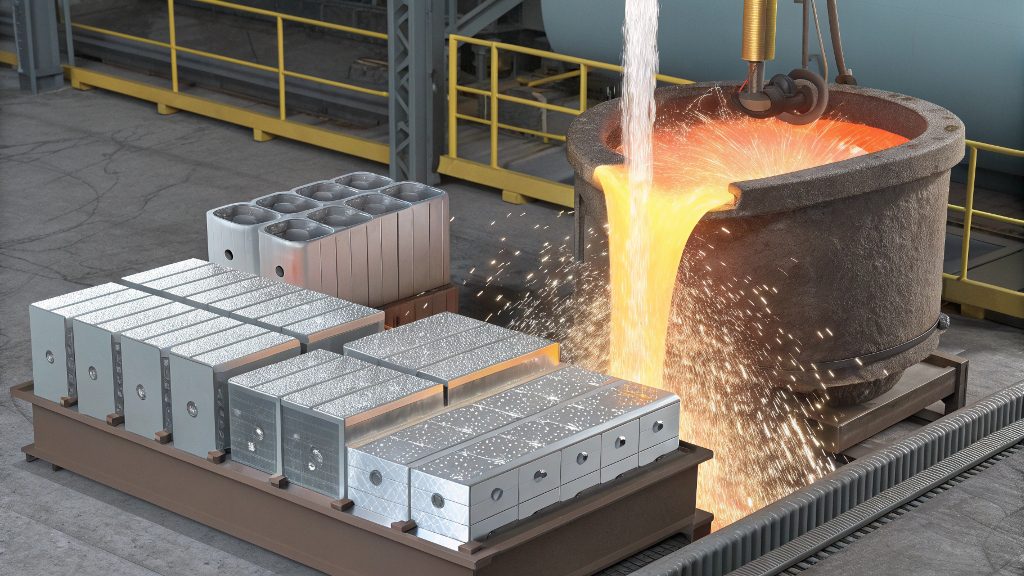
Many of our customers, especially in the aerospace and consumer electronics sectors, rely on high-strength, lightweight aluminum parts. We recently worked on a project for an Australian company making drone components. The parts needed to be as light as possible but strong enough to withstand high-speed maneuvers. Precipitation hardening was the only way to achieve that combination of properties in an aluminum 6061 alloy. The process is precise and transforms a relatively soft material into a high-performance structural component.
The Stages of Precipitation Hardening
- Solution Treatment: The aluminum part is heated to a high temperature (around 500°C) until the alloying elements dissolve completely into a solid solution. Think of it like dissolving sugar in hot water.
- Quenching: The part is then rapidly cooled, usually in water. This "freezes" the dissolved elements in place, creating an unstable, supersaturated state.
- Aging: The part is then held at a lower temperature for an extended period (artificial aging) or left at room temperature (natural aging). During this time, the dissolved elements precipitate out as extremely small, hard particles that strengthen the material.
This process is what gives heat-treatable aluminum grades like 6061-T6 and 7075-T6 their impressive strength-to-weight ratios.
Which rapid cooling method is the most common for alloy steels?
You need to cool your steel part to lock in the hardness. But if you cool it too slowly or too quickly, you could end up with a brittle or soft part. So what's the best way?
The most common rapid cooling method for alloy steels is quenching in a liquid medium. Water, oil, and specialized polymer solutions are the most frequently used liquids. Oil quenching is extremely popular for alloy steels because it provides a slower, less severe cool than water, reducing the risk of cracking.
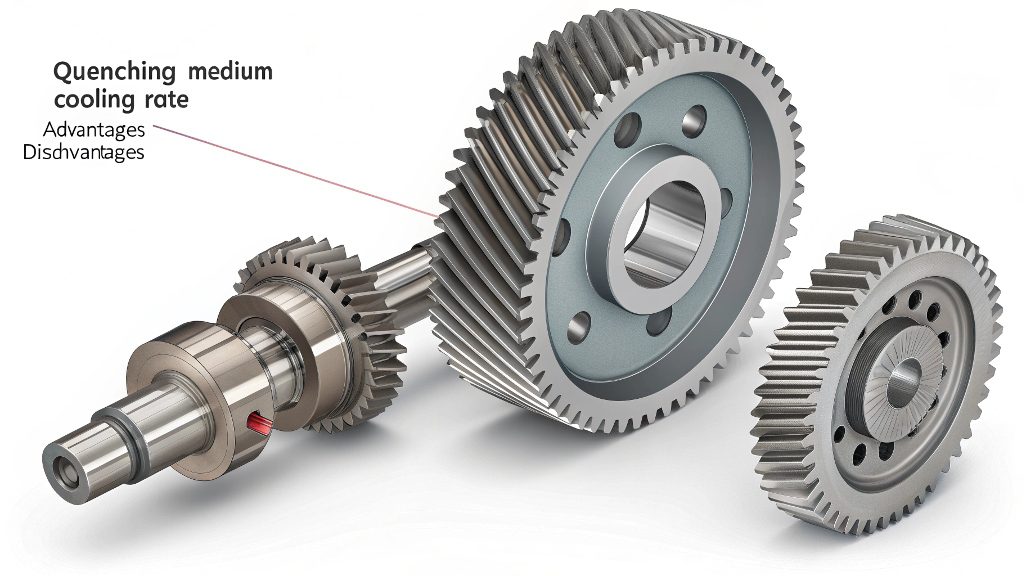
I remember a client's project involving complex gear parts with thin sections right next to thick ones. If we used water, the thin sections would cool too fast and likely crack from the thermal shock. By choosing an engineered quenching oil, we controlled the cooling rate perfectly. It was fast enough to achieve the required hardness but slow enough to prevent distortion and cracking. This decision saved the entire batch of parts.
Common Quenching Mediums
| Quenching Medium | Cooling Rate | Advantages | Disadvantages |
|---|---|---|---|
| Water | Very Fast | Inexpensive, excellent for simple shapes, creates high hardness. | Can cause distortion and cracking in complex parts. |
| Brine (Salt Water) | Extremely Fast | Even faster than water, achieves maximum hardness. | Highly corrosive, high risk of distortion. |
| Oil | Medium | Less severe quench, minimizes cracking risk, good for alloys. | Flammable, messier, slower than water. |
| Polymers | Adjustable | Cooling rate can be adjusted by changing concentration. | More expensive, requires careful control. |
| Air | Slow | Used for high-alloy tool steels, minimal distortion. | Only suitable for certain types of steel (air-hardening). |
For most of our B2B clients in Europe and America who need reliable, high-strength alloy steel parts, oil quenching followed by tempering is our go-to recommendation. It provides a fantastic balance of performance, reliability, and cost-effectiveness.
Conclusion
Choosing the right heat treatment, like quenching and tempering for alloy steel, is crucial. It ensures your parts have the exact strength, hardness, and toughness needed for their specific job.