
What Are The Machining Challenges With Different Aluminum Grades?
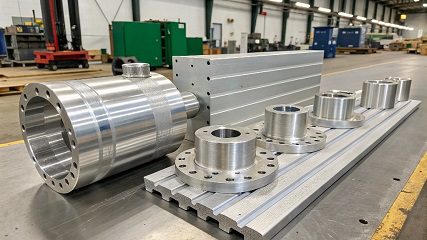
Struggling with warped aluminum parts after machining? This common frustration increases costs and delays projects. Let's look at why different aluminum grades[^1] behave the way they do.
The main challenges with different aluminum grades are their varying hardness, thermal conductivity, and tendency to deform. Softer grades can be gummy and build up on tools, while harder alloys can cause more tool wear. Each grade needs a specific machining strategy.
In my years of running a CNC shop, I've seen it all. The most common problem we face, especially with aluminum, is deformation. I remember a client, Mark from Canada, who was frustrated because his previous supplier produced parts that warped right after machining. He thought it was just bad quality. I explained that the internal stress of the material and the chosen grade were the real culprits. It's a challenge we solve every day by understanding the material first. Let's break down the common questions I get about aluminum grades.
What grade of aluminium is best for machining?
Need the most machinable aluminum for your project? Picking the wrong one can slow down production and wear out your tools. Let's find the best option for you.
For pure machinability, the 2000 and 7000 series alloys are top choices. Grades like 2011 and 7075 are known as "free-machining" alloys. They produce small, manageable chips, which helps achieve excellent surface finishes and allows for very high cutting speeds.
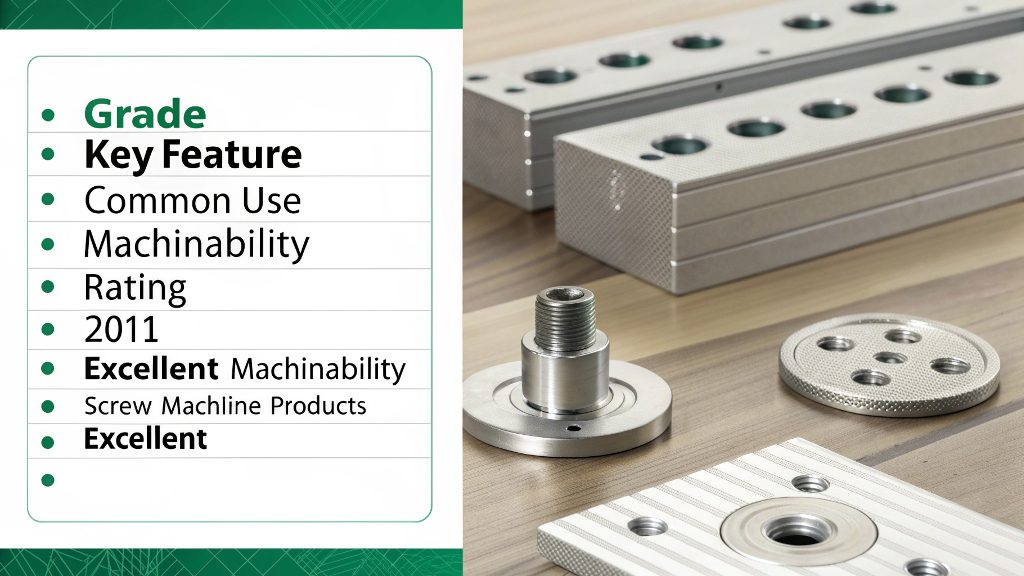
When we talk about the "best" grade, it's a balance between how easy it is to cut and the final properties you need. While 2011 is fantastic for machining, it has poor corrosion resistance. On the other hand, 7075 offers incredible strength, making it a favorite for aerospace parts, but it's more expensive.
Comparing Top Machinable Grades
| Grade | Key Feature | Common Use | Machinability Rating |
|---|---|---|---|
| 2011 | Excellent machinability | Screw machine products | Excellent |
| 7075 | High strength-to-weight | Aerospace frames | Very Good |
| 6061 | Great versatility | Structural components | Good |
| 2024 | Good strength & fatigue resistance | Aircraft structures | Good |
We often recommend 6061 as a starting point for many projects because it offers a great compromise. It machines well, has good corrosion resistance, and is cost-effective. But if speed and finish are your only concerns, 2011 is hard to beat.
Is 6061 aluminum good for machining?
Thinking about using 6061 aluminum for your next part? You're wondering if it will machine easily without causing problems. Let’s see how it holds up.
Yes, 6061 aluminum is considered very good for machining. It is one of the most popular and versatile aluminum alloys for a reason. It provides a great balance of strength, corrosion resistance, weldability, and most importantly, good machinability, making it a go-to choice for many applications.
From my experience, 6061 is a reliable workhorse. When a customer doesn't have a specific material requirement but needs good all-around performance, I often suggest 6061-T6. The "T6" temper means it has been solution heat-treated and artificially aged, which significantly improves its strength and makes it even better for machining. The main challenge with 6061 is managing heat. It can get sticky if the speeds and feeds are not right, leading to material buildup on the cutting tool. We avoid this by using sharp tools, proper coolant, and optimized cutting parameters. This ensures we get a clean surface finish and hold tight tolerances, something we promise on every part we make at Worthy Hardware. It’s predictable and cost-effective, which is why clients like Mark appreciate it.
What is easier to machine, 316 stainless or 6061 aluminum?
Choosing between 316 stainless steel and 6061 aluminum? The material choice will greatly impact machining time and cost. Let's compare their machinability directly.
6061 aluminum is significantly easier and faster to machine than 316 stainless steel. Aluminum is softer, dissipates heat better, and requires less cutting force. This means we can use much higher cutting speeds and feeds, resulting in shorter cycle times and lower costs.
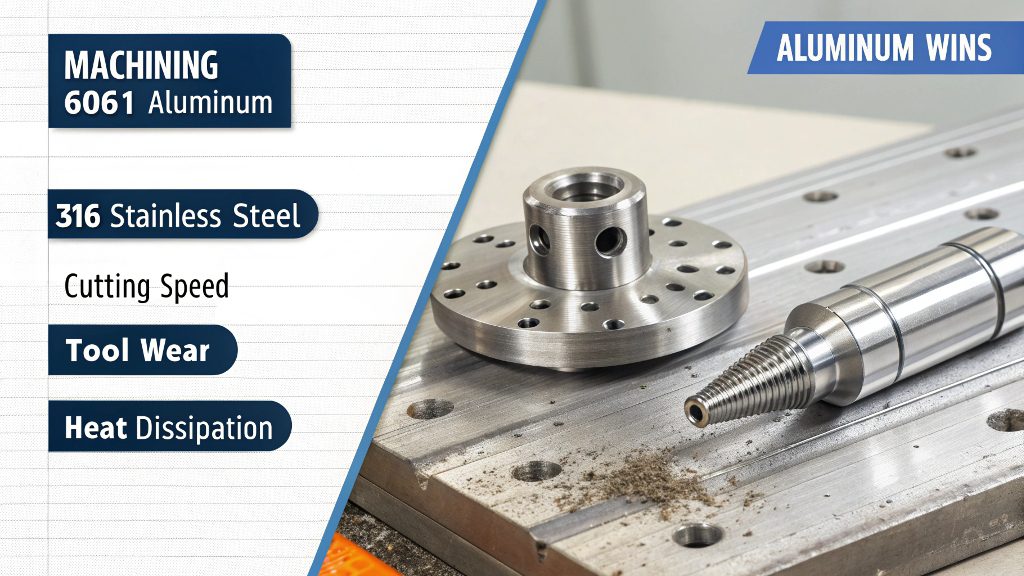
The difference is night and day in our shop. When we machine 316 stainless steel, we have to be much more careful. It’s tough, gummy, and work-hardens quickly. This means we must use slower speeds, specialized tooling, and high-pressure coolant to manage the heat and prevent tool breakage. Tool life is much shorter with stainless steel. In contrast, 6061 aluminum is very forgiving. We can cut it about four to five times faster than 316 stainless steel. For procurement managers watching the bottom line, this difference is huge. The longer machining time and increased tool wear for stainless steel make it a more expensive material to work with, even if the raw material costs were similar.
Machinability Head-to-Head
| Factor | 6061 Aluminum | 316 Stainless Steel | Winner |
|---|---|---|---|
| Cutting Speed | Very High | Low to Medium | Aluminum |
| Tool Wear | Low | High | Aluminum |
| Heat Dissipation | Excellent | Poor | Aluminum |
| Cost to Machine | Low | High | Aluminum |
What are the different grades of aluminum?
Confused by all the numbers like 6061, 7075, or 5052? Understanding these grades is key to getting the right performance from your parts. Let’s simplify it.
Aluminum grades are categorized into series, primarily based on their main alloying elements. Each series has distinct properties. For example, the 6000 series uses magnesium and silicon, offering good formability and corrosion resistance, while the 7000 series uses zinc for very high strength.
Think of it like a menu. You wouldn't order the same dish for every occasion. It's the same with aluminum. At Worthy Hardware, we machine over 100 materials, and aluminum is one of the most common. We frequently help customers choose the right grade. For example, if a part needs to be bent or formed and will be used near saltwater, we'd suggest the 5000 series, like 5052. If it’s a high-stress aerospace component, we'd recommend 7075. Understanding these differences is crucial because the wrong choice can lead to part failure. We make sure to discuss the application with our clients to ensure the material fits the design perfectly, not just the drawing.
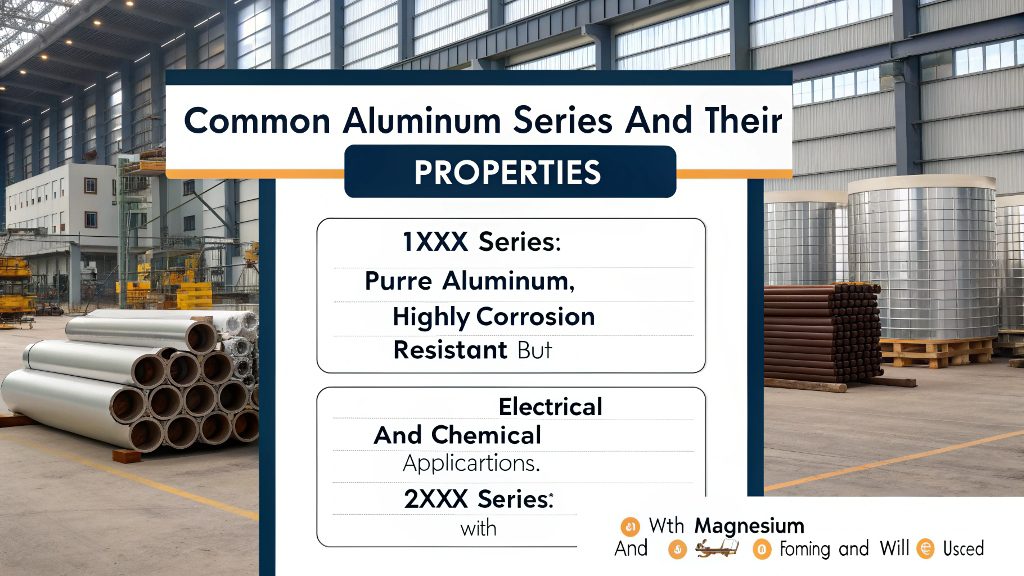
Common Aluminum Series and Their Properties
- 1xxx Series: Pure aluminum. Highly corrosion-resistant but soft. Used for electrical and chemical applications.
- 2xxx Series: Alloyed with copper. High strength but lower corrosion resistance. Common in aerospace.
- 5xxx Series: Alloyed with magnesium. Excellent corrosion resistance, especially in marine environments. Good for forming.
- 6xxx Series: Alloyed with magnesium and silicon. Most common general-purpose alloy (like 6061). Good strength, corrosion resistance, and machinability.
- 7xxx Series: Alloyed with zinc. The highest strength aluminum alloys. Used for high-stress applications like aircraft frames.
Conclusion
Choosing the right aluminum grade is vital for your project's success. Understanding each grade's unique challenges ensures better parts, lower costs, and fewer production headaches every time.