
What Are The Chemical Resistance Properties Of Custom CNC Machined Silicone Parts?
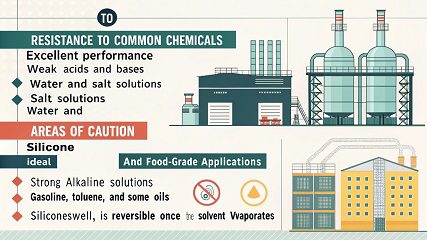
Need parts that resist harsh chemicals? The wrong choice leads to failure and costly delays. Custom CNC machined silicone offers the robust chemical resistance your project demands.
Custom CNC machined silicone parts have excellent chemical resistance. They stand up well against many acids, bases, solvents, and oxidation. This makes them ideal for tough jobs in medical, food, and industrial fields where reliability is critical.
You now know that silicone is a great choice for chemical resistance. But what makes it so special? Let's look closer at its specific properties and how it compares to other materials in the CNC machining process. Understanding these details will help you make the best choice for your project.
What are the chemical properties of silicone?
Unsure which specific chemicals silicone can handle? Making the wrong choice can ruin your project. Understanding silicone's core chemical properties gives you confidence in your design's durability.
Silicone is highly inert and stable. It shows excellent resistance to water, ozone, UV radiation, and many acids and bases. However, it can be affected by concentrated acids, certain solvents like gasoline, and strong alkaline solutions. Its performance is very reliable in many applications.
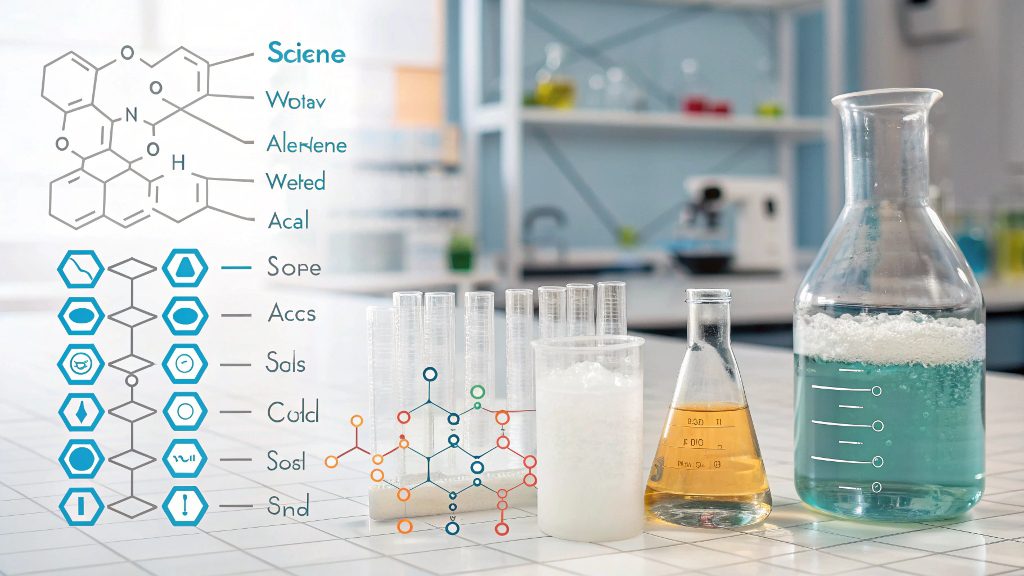
Silicone's chemical backbone gives it impressive stability. This makes it a go-to material for us at Worthy Hardware when a customer like Mark from Canada needs a reliable part for a tough environment. Let's break down its key resistances.
Resistance to Common Chemicals
Silicone stands up very well against many common chemicals. It performs excellently with weak acids and bases, making it suitable for many industrial and food-grade applications. It's also great against water and salt solutions.
Areas of Caution
However, you must be careful with some substances. Concentrated sulfuric acid or strong alkaline solutions can damage silicone over time. Certain organic solvents, like gasoline, toluene, and some oils, can cause silicone to swell. This swelling is often reversible once the solvent evaporates, but it's a key design consideration. We always ask our customers about the specific operational environment to ensure silicone is the right choice.
Here is a simple guide:
| Chemical Type | Silicone's Resistance Level | Common Examples |
|---|---|---|
| Water & Steam | Excellent | Hot water, moisture |
| Weak Acids/Bases | Good to Excellent | Vinegar, soap solutions |
| Strong Acids/Bases | Poor to Fair | Concentrated Sulfuric Acid |
| Organic Solvents | Fair to Poor (causes swelling) | Gasoline, Toluene, Acetone |
| Oils (Petroleum) | Fair to Poor | Mineral oil |
| Ozone & UV | Excellent | Outdoor exposure |
What are the mechanical properties of food grade silicone?
Need a part that is both food-safe and mechanically tough? The wrong material could break or contaminate products. Food-grade silicone offers the perfect blend of safety and durability.
Food-grade silicone is flexible, durable, and has a wide temperature range (-55°C to 230°C). It has good tear strength and elongation. This means it can stretch without breaking easily. It is also non-toxic and odorless, which is critical for food applications.
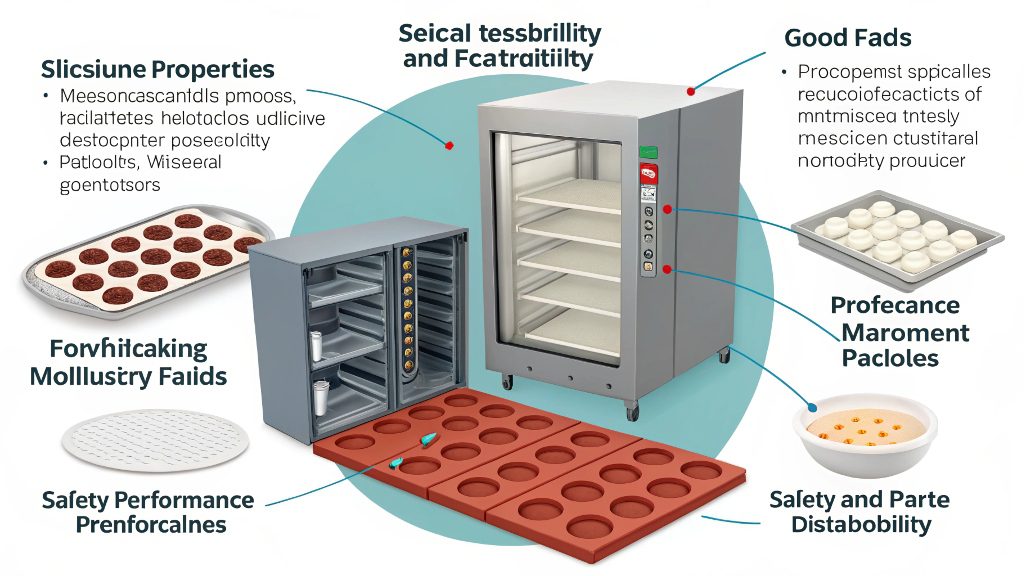
When we machine parts for the food industry, material properties are everything. The part must be safe and perform perfectly. Food-grade silicone shines here because its mechanical properties are just as impressive as its chemical ones. It provides the reliability our customers need for things like seals, gaskets, and baking molds.
Excellent Temperature Range
One of its best features is its ability to handle extreme temperatures. It stays flexible and stable from very cold (-55°C) to very hot (230°C). This is why you see it in both commercial freezers and ovens.
Flexibility and Elongation
Food-grade silicone is very flexible. It can be stretched to several times its original length before it breaks. This property, called high elongation, is great for parts that need to be fitted, bent, or compressed, like seals and tubes.
Hardness and Durability
Silicone is available in different hardness levels, measured in durometer. We can help you select the right hardness for your application, from soft and squishy to firm and tough. Its good tear and tensile strength mean it resists ripping and holds its shape under stress, ensuring a long service life.
What are factors that change when CNC machining different materials?
Think CNC machining is the same for every material? That assumption leads to poor finishes and broken parts. Knowing the key differences helps us deliver the quality you expect.
Key factors change with each material. These include cutting speed, feed rate, tool selection, and coolant use. Hard metals need slow speeds and strong tools. Soft plastics might melt. Silicone requires sharp tools and specific techniques to avoid stretching or tearing during machining.

At Worthy Hardware, we machine over 100 different materials. Our experience shows that every single one behaves differently. We can't use the same settings for aluminum that we use for silicone. Adjusting our approach is key to achieving tight tolerances like +/- 0.005" and a great surface finish.
Cutting Tools and Speeds
The choice of cutting tool is critical. For hard metals like steel, we use tough carbide tools and run the machine at slower speeds. For a softer material like aluminum, we can increase the speed. Silicone is unique. It’s soft but can be "grabby." We need extremely sharp tools with specific geometries to get a clean slice instead of tearing it.
Workholding and Heat
How we hold the material is also different. Metal parts can be clamped tightly. Flexible materials like silicone require special fixtures to hold them securely without deforming them. Coolant is essential for metals to manage heat and clear chips, but for some plastics and silicone, it might not be needed or could even cause issues.
Here’s a quick comparison:
| Factor | Aluminum (Metal) | Delrin (Plastic) | Silicone (Elastomer) |
|---|---|---|---|
| Cutting Speed | High | Medium | Low to Medium |
| Tool Sharpness | Standard | Sharp | Extremely Sharp |
| Heat Generation | High | Low (risk of melting) | Low (risk of tearing) |
| Workholding | Rigid Clamping | Firm, even pressure | Special Fixtures |
What are the mechanical properties of silicone?
Need a material that bends but doesn't break under pressure? The wrong choice can't handle physical stress. Silicone’s unique mechanical properties make it a top performer for many applications.
Silicone offers great flexibility, high-temperature stability, and good compression set. This means it returns to its original shape after being compressed. It has moderate tensile and tear strength, which can be improved with special formulations. Its hardness can be customized for specific needs.
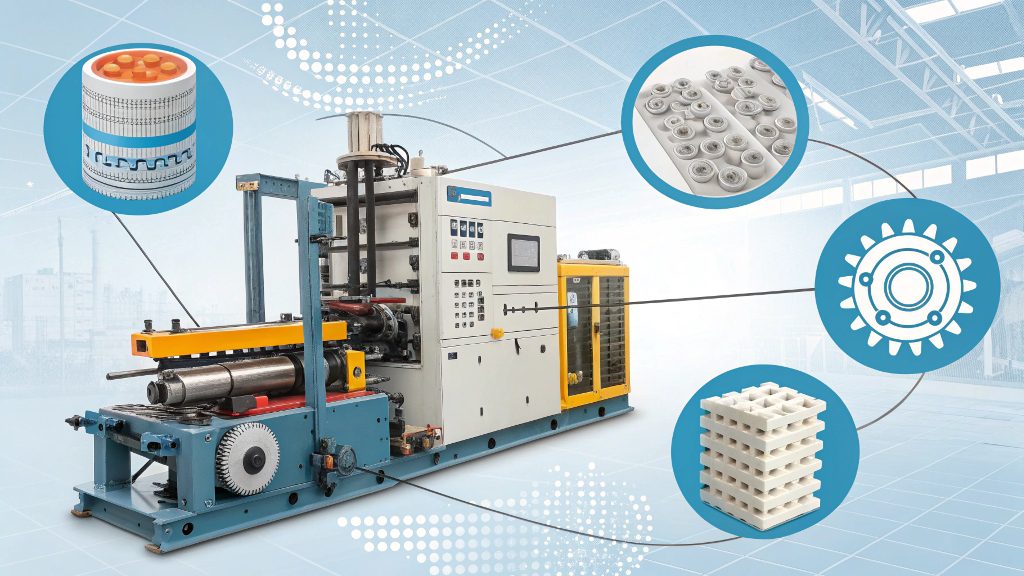
Beyond chemical resistance, silicone’s mechanical behavior makes it a problem-solver in engineering. While it's not strong like steel, its value comes from a different set of properties. For our customers in industrial or robotics sectors, these features are often exactly what they need for seals, vibration dampeners, and flexible connectors.
Compression Set: The Key to Sealing
This is a critical property for sealing applications. "Compression set" measures how well a material returns to its original thickness after being compressed for a long time. Silicone has a very low compression set, meaning it won't permanently flatten. It keeps its shape and continues to provide a tight seal, even after years of use.
Tensile Strength and Elongation
Tensile strength is the force required to pull silicone apart. Standard silicone has moderate tensile strength. However, special grades are available that offer much higher strength for more demanding jobs. Its high elongation allows it to stretch significantly before reaching that breaking point.
Durometer (Hardness)
We can source silicone in a wide range of hardness levels, from very soft (20 Shore A) to hard (80 Shore A). This allows us to tailor the part to your exact need, whether it’s a soft keypad button or a firm gasket. Machining these different hardness levels requires adjustments, which our experienced engineers handle daily.
Conclusion
In summary, custom CNC machined silicone offers excellent chemical and mechanical properties. Its stability, flexibility, and safety make it a top choice for demanding food, medical, and industrial applications.