
What Are Hidden Costs in Metal Stamping That Buyers Should Know About?
Getting a metal stamping quote seems straightforward. But unexpected costs can derail your budget. Let's uncover these hidden fees to protect your bottom line and ensure project success.
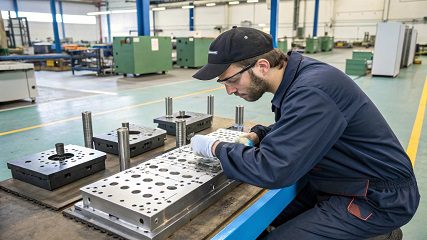
Beyond the per-part price, hidden costs in metal stamping include tooling development, which can be thousands of dollars, and ongoing tool maintenance. Other factors like material waste, setup charges for small batches, and secondary finishing processes can also significantly increase your total project cost.
That initial quote can look really appealing, especially when you're comparing suppliers. I've spoken to many buyers, like Mark from Canada, who are sharp about pricing but have been burned by surprise charges in the past. It's not just about the price per piece; it's about the total cost of ownership. The biggest initial investment is the tool and die. This mold, depending on the part's complexity, size, and required precision, can cost anywhere from $400 to well over $10,000. To really understand your investment, you need to break down every potential expense. Let's dive deeper into what these costs are and why they matter.
What is the rule of thumb for metal stamping?
Choosing a manufacturing process is tough. Picking the wrong one costs time and money. Here’s a simple rule of thumb for when metal stamping is your best option.
The primary rule of thumb for metal stamping is volume. It's most cost-effective for high-volume production runs, typically thousands of parts. The initial mold cost is significant, but the per-piece price drops dramatically as quantity increases, justifying the investment for mass production.
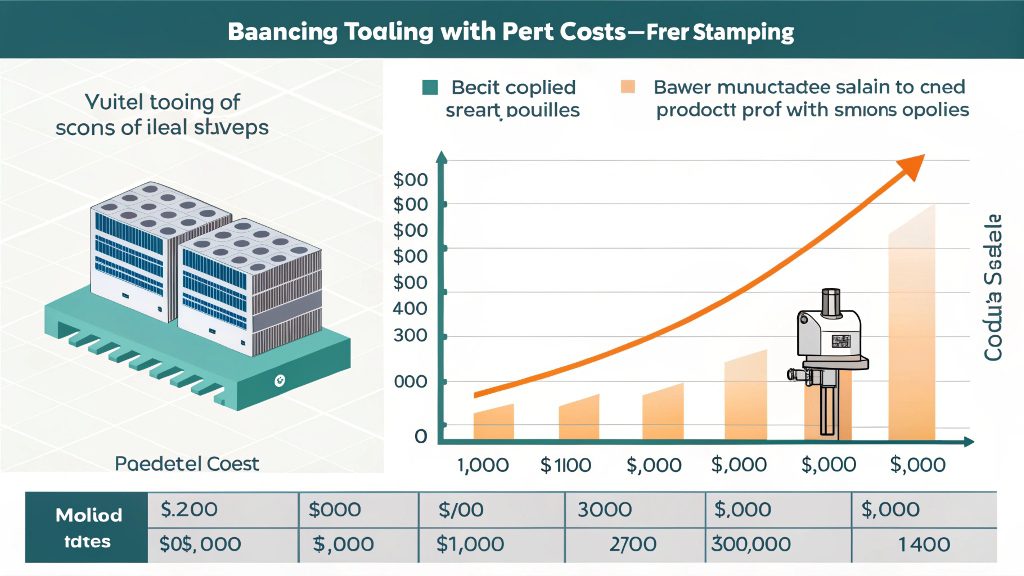
The core idea is balancing tooling costs with per-part costs. Metal stamping requires a custom-made tool, or die. This is a significant upfront investment. However, once that tool is made, we can produce parts very quickly and cheaply. So, the more parts you make, the more that initial tooling cost is spread out, making each part cheaper.
For a client in the electronics industry, they needed 100,000 small shield clips. The tooling was a few thousand dollars. If they only needed 1,000 clips, the cost per clip would have been too high. But at 100,000 units, the tool cost became just a few cents per piece. This made stamping the clear winner over other methods like CNC machining.
When to Choose Metal Stamping
| Production Volume | Best Manufacturing Method | Why? |
|---|---|---|
| 1 - 100 (Prototype) | CNC Machining / Laser Cutting | No tooling cost, fast turnaround for design validation. |
| 100 - 5,000 (Low Volume) | Soft Tooling / Turret Press | Lower initial tooling cost than full progressive dies. |
| 5,000+ (High Volume) | Progressive Die Stamping | High initial tool cost, but lowest possible per-part price. |
This table helps guide the conversation. For high-volume needs, the efficiency and low variable costs of stamping are unmatched.
What are the problems with metal stamping?
You worry about part defects and project delays. These issues can damage your reputation and hurt your sales. Understanding potential problems upfront helps you choose the right partner.
Common problems include material defects like burrs or cracks, dimensional inaccuracies from tool wear, and part-to-part inconsistencies. These issues often stem from poor tool design, inadequate press maintenance, or rushing the setup process. Working with an experienced supplier is key to minimizing these risks.
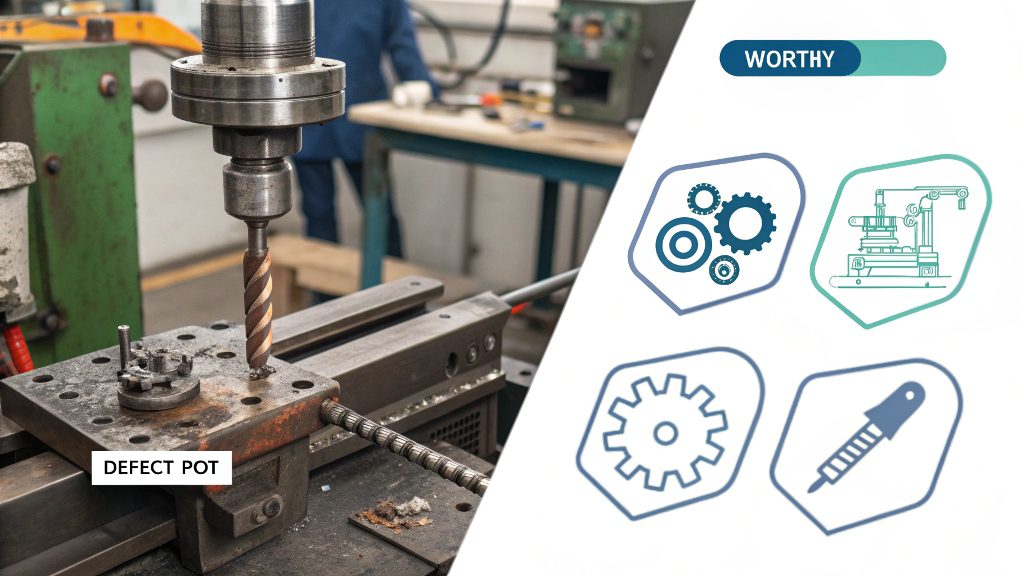
While metal stamping is incredibly efficient, it’s not without its challenges. Problems usually fall into three categories: tooling, material, and process. A poorly designed tool is the source of many headaches. If the die isn't built correctly or maintained, it leads to burrs (sharp edges), cracks in the metal, and parts that don't meet tolerance specifications. As a tool wears out over tens of thousands of cycles, we must actively maintain and repair it. This maintenance is a hidden cost that reliable suppliers, like us at Worthy, build into our long-term planning.
I remember a new customer who came to us after a bad experience elsewhere. Their previous supplier used a cheap tool that started producing faulty parts after just 5,000 cycles. The delays and bad parts cost them a major contract. We built them a robust tool and implemented a strict maintenance schedule, ensuring consistent quality for their entire 200,000-part order.
Common Defects and Their Causes
| Defect | Potential Cause | How We Prevent It |
|---|---|---|
| Burrs | Worn cutting edges on the die. | Regular tool sharpening and maintenance. |
| Cracks | Material is stretched too fast or beyond its limit. | Proper material selection and tool design. |
| Inaccurate Dimensions | Tool wear, incorrect press setup. | In-press monitoring and regular part inspections. |
Choosing a partner who prioritizes quality control and tool maintenance is the best way to avoid these problems.
What are the 7 steps in the stamping method?
You need to understand the process to manage your project. Not knowing the steps makes it hard to track progress. Here is a clear breakdown of the entire method.
The stamping method involves seven key steps: design review, tool and die manufacturing, coil feeding, blanking, forming (bending/drawing), secondary operations like tapping or plating, and finally, quality inspection and packaging. This structured process ensures consistency and efficiency from raw material to finished part.
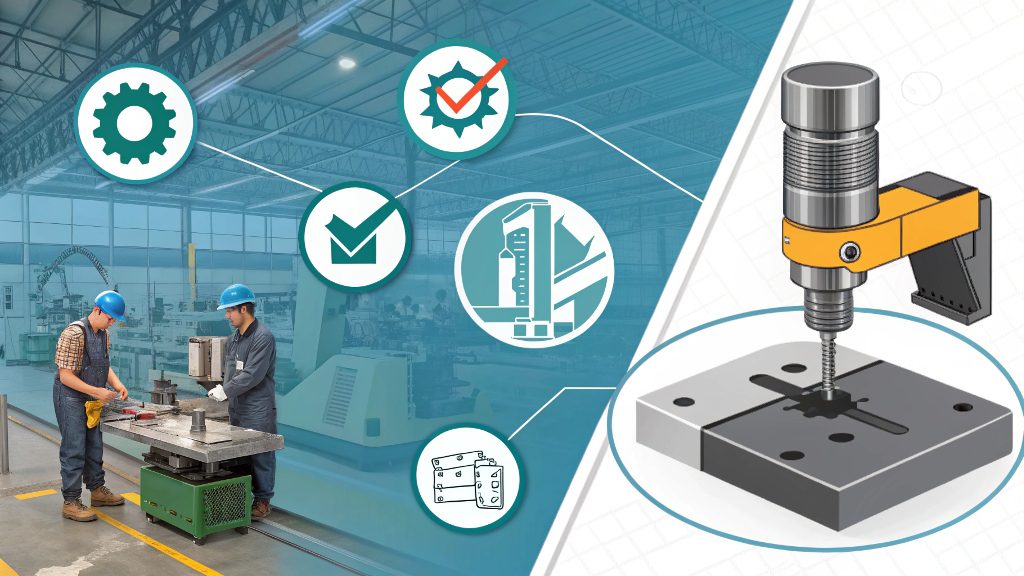
From the moment you send us your design to when you receive your finished parts, we follow a precise workflow. This ensures nothing is missed and you get exactly what you need. It might seem complex, but breaking it down makes it much clearer.
Think of it like building a house. You don't just start throwing up walls. You need a blueprint first. For us, that's your part design. Then we build the foundation, which is our tool and die. Only then can we start the actual construction, or stamping, of the parts. Each step builds on the last one, and skipping or rushing any of them leads to problems. Our engineers work closely with customers during the first step to optimize their design for manufacturing, which can save a lot of money and prevent issues later.
The Stamping Process, Step-by-Step
- Design & Engineering: We analyze your CAD file to ensure it's manufacturable and cost-effective.
- Tool & Die Making: We use your design to build the custom progressive die. This is the most time-consuming step.
- Coil Feeding: A large coil of metal sheet is fed into the stamping press.
- Blanking: The first station in the die often cuts the outer shape of the part from the metal strip.
- Forming: As the strip moves through the press, subsequent stations bend, pierce, and form the part into its final 3D shape.
- Secondary Operations: If needed, parts can be tapped, plated, heat-treated, or assembled.
- Inspection & Packaging: We perform 100% inspection to ensure every part meets your specifications before carefully packing for shipment.
What are the four types of metal stamping?
You hear terms like "progressive" or "fourslide" but don't know the difference. Choosing the wrong type can increase costs or limit design. Let's clarify the main stamping types.
The four main types of metal stamping are progressive die, fourslide (or multislide), transfer die, and deep draw. Each method is suited for different part geometries, complexities, and production volumes. Progressive die is the most common for high-volume, complex parts from coil stock.
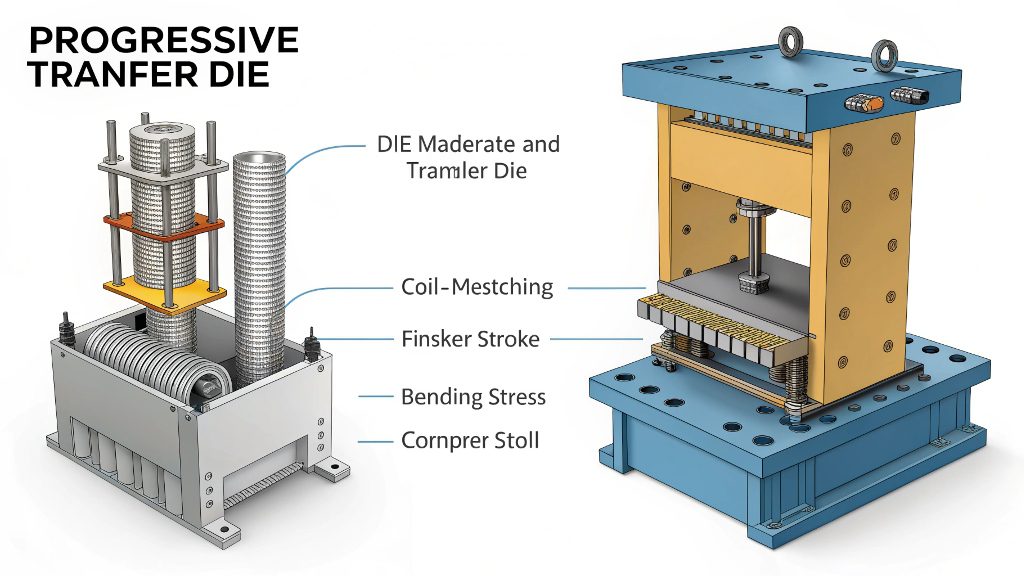
The best stamping method depends entirely on your part's design. There isn't a single "best" type; it's about matching the process to the product. At Worthy, we specialize in progressive and fourslide stamping, as they cover a wide range of needs for our customers in the automotive, electronics, and consumer product sectors.
For example, a simple flat bracket might be perfect for a basic stamping operation. But a complex electrical connector with multiple bends and features is an ideal candidate for progressive die stamping. A part that needs bends in several different planes, like a spring clip, is often best made with our fourslide machines. Understanding these differences helps you have a more productive conversation with your supplier about how to produce your part efficiently.
Choosing the Right Stamping Type
| Stamping Type | Best For | Example Parts | Main Advantage |
|---|---|---|---|
| Progressive Die | Complex parts from coil, high volume. | Terminals, shields, brackets. | High speed and low part cost. |
| Fourslide | Parts with multiple bends in different directions. | Clips, flat springs, wire forms. | Versatility in forming directions. |
| Transfer Die | Larger parts that are separated from the strip early. | Frame components, larger cups. | Good for large, bulky parts. |
| Deep Draw | Parts that are deeper than they are wide. | Cans, cups, enclosures. | Creates deep cylindrical shapes. |
Discussing your part's geometry with an experienced engineer will quickly determine the most cost-effective method for your project.
Conclusion
Understanding tooling, maintenance, and process steps demystifies metal stamping costs. Asking for an itemized quote a nd discussing volumes and part complexity ensures you get an accurate price without surprises.