
What is the most effective way to prevent corrosion in 1018 steel parts?

Struggling with rust on your 1018 steel parts? This corrosion ruins your product's look and function. I will show you how to stop it for good.
The most effective way is creating a barrier. You can apply anti-rust oil for simple, short-term protection. For long-term defense, consider surface treatments like zinc plating or powder coating. These methods completely seal the steel from moisture and air.
This is a common problem for our customers. They receive parts that look great, but if not protected, rust can appear quickly. This is especially true for a material like 1018 steel. Protecting your investment is key, and it starts with understanding the material and the solutions available. Many people choose 1018 steel for its great price and how easy it is to machine, but they forget to plan for rust prevention. So, let's look at the bigger picture of steel corrosion and how you can stop it before it starts.
How can corrosion of steel be prevented?
Worried that rust will destroy your steel components? This common issue can lead to costly failures and unhappy customers. Here is the basic principle for preventing it.
Corrosion is a chemical reaction between steel and its environment. To prevent it, you must create a barrier. This can be a simple oil coating, a layer of paint, or a more advanced plated metal layer like zinc or nickel. The goal is to stop oxygen and moisture from reaching the steel surface.
To understand how to prevent corrosion, you first need to understand the methods. I see them falling into a few main categories. At my company, Worthy Hardware, we help customers choose the right one every day.
Barrier Coatings
This is the most common strategy. Think of it like putting a raincoat on your steel part. It physically blocks the air and moisture that cause rust.
-
Oils and Waxes: These are great for temporary protection, like during shipping or storage. They are very cheap and easy to apply. The downside is that they can be messy and need to be reapplied if the part is handled a lot.
-
Paint and Powder Coat: These offer much more durable protection and also provide a cosmetic finish. Powder coating is especially tough. We spray a dry powder onto the part and then bake it. This creates a hard, even finish that resists chipping and scratching much better than regular paint.
Sacrificial Coatings
This is a more clever method, also known as galvanic protection. We coat the steel with a different metal that is more reactive, like zinc.
- How it works: When the coating gets scratched, the zinc corrodes instead of the steel. It sacrifices itself to protect the part underneath. This is why galvanizing, which is a type of zinc coating, is so effective for parts used outdoors.
Is 1018 steel corrosion resistant?
You chose 1018 steel for its great machinability and low cost. But now you see rust. Is this material supposed to be so weak against corrosion?
No, 1018 steel is not corrosion resistant. It is a low-carbon steel with a high iron content and lacks significant amounts of alloying elements like chromium. This makes it very susceptible to rust when exposed to moisture and oxygen. It always needs a protective coating.
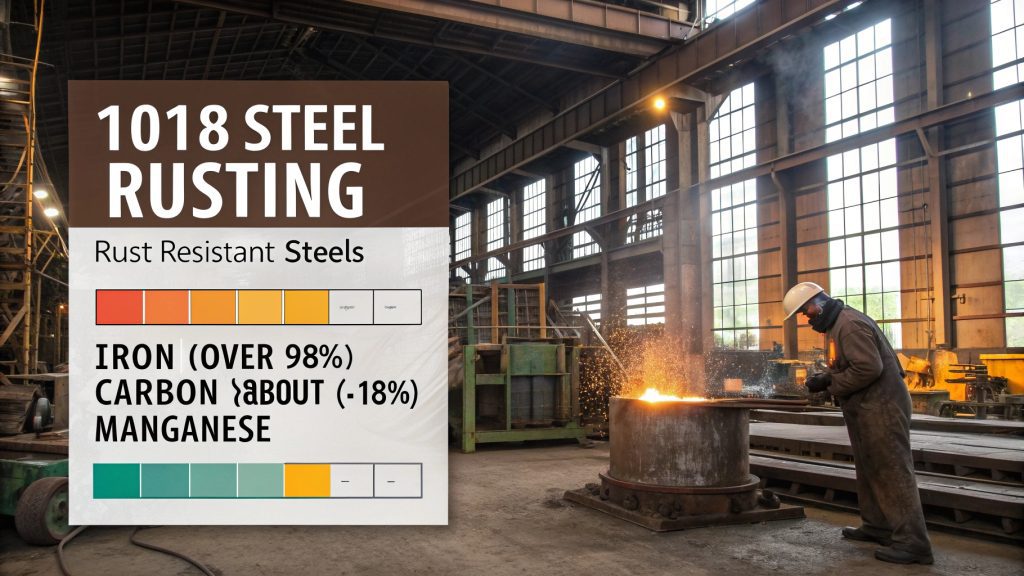
Let's dive deeper into why this is the case. 1018 steelis one of the most common materials we machine at Worthy Hardware. It is a fantastic general-purpose steel because it's strong, very easy to cut precisely, and affordable. But its chemical makeup is its weakness when it comes to rust.
What is 1018 Steel Made Of?
The composition of 1018 steel is mostly iron (over 98%), with a small amount of carbon (about 0.18%) and some manganese. It does not contain the key ingredients that fight rust.
Why It Rusts So Easily
The natural state of iron is iron oxide, which is the reddish-brown material we call rust. Without other protective elements mixed into the metal, the iron in 1018 steel will always try to return to this state. It just needs two things: oxygen (from the air) and water (from humidity). This chemical reaction, called oxidation, eats away at the steel, which can ruin a part's dimensions and structural strength.
Here is a simple table to show the difference:
| Feature | 1018 Carbon Steel | 304 Stainless Steel |
|---|---|---|
| Corrosion Resistance | Poor | Excellent |
| Cost | Low | High |
| Machinability | Excellent | Good |
| Key Alloying Elements | Carbon, Manganese | Chromium, Nickel |
When you choose 1018 steel, you are making a great choice for cost and performance. But you must also accept that you need to add corrosion protection as a required manufacturing step.
What is the best protection against corrosion?
So many protection options exist, from simple oil to complex plating. It's confusing to pick the right one. Choosing wrong can be a costly mistake.
The "best" protection depends on your part's use, budget, and desired lifespan. For harsh outdoor environments, hot-dip galvanizing is excellent. For a durable, cosmetic finish, powder coating is a top choice. For high-precision parts, thin platings like nickel are often best.
The "best" solution is always the one that fits your specific project. I remember a customer from Canada, a business owner named Mark. He needed a large volume of machined parts for an industrial machine he was building. The parts were mostly hidden inside the machine but needed to last for many years without failing from rust. We walked through his requirements to find the perfect fit.
Evaluating the Project's Needs
-
Environment: The parts would be indoors in a factory. There might be some humidity, but no direct rain or salt spray.
-
Appearance: A clean, industrial look was perfectly fine. He did not need any special colors or a highly decorative finish.
-
Budget: Cost was a major factor. He wanted a reliable solution but needed to avoid the high price of switching to stainless steel.
-
Tolerances: This was very important. His parts had some very tight tolerances of +/- 0.002", and any coating that was too thick would cause assembly problems.
We decided that zinc plating with a clear passivate was the best solution. It gave him excellent corrosion protection for his indoor application. It was also very cost-effective. Most importantly, the zinc plating process adds a very thin and consistent layer, so it did not affect the critical dimensions of his parts. The "best" solution for him balanced all his requirements perfectly.
How do you make steel corrosion resistant?
You have your finished 1018 steel parts. They look perfect after machining. Now what? How do you apply that crucial protective layer to make them last?
You make steel corrosion resistant by applying a surface finish. This involves a series of steps: cleaning the part thoroughly, applying the coating through methods like electroplating or powder coating, and then curing or drying it. This creates a durable barrier.
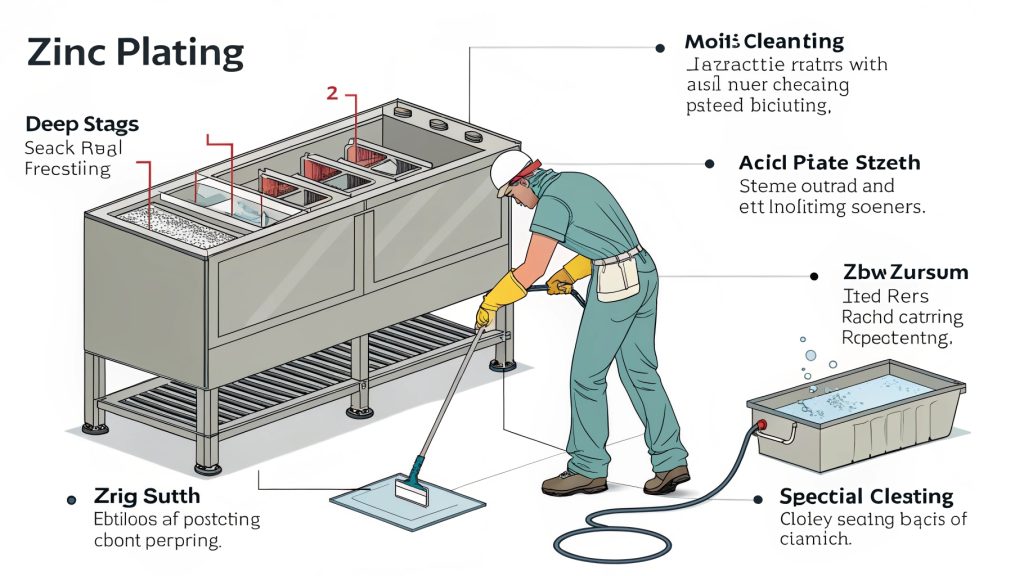
At Worthy Hardware, providing a high-quality surface finish is a key part of our service. We manage this entire process to ensure the final parts are perfect. A customer should not have to worry about a part rusting. Let me explain the process for zinc plating, which is a very common and effective finish.
Step 1: Deep Cleaning
This is the most critical step. If there is any oil, grease, or dirt left over from the machining process, the plating will not stick to the surface. It will peel or flake off. We use a multi-stage cleaning process with special soaps and a light acid bath to make sure the steel surface is perfectly clean and ready to accept the plating.
Step 2: The Plating Bath
The clean parts are loaded onto racks and then submerged in a chemical bath that contains dissolved zinc. We pass a controlled electric current through the bath. This causes the zinc from the solution to deposit onto the steel parts, forming a strong, even layer of pure zinc.
Step 3: Passivation
After plating, the parts get another rinse and are dipped into a passivation solution. This adds an extra, invisible protective layer over the zinc. This layer seals the zinc and makes it much more resistant to corrosion. It can also add a slight color, like clear/blue or yellow.
Step 4: Drying and 100% Inspection
Finally, the parts are carefully dried. Then, our quality team inspects every single part to check the finish quality, look for any defects, and make sure it meets the customer's specifications. Only then are they packed and shipped.
Conclusion
1018 steel needs protection from rust. Choosing the right coating, like zinc plating or powder coating, based on your specific needs is the most effective way to ensure your parts last.