
What Surface Finishes Work Best For Copper CNC Machined Parts?

Copper parts oxidizing or lacking durability? Choosing the right surface finish is crucial. We'll explore the best options to protect and enhance your copper components.
For copper CNC machined parts, common and effective surface finishes include nickel plating, chemical nickel (electroless nickel), and chrome plating. These protect against oxidation and improve wear resistance, which is vital since copper tarnishes easily.
Understanding the right finish for copper can feel overwhelming. There are so many choices, and each has its pros and cons. But don't worry. We're going to break it down so you can make an informed decision. Let's look at some common questions about surface finishes and how they relate to copper parts. This will help you see why certain finishes are better for copper.
What is the standard surface finish for CNC?
Unsure what "standard finish" means for CNC parts? This can lead to mismatched expectations. Let's clarify what you typically get straight off the machine.
The standard surface finish for CNC machined parts is typically "as-machined." This usually means a surface roughness of Ra 3.2 μm (125 μin) or better, though it varies by material and process. Specific requirements need further finishing.
When we talk about a "standard surface finish" in CNC machining, we're generally referring to the condition of the part right after the cutting operations are complete, with no secondary finishing processes applied. This is often called an "as-machined" finish.
At Worthy, our standard as-machined finish is typically 125 Ra microinches (which is about 3.2 Ra micrometers) or better. This is a common industry standard. However, the actual roughness can depend a lot on the material being machined, the specific cutting tools used, the cutting speed, feed rate, and even the machine's condition.
For softer metals like aluminum or brass, achieving a smoother finish might be easier than with harder steels. Copper, being relatively soft and ductile, can sometimes present challenges like "gumminess" during machining, which can affect the as-machined finish. It might require specific tool geometries and parameters to get a good result.
If a part needs a smoother finish than the standard as-machined, or specific properties like enhanced corrosion resistance or a different appearance, then additional surface finishing operations are necessary. It's important to specify your desired Ra value if it's critical for your application.
What is the best copper grade for machining?
Choosing the wrong copper grade makes machining tough and costly. It can even affect the final part quality. So, which copper should you pick for easy machining?
For excellent machinability, C145 Tellurium Copper is often considered the best. It contains tellurium, which makes chips break easily. C110 (ETP Copper) is common but can be "gummy," making machining harder.
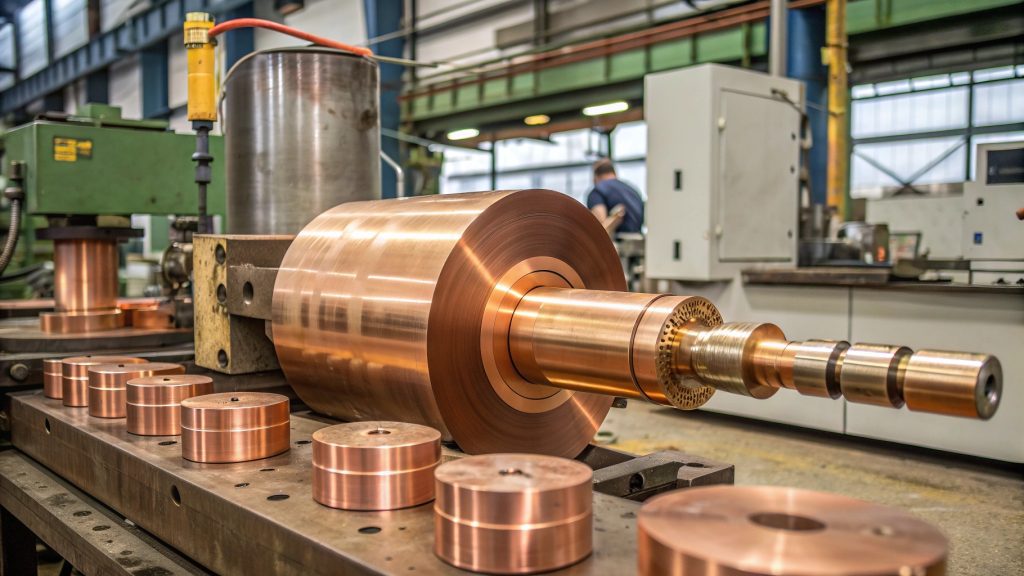
When it comes to machining copper, not all grades are created equal. The "best" grade really depends on balancing machinability with the desired properties like conductivity or corrosion resistance. In my experience, if machinability is the top priority, C145 Tellurium Copper is a fantastic choice. It has a machinability rating of about 80-90% (compared to free-cutting brass C36000 at 100%). The small amount of tellurium (around 0.5%) makes a huge difference by helping the chips break off cleanly, rather than forming long, stringy tangles. This leads to better surface finishes directly from machining and longer tool life.
Another common grade is C110 (Electrolytic Tough Pitch Copper). It has excellent electrical and thermal conductivity, which is why it's so popular. However, its machinability is much lower, around 20%. It tends to be "gummy" and ductile, which can lead to built-up edges on tools and a poorer surface finish if not machined carefully with sharp tools and appropriate coolants.
Then there's C101 (Oxygen-Free High Conductivity Copper). It's even purer than C110 and has superior conductivity, especially at cryogenic temperatures. But, like C110, its machinability is low. For applications demanding the absolute highest conductivity, C101 is chosen despite the machining challenges.
So, if your part needs intricate features or high-volume production where cycle time matters, C145 is often the way to go. If conductivity is paramount and machining complexity is lower, C110 or C101 might be necessary, but expect more care during machining.
What is RA 0.8 surface finish?
Confused by terms like "Ra 0.8"? This specific value can seem abstract. Understanding it helps you specify the exact smoothness your parts need.
An Ra 0.8 μm (micrometer) surface finish, equivalent to approximately 32 μin (microinches), is a very smooth finish. It often looks reflective and requires secondary processes like grinding, lapping, or polishing to achieve.
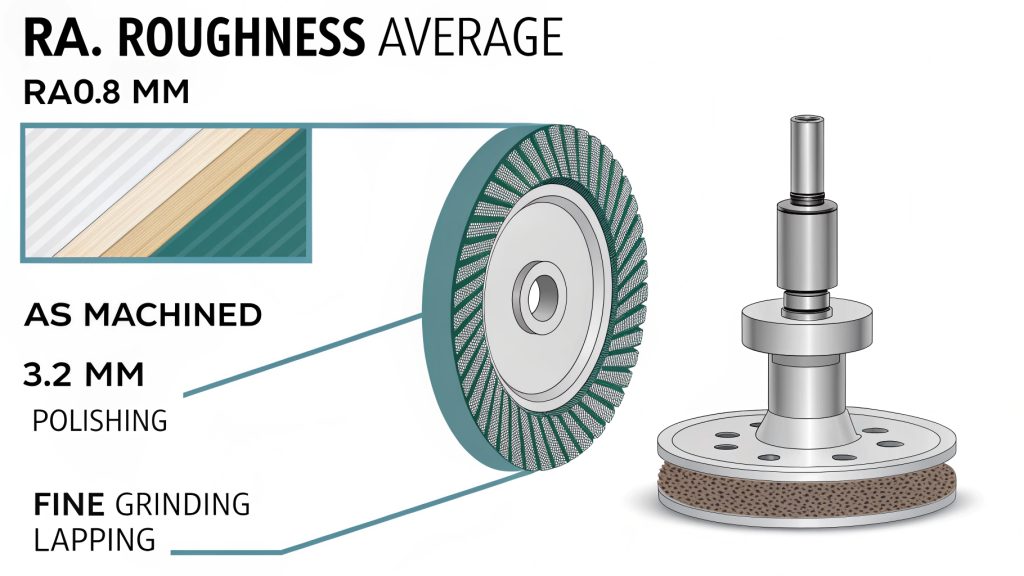
"Ra" stands for Roughness Average. It's the most common parameter used to describe the texture or smoothness of a surface. The value, like Ra 0.8 μm, represents the arithmetic average of the absolute values of the profile heights over an evaluation length. Think of it as an average of the peaks and valleys on the surface. An Ra 0.8 micrometers (μm) finish is quite smooth. To put it in perspective, the standard "as-machined" finish we discussed earlier is often Ra 3.2 μm (125 μin). So, Ra 0.8 μm is four times smoother.
Achieving an Ra 0.8 μm finish usually isn't possible with standard milling or turning operations alone, especially on materials like copper. You'd typically need secondary operations. These can include:
-
Fine Grinding: Uses abrasive wheels to remove small amounts of material and produce a precise, smooth surface.
-
Lapping: Employs a fine abrasive slurry between the part and a lap plate to achieve very high flatness and smoothness.
-
Polishing: Uses progressively finer abrasives, often on a buffing wheel, to create a mirror-like, highly reflective surface.
An Ra 0.8 μm finish would feel very smooth to the touch, almost silky. Visually, it would likely have a semi-reflective or even a bright, reflective appearance depending on the material and the exact process used. This level of finish is often specified for parts that require good sealing surfaces, low friction, high fatigue life, or a very specific aesthetic appearance. For copper parts, such a finish might be needed for high-performance electrical contacts or decorative elements.
Which metal cutting operation gives better surface finish?
Are your machined parts too rough? Not all cutting operations are equal for smoothness. Knowing which ones excel can save you time and finishing steps.
Generally, grinding, lapping, and polishing operations provide the best surface finishes, much finer than standard milling or turning. These are often secondary processes used to achieve very smooth surfaces like Ra 0.8 μm or better.
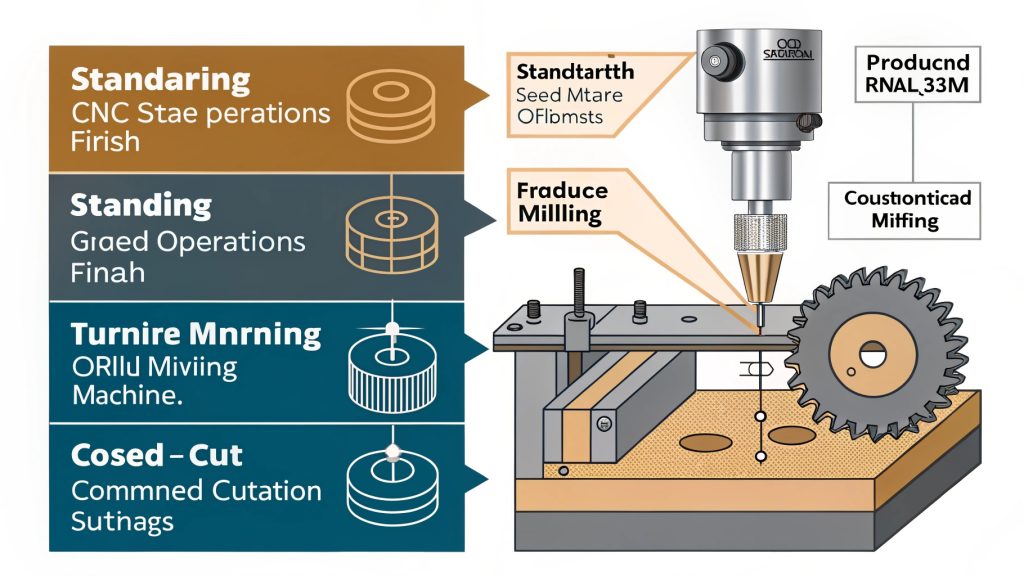
When we talk about achieving a good surface finish through metal cutting, there's a hierarchy of operations. Standard CNC operationslike milling and turning can produce decent finishes, often in the Ra 1.6 μm to Ra 6.3 μm (63 μin to 250 μin) range, with Ra 3.2 μm (125 μin) being a common target for an "as-machined" finish. However, to get really fine finishes, we usually turn to specialized abrasive processes.
Here’s a general idea:
-
Milling & Turning: These are primary shaping operations. The finish depends heavily on factors like cutting speed, feed rate, depth of cut, tool geometry (nose radius is key for turning), tool sharpness, material properties, and coolant application. For copper, which can be soft and ductile, sharp tools and appropriate parameters are crucial to avoid tearing and achieve a good initial finish.
-
Reaming & Boring: These operations are used to improve the size and finish of existing holes. They generally produce better finishes than drilling.
-
Grinding: This process uses an abrasive wheel to remove material. It's capable of producing very fine surface finishes (e.g., Ra 0.4 μm to Ra 1.6 μm, or even finer) and tight tolerances. It's often used after initial machining.
-
Honing: An abrasive process used for internal cylindrical surfaces, providing excellent finish and dimensional accuracy.
-
Lapping: This uses a loose abrasive between the workpiece and a lap. It produces extremely flat and smooth surfaces, often down to Ra 0.025 μm to Ra 0.2 μm.
-
Polishing/Buffing: These are finishing operations that use fine abrasives on flexible wheels or cloths to create very smooth, often mirror-like surfaces. They are more about appearance and extreme smoothness than dimensional accuracy.
So, if you need a surface finish that's better than what standard milling or turning can offer, you'll almost certainly be looking at grinding, lapping, or polishing as secondary operations.
Our Recommended Surface Finishes for Copper CNC Machined Parts
Copper is a wonderful material with excellent electrical and thermal conductivity. However, as many of my clients, like Mark Chen, know, it has a major downside: it oxidizes and tarnishes very easily when exposed to air and moisture. This oxidation can affect its appearance and, in some cases, its surface conductivity or solderability. That's why, for many copper CNC machined parts we produce at Worthy, applying a protective surface finish is essential.
Based on my experience and what we frequently provide for our customers, here are the finishes that work best for copper:
-
Nickel Plating:
-
Why it's good for copper: Nickel plating is a very common choice. It provides excellent corrosion resistance, preventing the copper from tarnishing. It also increases wear resistance and can give the part a bright, attractive appearance or a matte finish, depending on the process.
-
Types:
- Electrolytic Nickel: This is the standard electroplating process. It's cost-effective and provides good protection.
- Electroless Nickel (Chemical Nickel): This is my preferred method for parts with complex geometries, internal surfaces, or tight tolerance requirements. Electroless nickel deposits a very uniform coating, regardless of the part's shape. It also tends to be harder and more corrosion-resistant than standard electrolytic nickel. We often use this for precision components.
-
-
Chrome Plating:
- Why it's good for copper: Chrome plating offers superior hardness, wear resistance, and excellent tarnish resistance. It also provides a very bright, reflective, and aesthetically pleasing finish.
- Considerations: It's often applied over an underlayer of nickel (nickel-chrome plating) for better adhesion and corrosion protection. Hard chrome is used for wear resistance, while decorative chrome provides the bright look.
-
Tin Plating:
- Why it's good for copper: While not mentioned in my initial thoughts, tin plating is also a very popular finish for copper, especially for electrical components. It provides good corrosion resistance, is solderable, and is non-toxic. It’s often used for busbars, connectors, and food-grade applications.
- Silver Plating / Gold Plating:
- Why it's good for copper: For applications requiring the absolute highest electrical conductivity at the surface and excellent corrosion resistance, silver or gold plating is used. Gold is exceptionally resistant to tarnish. These are premium finishes and are more expensive, typically reserved for critical electronic or RF components.
When Mark from Canada orders custom CNC copper parts, quality and longevity are key for him. He needs parts that won't degrade quickly. By applying finishes like electroless nickel or tin, we help him deliver reliable products to his customers. The choice always depends on the specific application, the environment the part will be in, and the desired properties like conductivity, wear resistance, or appearance. We always discuss these factors with our clients to recommend the most suitable and cost-effective solution.
Conclusion
Choosing the right surface finish for copper CNC parts, like nickel or chrome plating, is vital to prevent oxidation, enhance durability, and meet specific functional requirements.