
How Does Shore A Hardness Affect Material Selection for Your CNC Machined Parts?
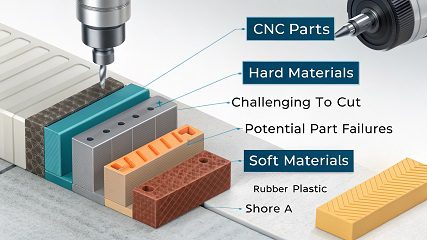
Choosing the wrong material hardness can cause part failure. This mistake ruins project timelines and budgets. Understanding hardness helps you select the perfect material for your CNC parts.
Shore A hardness measures the flexibility of soft materials like rubbers and plastics. It's crucial for CNC machining because it dictates how a material will behave during cutting, its final performance, and its suitability for your specific application, ensuring durability and proper function.
This is just the beginning. The hardness of a material affects much more than just its feel. It has a huge impact on the entire manufacturing process and the final quality of your part. I've seen firsthand how a small difference in a hardness specification can change an entire project. Let’s explore how this single property can make or break your design.
How does the hardness of a material affect the machining process?
Hard materials are tough to cut. Soft ones can deform easily. This leads to slow production, poor finishes, and wasted material. Knowing the hardness helps us set the right parameters.
A material's hardness directly impacts machining speed, tool selection, and the final surface finish. Harder materials require slower speeds and more robust tools. Softer materials might deform, demanding sharp tools and careful clamping to achieve precise cuts and prevent damage to the part.
When we receive a drawing at Worthy, one of the first things my engineers and I look at is the material's hardness. This tells us how to approach the job. The machining strategy for a very hard steel is completely different from that for a soft rubber.
Machining Harder Materials
Harder materials, like tool steel or titanium, resist being cut. This creates a lot of friction, which means a lot of heat. Heat is the enemy of both the cutting tool and the part itself. To manage this, we have to reduce the cutting speed and feed rate significantly. We also use special, tough cutting tools made from carbide and apply a constant stream of coolant. It's a slow, careful process, but it's necessary to hold tight tolerances and avoid damaging the tool.
Machining Softer Materials
Softer materials, like silicone or soft plastics specified with a Shore A hardness, present a different challenge. They don't wear out tools, but they can easily tear, stretch, or compress under the force of the cutter. This makes it difficult to get a clean edge or hold precise dimensions. For these materials, we use extremely sharp, specialized tools that slice cleanly rather than push through the material. We also have to be very careful with how we clamp the part to avoid deforming it or leaving marks. Custom fixtures are often needed.
| Feature | Softer Material (e.g., Silicone, Shore 70A) | Harder Material (e.g., Delrin, Rockwell R120) |
|---|---|---|
| Cutting Speed | Can be higher, but heat buildup from friction is a concern | Must be slower to prevent tool wear and overheating |
| Tool Type | Very sharp, specialized tools to prevent tearing | Hard, wear-resistant tools (e.g., carbide) |
| Clamping | Requires gentle, custom fixtures to prevent marks | Can be clamped firmly and securely |
| Surface Finish | Can be gummy or stringy if not machined correctly | Can achieve a very smooth, polished finish |
How does hardness affect material properties?
You need a part that is both strong and flexible. But it is hard to choose. Choosing the wrong material can mean your part cracks under stress or wears out too fast.
Hardness is closely related to other critical mechanical properties. Generally, as hardness increases, tensile strength and wear resistance also increase. However, this often comes at the cost of lower flexibility, making the material more brittle and likely to crack under sudden impact.
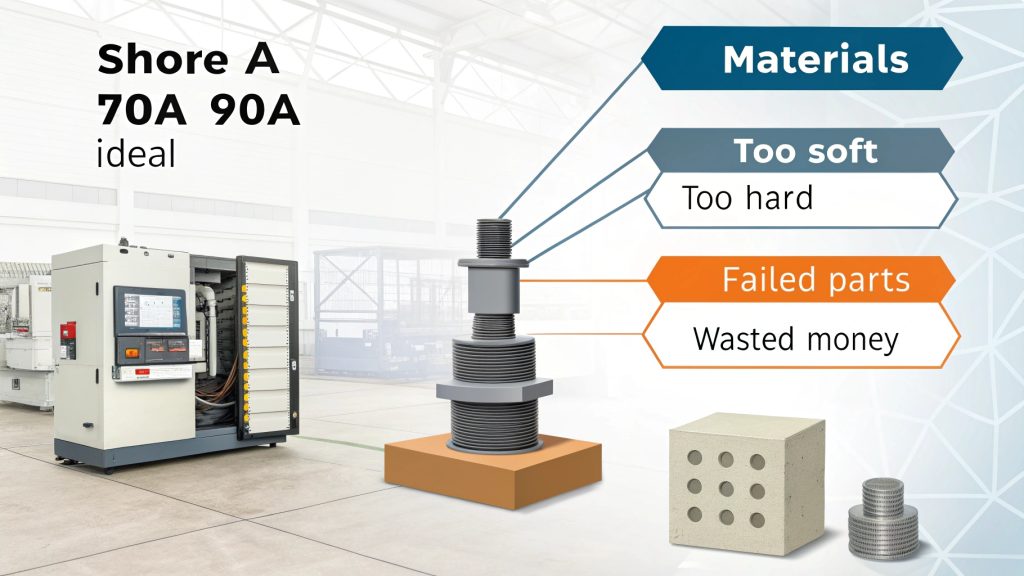
I often have conversations with customers like Mark Chen about this exact topic. He needs parts that are reliable for his customers, so we can't just pick the "hardest" material and call it a day. We have to look at how the part will be used and find the right balance of properties.
The Link Between Hardness and Strength
In general, a harder material is also a stronger material. This means it can resist being pulled apart (tensile strength) or being compressed. If you are designing a structural bracket or a component that will be under a constant load, choosing a material with higher hardness is usually the right decision.
Hardness vs. Flexibility: The Trade-Off
This is the most important trade-off to understand. As a material gets harder, it almost always gets less flexible and more brittle. Think of the difference between a glass plate and a rubber mat. The glass is very hard but shatters if you drop it. The rubber mat is very soft but can bend and absorb impact. For parts like seals, gaskets, or vibration dampeners, you need low hardness (like that measured on the Shore A scale) for maximum flexibility.
| Property | Relationship to Hardness | Example Application |
|---|---|---|
| Tensile Strength | Generally increases with hardness | Structural components that must resist pulling forces |
| Wear Resistance | Increases significantly with hardness | Bearings, gears, and cutting tools |
| Ductility/Flexibility | Generally decreases with hardness | Seals, gaskets, and shock absorbers |
| Toughness (Impact Resistance) | Often decreases with hardness (more brittle) | Bumpers, protective casings, and safety gear |
Why is hardness an important material property in design?
Your carefully designed part fails in the real world. This failure could cause huge safety issues, damage to your brand's reputation, and very costly recalls.
Hardness is a critical design property because it determines how a part interacts with its environment. It dictates the part's ability to resist scratching, indentation, and wear, ensuring long-term durability and reliable performance in its intended application, from soft seals to hard structural components.
When a designer creates a new part, they have a specific job for it to do. Hardness is a key specification that ensures the part can do that job for a long time without failing. It’s not just an abstract number; it has real-world consequences.
Ensuring Durability and Lifespan
The most obvious reason to specify hardness is to ensure the part lasts. Think about a consumer product like a remote control. The buttons are made of soft rubber (measured in Shore A) so they are easy to press. The casing is made of a harder plastic to resist scratches and drops. If the casing were too soft, it would look worn and damaged after a few weeks of use. The designer chooses the hardness of each component based on how it will be used.
Designing for Mating Components
This is an area where I see many mistakes. When two parts in an assembly rub or press against each other, their relative hardness is critical. If you have a hard steel shaft spinning inside a soft aluminum housing, the steel will quickly wear away the aluminum, causing the assembly to fail. A good designer will specify materials with compatible hardness levels, or they might add a hardened bearing or bushing to handle the wear. We always look for these potential issues during our design review process to help our customers save money and avoid problems later.
How does hardness in materials get measured and what are some common hardness testing methods?
You see terms like "Shore A" or "Rockwell C". You don't know what they mean. Misinterpreting these scales can lead you to order the wrong material for your parts.
Hardness is measured by testing a material's resistance to permanent indentation. Common methods include the Shore scale for rubbers and plastics, and Rockwell or Brinell for metals. Each uses a specific indenter and force, resulting in a value on its own unique scale.
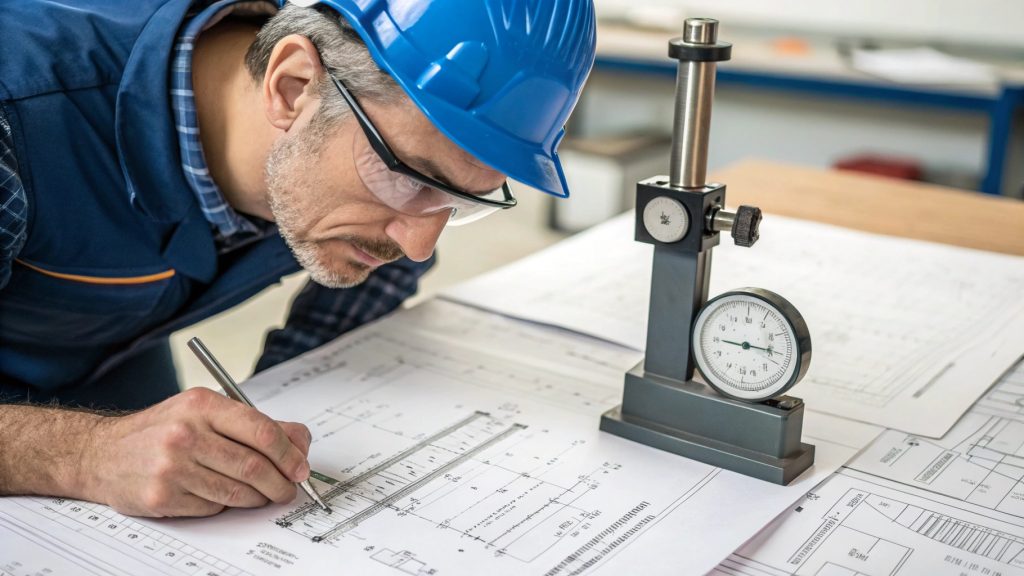
Understanding how hardness is measured helps you read engineering drawings and material datasheets correctly. The basic idea behind all hardness tests is the same: press a specifically shaped object (an indenter) into the material's surface with a specific amount of force and see how much of a dent it leaves.
Understanding the Shore Hardness Scale
The Shore Durometer is the device we use for testing softer materials like plastics and rubbers. This is where the "Shore A" specification in the title comes from. The instrument has a small, spring-loaded needle that it presses into the material. The depth of the indentation gives us a reading on a scale from 0 to 100.
-
Shore A Scale: This is used for the softest, most flexible materials, from very soft gels to flexible rubbers and elastomers. A rubber band might be 25A, while a car tire is around 70A.
-
Shore D Scale: This is used for harder plastics. There is some overlap between the A and D scales. A material that is 95A is also about 50D.
Hardness Tests for Metals
You cannot use a Shore durometer to test metals; the needle would not even scratch the surface. For hard materials like the steel, aluminum, and brass we machine, we use tests that apply much more force.
-
Rockwell Test: This is very common for metals. It uses a small diamond cone or steel ball and measures the depth of the dent. You'll see results like HRC 60 (a very hard steel) or HRB 90 (a softer steel or aluminum).
-
Brinell Test: This test uses a larger ball and more force, leaving a bigger indentation. It's often used for castings or forgings with rougher surfaces.
| Hardness Test | Material Type | How it Works | Common Scale(s) |
|---|---|---|---|
| Shore Durometer | Rubbers, Elastomers, Soft Plastics | A spring-loaded needle (indenter) is pressed into the material. | Shore A, Shore D |
| Rockwell | Metals, Hard Plastics | A cone or ball indenter is forced into the material with a set load. | Rockwell B (HRB), Rockwell C (HRC) |
| Brinell | Metals (especially softer or coarse-grained) | A hardened steel or carbide ball is pressed into the surface with a set load. | Brinell Hardness Number (HBW) |
Conclusion
Choosing the right material hardness is vital. It affects machining, performance, and durability. Let us at Worthy help you select the perfect material for your CNC machined parts.