
How to Prevent Corrosion in Various Stainless Steel Grades?
Stainless steel rusting when you least expect it? This causes frustrating delays and expensive replacements. Learn how to choose the right grade and use effective prevention methods.
Prevent stainless steel corrosion by selecting grades with sufficient chromium, nickel, and molybdenum for the environment. Keep surfaces clean and free of contaminants. Consider surface treatments like passivation or plating for added protection in tougher conditions. We often help select the best approach.
Understanding the basics is good. But how do you actually stop corrosion in practice? Let's look at specific steps you can take to keep your stainless steel parts looking good and working well for a long time. Keep reading to learn more.
How to prevent corrosion in stainless steel?
Think your stainless steel parts are immune to rust? Unfortunately, even stainless steel can corrode under certain conditions, causing big problems. Let's cover the practical ways to stop it.
The best prevention methods are: choose the correct grade for the specific job, keep the surface clean regularly, avoid contact with chlorides or iron particles, and use protective treatments like passivation. We always advise our customers on the most suitable grade.
Keeping stainless steel corrosion-free involves a few key actions. First, choose the right material. Don't use a basic grade like 304 if the part will be exposed to harsh chemicals or saltwater. We work closely with clients, like Mark in Canada, to select the most cost-effective stainless steel grade that meets their specific performance requirements. This avoids problems later. Second, keep the surface clean. Dirt, grime, and other deposits can trap moisture and corrosive agents. Simple cleaning with soap and water is often enough.
Very important: avoid abrasive pads or steel wool. These can scratch the surface and, worse, leave behind tiny iron particles that will definitely start to rust. Third, watch out for contaminants.
Chlorides are a major enemy – they are found in salt (including sea air), some cleaning products, and even tap water in some areas. Also, prevent contact between stainless steel and regular carbon steel. Tools, work surfaces, or grinding dust can transfer iron particles, leading to rust spots called galvanic corrosion.
Finally, consider passivation. This is a chemical surface treatment we offer at Worthy Hardware. It removes any free iron left from the machining process and helps thicken the steel's natural protective chromium oxide layer. It significantly improves corrosion resistance, especially for parts going into tougher environments.
What is the best corrosion resistant stainless steel grade?
Need parts that can withstand really tough conditions? Picking the wrong stainless steel grade can result in early failure and expensive fixes. Let's find out which grades offer the best protection.
There isn't one single "best" grade for every situation. Generally, stainless steels with higher amounts of chromium, nickel, and especially molybdenum (like 316, 904L, or super duplex grades) provide superior corrosion resistance. The specific corrosive environment determines the optimal choice.
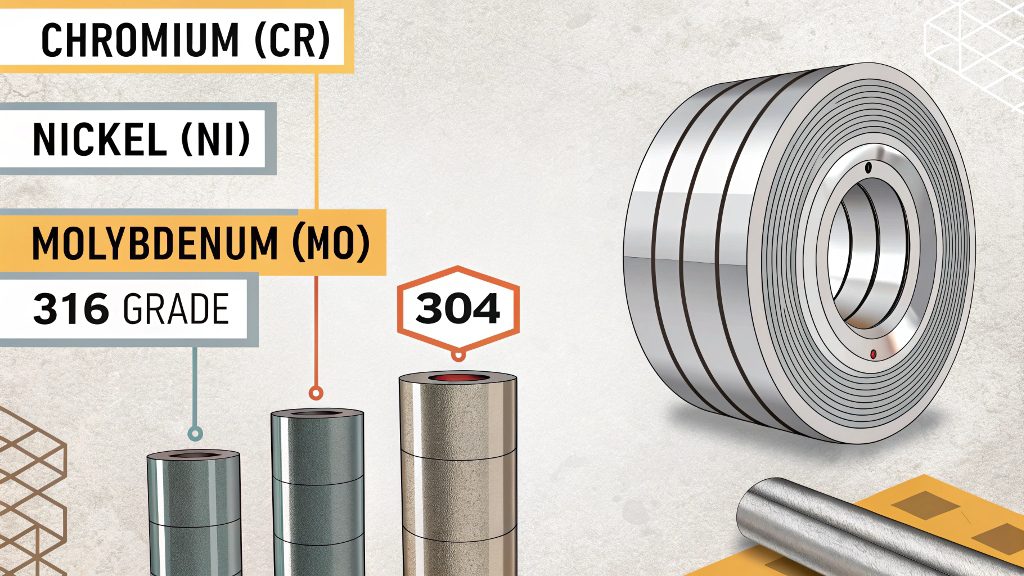

Choosing the "best" corrosion-resistant stainless steel really depends on the specific application – where and how the part will be used. For everyday situations, grade 304 is often sufficient and cost-effective. But when the environment gets more aggressive, you need alloys with more protective elements. Here’s a look at the key players:
-
Chromium (Cr): This is the most important element. It forms the invisible, passive oxide layer that protects the steel from rusting. Generally, more chromium means better basic corrosion resistance.
-
Nickel (Ni): Nickel enhances overall corrosion resistance, particularly against acids. It also makes the steel non-magnetic (in austenitic grades like 304 and 316) and improves its toughness and ability to be formed.
-
Molybdenum (Mo): This is the critical element for fighting localized corrosion, like pitting and crevice corrosion, especially when chlorides (salt) are present. This is the main reason 316 is better than 304 in marine environments.
-
Nitrogen (N): Adding nitrogen increases the steel's strength and improves its resistance to pitting corrosion, particularly important in duplex stainless steels.
Here is a simple table comparing common types:
| Grade Family | Key Alloying Elements | Corrosion Resistance Highlights | Common Uses |
|---|---|---|---|
| Austenitic (304) | High Cr, Ni | Good all-around resistance, but not vs. Cl | Kitchen equipment, architectural trim |
| Austenitic (316) | High Cr, Ni, Mo | Excellent resistance, especially to chlorides | Marine hardware, chemical tanks, medical |
| Ferritic (430) | High Cr, Low C & Ni | Moderate resistance, magnetic | Automotive exhaust, appliance panels |
| Duplex | High Cr, Mo, N | Very high strength & chloride resistance | Chemical processing, oil & gas pipelines |
At Worthy Hardware, we have experience machining a wide variety of stainless steel grades, from common 303/304/316 to more exotic duplex alloys. Our engineers can help you select the right material based on your specific needs and budget, ensuring you get the performance you require without overspending.
Is 304 or 316 more corrosion resistant?
Trying to decide between 304 and 316 stainless steel for your parts? It's a very common question we get. Choosing incorrectly can affect how long your product lasts. Let's make the difference clear.
Grade 316 stainless steel is significantly more corrosion resistant than grade 304. The main reason is that 316 contains molybdenum, which provides excellent protection against pitting and crevice corrosion, especially from chlorides like salt water.
The critical difference between 304 and 316 stainless steel comes down to one important alloying element: molybdenum (Mo). Grade 316 typically includes 2% to 3% molybdenum, whereas 304 contains none or only tiny trace amounts. This addition of molybdenum makes a huge difference in performance. It greatly boosts the steel's ability to resist corrosion, particularly the nasty localized forms like pitting (small holes) and crevice corrosion (under gaskets or bolts) that are often caused by chloride ions.
This makes 316 the preferred choice for applications near the coast, on boats (marine hardware), in chemical processing equipment, medical devices, and anywhere else exposure to salt or harsh chemicals is likely.
Grade 304, often called "18/8" (roughly 18% chromium, 8% nickel), is still a very good and widely used stainless steel. It works perfectly well for many applications like kitchen appliances, food handling equipment, architectural panels, and general hardware where the environment is less aggressive.
For customers like Mark, who need custom CNC parts, the choice between 304 and 316 often depends on the final product's environment. We machine both grades accurately at Worthy Hardware every day, meeting tight tolerances specified on drawings. We can help you weigh the cost versus the required performance.
What can I spray stainless steel with to keep from rusting?
Noticing some light rust spots or staining on your stainless steel components? This can spoil the appearance and might eventually affect function. What can you safely use to protect it?
You can use specialized stainless steel cleaners and polishes, which often leave a thin protective film. Passivating solutions offer better, chemical protection. Always avoid harsh chemicals like bleach or anything containing chlorides. Regular gentle cleaning is often the best strategy.
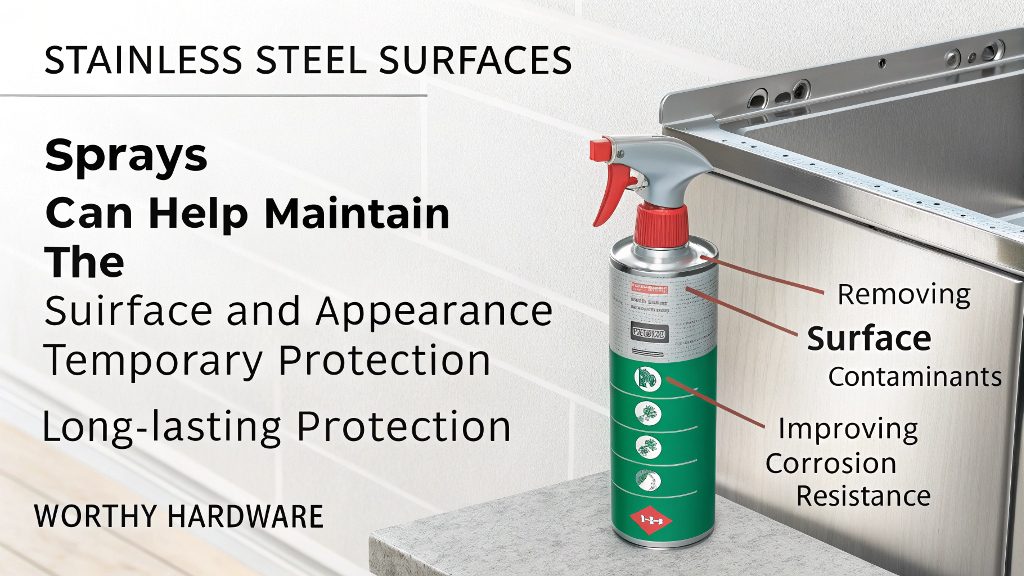
Even though stainless steel is known for its resistance, it isn't completely immune to surface issues like staining or light rusting, especially the lower grades or when placed in tough environments. Using a spray can help maintain the look and add a temporary barrier. Look for products specifically designed for stainless steel. These often contain light oils or silicone-based ingredients that help repel water, reduce fingerprints, and provide a bit of shine.
However, remember that these sprays offer only short-term protection. They are more for cleaning and appearance than for serious corrosion prevention. For more robust, long-lasting protection, especially after processes like machining, welding, or if the part will face a corrosive environment, passivation is a far superior approach.
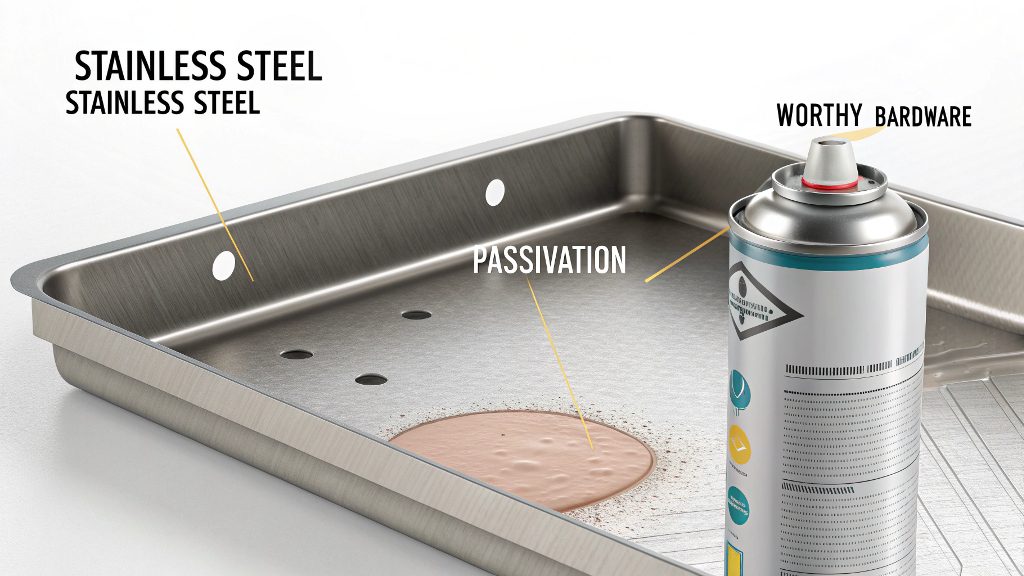
As discussed earlier, passivation isn't just a coating you spray on; it's a chemical treatment. At Worthy Hardware, we offer passivation as a finishing service. It removes surface contaminants (like free iron particles left from tools) and chemically enhances the steel's own natural protective oxide layer. What should you never use? Absolutely avoid using steel wool or carbon steel brushes for cleaning – they will scratch the surface and embed iron particles, guaranteeing future rust.
Also, stay away from cleaners containing chlorides (including bleach), strong acids, or abrasive powders. These can damage the protective passive film and actually cause corrosion. Often, the simplest and best maintenance is regular cleaning with mild soap and water, followed by a thorough rinse and complete drying. This prevents corrosive substances from building up on the surface.
Conclusion
To prevent stainless steel corrosion: select the right grade for the job, keep the surfaces clean, and consider passivation or other finishes for demanding applications. This ensures longevity.