
Metal Stamping vs. CNC Machining: Which Is Better For Your Project?

Choosing the wrong metal fabrication process can be a costly mistake. It leads to budget overruns and missed deadlines, putting your entire project at risk.
For high-volume production, metal stamping is more cost-effective. For low-volume, high-precision parts or prototypes, CNC machining is the better choice. The best method depends entirely on your project's specific needs for quantity, budget, and complexity.
Making the right decision isn't just about the final part; it's about optimizing your entire production plan from the start. You need to weigh the upfront costs against the per-piece price and consider factors like speed and design flexibility. Let's break down the key differences so you can feel confident in your choice.
What is the difference between CNC and stamping?
You know you need a metal part, but the methods seem confusing. Choosing incorrectly can lead to wasted materials and a process that is not suited for your needs.
The main difference is how they shape metal. Stamping is a forming process that uses a die to press a sheet of metal into shape. CNC machining is a subtractive process that cuts material away from a solid block.
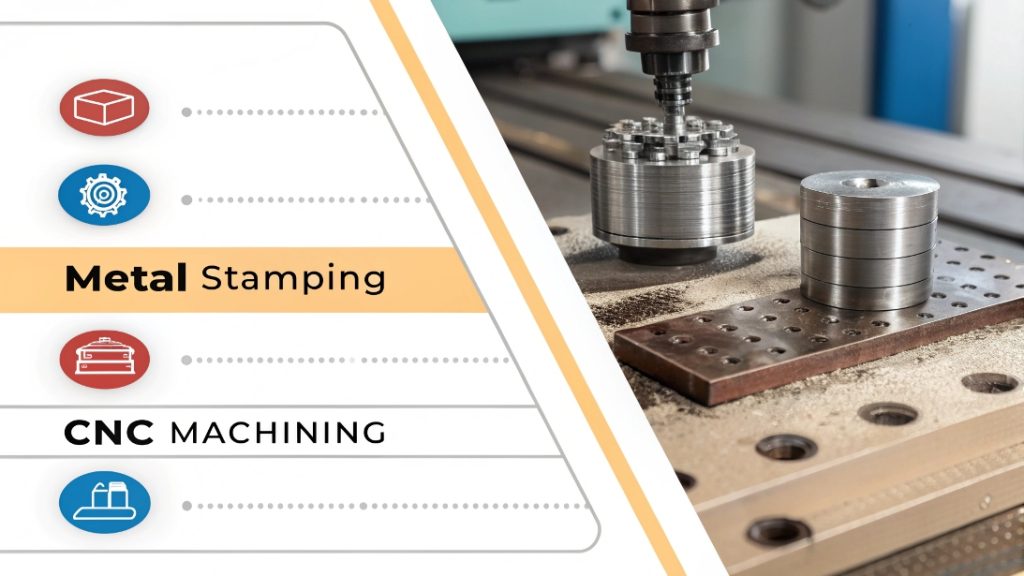
Let's dive deeper into what this means. With metal stamping, we first have to build a very hard tool, called a die. This die is the exact negative shape of the part you want. We then put this die into a large press. A coil of sheet metal is fed into the press, and with each stroke, the machine stamps out a perfect part at incredible speed. This is ideal for things like brackets, clips, and terminals.
CNC machining, on the other hand, starts with a solid block or rod of metal. A computer program tells a sharp cutting tool exactly where to move, carving away the material layer by layer until only the final part remains. It's like a robot sculptor. This method is much slower per part but allows for incredibly complex shapes and is great for thicker materials.
Here is a simple table to show the basic differences:
| Feature | Metal Stamping | CNC Machining |
|---|---|---|
| Process Type | Forming (Pressing) | Subtractive (Cutting) |
| Starting Material | Thin metal sheet or coil | Solid block or rod of metal |
| How it Works | A custom die shapes the metal with pressure. | A computer-controlled tool cuts the metal. |
| Best For | High volumes of simpler, repeatable parts. | Low volumes of complex, high-precision parts. |
What is the biggest disadvantage of using CNC machines?
You need extremely precise parts, and CNC machining seems like the obvious choice. But if you need a large quantity, the high per-unit cost can quickly destroy your project's budget.
The biggest disadvantage of using CNC machines is the higher per-unit cost and slower production speed, especially for large quantities. Each part is made one at a time, which makes it less economical for mass production.
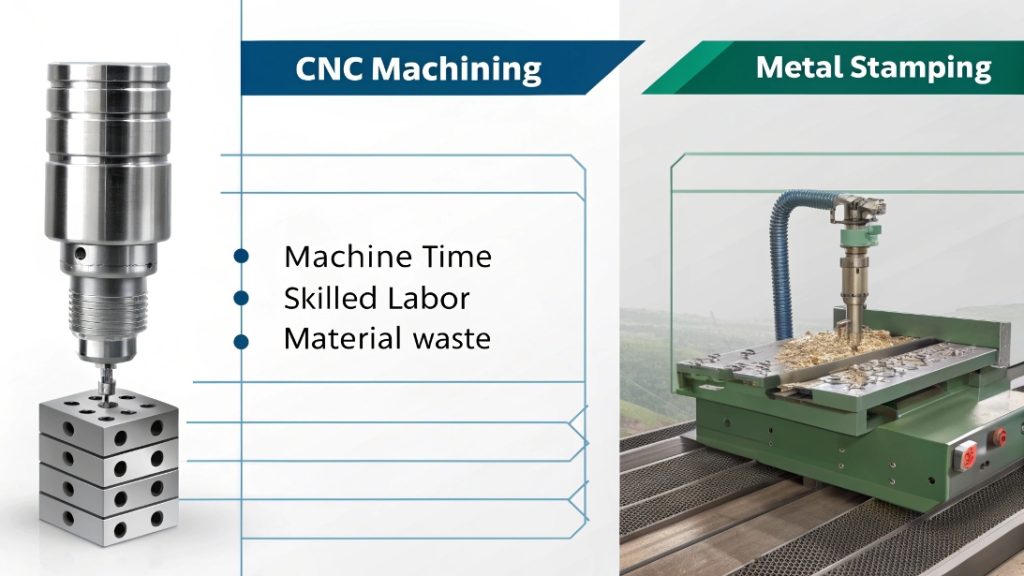
The cost of CNC machining comes from several factors. First, there's the machine time. A complex part can take minutes or even hours to machine. During this entire time, you're paying for an expensive machine to be running. Second, it often requires a skilled operator to set up and monitor the process. Third, you have material waste. All the metal that is cut away, called swarf, is essentially wasted material that you paid for.
For a prototype or a small run of 100 parts, this is perfectly fine. The cost is justified by the precision and the fact that you don't need to invest in expensive tooling. However, if a customer like Mark from Canada needs 500,000 terminals, the cost and time would be enormous. Stamping would be a much better choice in that case.
Here’s a breakdown of the cost structure:
| Cost Aspect | CNC Machining | Metal Stamping |
|---|---|---|
| Tooling Cost | Low to None (uses standard cutting tools) | High (requires custom-built die) |
| Per-Unit Cost | High (machine time, labor, material waste) | Very Low (fast cycle times, minimal labor per part) |
| Speed | Slow (parts are made sequentially) | Extremely Fast (hundreds of parts per minute) |
| Material Waste | High (material is cut away from a solid block) | Low (parts are nested efficiently on a metal coil) |
What are the disadvantages of stamping?
You want the low per-unit cost that stamping offers for your large order. But the huge upfront investment in tooling and the long wait time can be a major barrier to starting.
The main disadvantage of stamping is the high initial cost and long lead time needed to design and build the custom tool and die. This makes it a poor choice for low-volume projects or frequent design changes.
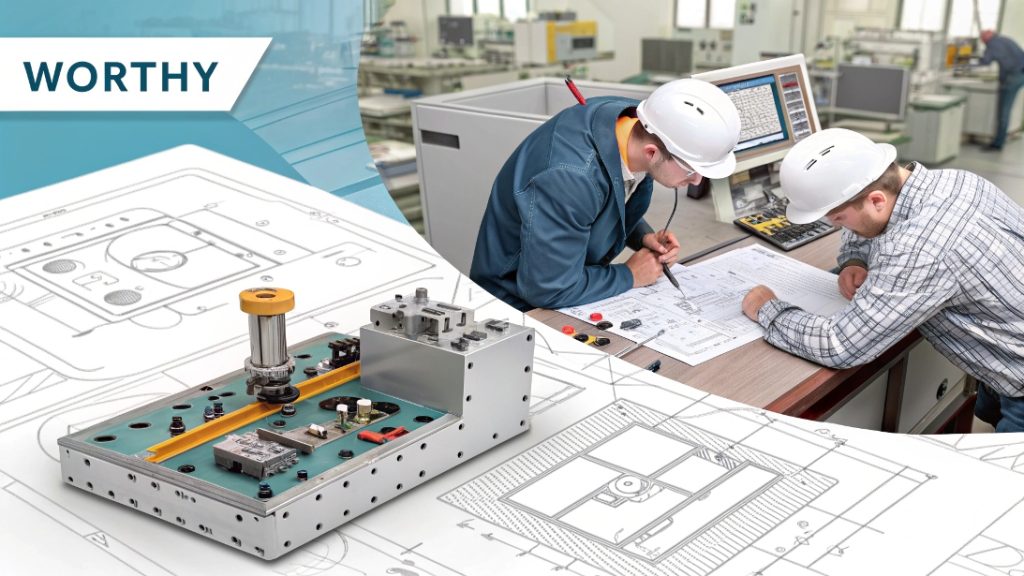
The tool and die is the heart of the stamping process, and it has to be perfect. It's made from hardened tool steel and must be engineered with extreme precision. Designing, building, and testing a complex progressive die can take many weeks, sometimes months. This is a significant investment of both time and money before you ever produce a single part. At my company, Worthy, this is a major part of the initial discussion with a new client.
Another key disadvantage is the lack of flexibility. Once that die is made, changing the design is very difficult and expensive. If you decide you want to move a hole by 2mm, it might require a complete rebuild of a section of the die. This is why we work so closely with our clients upfront. Our engineers use their experience to help customers perfect their designs before we cut any steel for the tool. This partnership approach saves a lot of headaches later on. It’s not suitable for products still in a testing or development phase.
Which method of machining is more accurate?
Your product must meet very tight tolerances to function correctly. Choosing the wrong process can lead to parts that don't fit, causing assembly failures and costly quality issues down the line.
Generally, CNC machining can achieve tighter tolerances and greater complexity. However, modern precision stamping can hold extremely consistent tolerances over millions of parts, which is a different kind of accuracy critical for mass production.
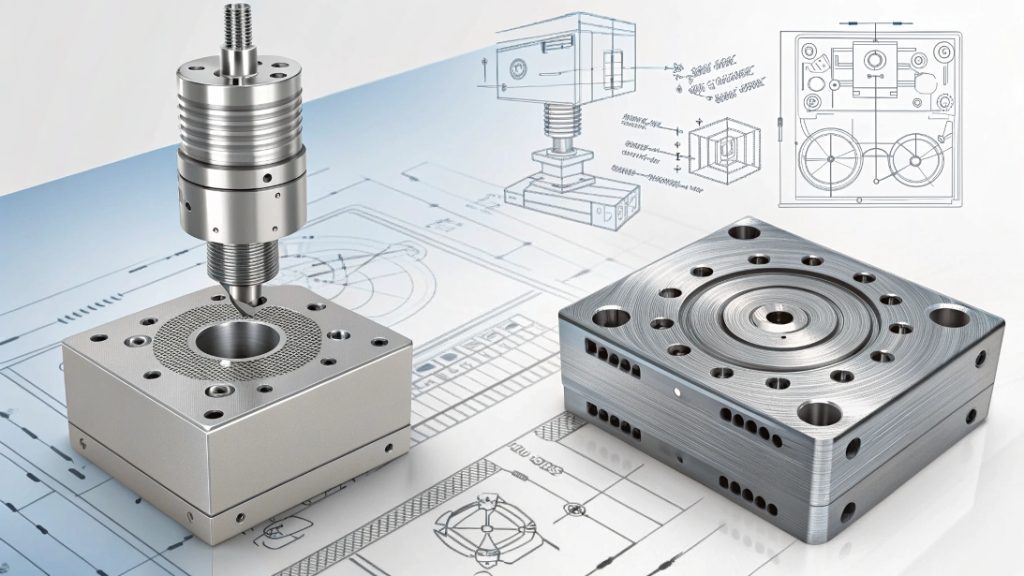
CNC machining excels at absolute accuracy for a single part. Because a computer controls every movement of the cutting tool, it can create intricate features and hit tolerances as tight as 0.025mm, something we achieve regularly here at Worthy. For a one-off part for a medical device or an aerospace application, CNC is often the only way to get the required precision.
Metal stamping's strength is in its consistency. The accuracy of a stamped part is determined by the accuracy of the die. Once a high-quality die is made, it will produce the first part and the millionth part with almost no variation. This repeatability is vital for customers in the automotive and electronics industries, where every single component in a large batch must be identical. While the absolute complexity might be less than CNC, the ability to hold a tolerance of +/- 0.05mm across an entire production run is a powerful form of accuracy.
Here's how they compare on accuracy:
| Accuracy Aspect | CNC Machining | Metal Stamping |
|---|---|---|
| Typical Tolerance | Extremely Tight (can reach +/- 0.025mm or better) | Very Good (typically +/- 0.05mm to +/- 0.1mm) |
| Complexity | Can produce highly complex 3D shapes and features. | Best for 2D or 3D parts formed from sheet metal. |
| Consistency | Consistency depends on machine setup for each part. | Extremely high consistency; every part is identical. |
| Best for... | Prototypes, complex parts, ultra-high precision needs. | High-volume production where consistency is the top priority. |
Conclusion
The right choice is clear when you know your priorities. Use CNC for precision, complexity, and prototypes. Choose stamping for high volume, speed, and unbeatable per-unit cost on large runs.