
How to Design CNC Parts to Minimize Material Fatigue?
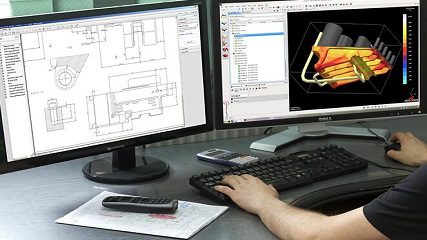
Are your machined parts failing sooner than expected? This premature failure, often due to material fatigue, leads to costly replacements and frustrating downtime. Smart design choices can significantly reduce this risk.
Optimizing part design is the primary way to minimize material fatigue in CNC parts. This involves avoiding sharp internal corners, using generous fillets and radii, selecting appropriate materials based on load conditions, and carefully considering stress concentrations during the design phase.
Understanding how design choices impact a part's lifespan under repeated stress is crucial. Thinking about the manufacturing process, specifically CNC machining, right from the start helps create parts that are not only strong but also efficient to produce. Let's explore how to design better, more durable parts.
How to design parts for CNC machining?
Struggling with designs that are difficult or expensive to machine? This happens when design ignores manufacturing limits, causing delays and higher costs. Designing for CNC solves this.
Design parts for CNC by simplifying geometry, using standard features like hole sizes and threads, specifying tolerances only as tight as needed, ensuring tools can reach all features, and selecting easily machinable materials whenever possible.
Designing for CNC machining means thinking like a machinist from the beginning. Complex shapes that look good on screen might be very hard or impossible to cut with standard tools. Deep, narrow pockets require special, long, thin tools that are prone to breaking and slow down the process. Instead, aim for simpler shapes and profiles where you can. Always ask yourself: can a standard cutting tool easily access this feature?
Another key area is tolerances. While my team at Worthy Hardware can achieve very tight tolerances (down to +/- 0.001" or even tighter based on drawings), specifying unnecessary precision significantly increases machining time and cost.
Use standard tolerances (like +/- 0.005" for metals as per ISO 2768) unless the function absolutely requires more. Standardizing features like hole diameters or thread types also helps, as it minimizes the need for tool changes.
Choosing the right material is a balance. We work with over 100 materials, but some machine much faster and easier than others, impacting cost. Consider if a more machinable grade (like Aluminum 6061 vs. a harder steel) meets the performance needs.
| Design Consideration | Easy to Machine | Harder/More Expensive to Machine |
|---|---|---|
| Internal Corners | Generous radius (e.g., >3mm) | Sharp corners or very small radii |
| Wall Thickness | Uniform, relatively thick (>0.8mm) | Very thin walls, non-uniform thickness |
| Pockets/Cavities | Shallow, wide | Deep, narrow pockets |
| Tolerances | Standard (+/- 0.005" / 0.127mm) | Very tight (+/- 0.001" / 0.025mm) |
| Features | Standard holes, threads | Complex curves, non-standard features |
| Material | Aluminum 6061, Brass, Acetal (Delrin) | Stainless Steel 316, Titanium, PEEK |
How to improve CNC efficiency?
Are long machining times driving up your costs? Slow production means higher expenses and potential delays in getting your parts. Optimizing design and machining strategies boosts efficiency.
Improve CNC efficiency by optimizing toolpaths (e.g., using High-Speed Machining techniques), selecting appropriate cutting speeds and feeds, minimizing tool changes through smart design and programming, designing for easy workholding, and choosing materials with good machinability.

Efficiency in CNC machining comes from several factors. On the machine side, how the tool moves (the toolpath) makes a big difference. Modern CAM software allows for strategies like High-Speed Machining (HSM), which uses shallower cuts at much faster speeds, reducing cycle times and tool wear. Using the right cutting speeds and feeds for the specific material and tool is also vital – too slow wastes time, too fast can break tools or give a poor finish.
From a design perspective, think about how the part will be held (workholding). Simple, flat surfaces for clamping are easier and faster to set up than complex shapes requiring custom fixtures. Reducing the number of different tools needed also saves time, as each tool change stops the cutting process.
If you can design features using common tool sizes or combine operations, it helps. Material choice impacts cutting speed directly; softer metals like aluminum machine much faster than hard steels or titanium. At Worthy Hardware, our engineers often help customers review designs to find ways to make them faster and cheaper to machine without compromising function.
| Efficiency Factor | How it Improves Efficiency | Design/Process Implication |
|---|---|---|
| Toolpath Optimization | Reduces cutting time, smoother motion, less tool wear | Use modern CAM software, HSM techniques |
| Cutting Parameters | Maximizes material removal rate | Select correct speeds/feeds based on material, tool, machine |
| Tool Management | Minimizes non-cutting time (tool changes) | Design using fewer tool types, standardize features |
| Workholding | Reduces setup time, ensures stability | Design parts with clear clamping surfaces, consider fixtures |
| Material Selection | Faster cutting speeds possible, less tool wear | Choose machinable materials when performance allows |
| Machine Maintenance | Prevents breakdowns, ensures accuracy | Regular servicing, proper lubrication |
What is the rule of thumb for CNC?
Need some simple guidelines for designing machinable parts? It's easy to get overwhelmed by details, leading to complex or costly designs. Following basic rules helps streamline the process.
Key CNC rules of thumb: Keep designs simple. Use generous radii on internal corners (bigger than tool radius). Specify tolerances wisely. Ensure tool access. Choose machinable materials. Communicate clearly with your machinist.

When designing for CNC, a few simple rules can save a lot of trouble. Firstly, keep it simple. Avoid unnecessary complexity. Secondly, avoid sharp internal corners. Cutting tools are round, so they leave a radius. Design internal corners with a radius larger than the cutting tool's radius – a good rule is at least 1/3 of the cutter diameter, but bigger is always better and cheaper. For example, if a 10mm diameter end mill is used, aim for at least a 3mm radius, ideally more.
Thirdly, mind wall thickness. Aim for uniform thickness and avoid very thin walls, which can vibrate or warp during machining. A common guideline is >0.8mm for metals and >1.5mm for plastics. Fourth, watch hole depths. Very deep holes (generally deeper than 6 times the diameter) require special techniques and increase risk/cost. Fifth, use standard tolerances unless high precision is truly essential.
Finally, think about tool access. Can a standard tool reach all the surfaces that need machining? Following these guidelines makes parts easier, faster, and less expensive to produce. Clear communication with your supplier, like us at Worthy Hardware, is also key – we can often provide feedback based on your drawings.
| Rule of Thumb | Guideline | Why it Matters |
|---|---|---|
| Simplicity | Avoid unnecessary complex features | Reduces machining time and potential errors |
| Internal Radii | Radius > 1/3 tool diameter (bigger is better) | Standard tools can cut it, faster machining |
| Wall Thickness | > 0.8mm (metal), > 1.5mm (plastic), uniform | Prevents vibration, warping, easier machining |
| Hole Depth | Ideally < 6x diameter | Deep holes require special tools/techniques, slower |
| Tolerances | Use standard unless functionally required | Tighter tolerances increase cost and time |
| Tool Access | Ensure features are reachable | Avoids need for complex setups or special tools |
| Material Choice | Consider machinability | Directly impacts speed, tool life, and cost |
How can CNC machines be used for greener manufacturing?
Concerned about manufacturing's environmental impact? Wasteful processes consume resources and energy, harming the planet. CNC machining offers ways to be more sustainable.
CNC machining aids greener manufacturing through efficient material use (optimizing designs to reduce scrap), energy-saving optimized toolpaths, potential use of recycled metals, and producing durable, long-lasting parts that minimize the need for replacements.

While CNC machining is a subtractive process (it removes material), there are several ways it contributes to greener manufacturing. Firstly, design optimization plays a huge role. By carefully designing parts, we can minimize the amount of raw material needed and reduce the volume of chips (waste) produced.
Starting with near-net shape stock, where possible, also helps. Modern CAM software helps create highly efficient toolpaths that reduce cutting time, which directly translates to lower energy consumption per part.
Secondly, the management of cutting fluids (coolants) is important. Using environmentally friendly coolants, recycling them effectively, or even employing dry machining techniques where suitable reduces environmental impact. Thirdly, CNC machines can effectively process recycled materials. For example, parts can be machined from billets made of recycled aluminum or steel, supporting a circular economy.
Finally, CNC machining produces highly accurate and durable parts. Parts that perform well and last longer reduce the frequency of replacements, saving resources and energy over the product's entire lifecycle. At Worthy Hardware, we focus on quality and precision, ensuring the parts we make contribute to the longevity of our customers' products.
Conclusion
Optimizing part design is crucial. By considering material fatigue, CNC process limits, and efficiency from the start, you create durable, cost-effective parts that contribute to greener manufacturing.