
How to Choose the Right Aluminum Alloy for Your Metal Stamping Project?
Struggling to pick an aluminum alloy for stamping? The wrong choice leads to high costs and failed parts. I will show you how to easily select the right one.
Choosing the right aluminum alloy means balancing workability, strength, corrosion resistance, and cost. Common choices like 3003 are great for simple parts, while 5052 offers higher strength for applications like automotive components. Always match the alloy's properties to your product's final use.
Making the right material choice at the start of your project is one of the most critical steps. I have seen clients come to us with designs that specify an alloy completely unsuited for their needs, leading to unnecessary costs and delays. We work with them to correct these issues before we even make the tool. It is much better to get it right from the beginning. Let's break down how you can make a better, more informed decision for your next project and avoid common pitfalls.
How to choose the right aluminium alloy?
It feels overwhelming looking at a long list of alloy numbers. Picking one randomly is a gamble. You might overpay for features you do not need.
The best way to choose an alloy is to clearly define your product's needs first. Consider its strength requirements, the environment it will be used in, and your budget. Then, you can match these needs to the properties of a specific alloy, like 3003 or 5052.
To choose the right alloy, I always ask my customers three main questions. This simple process helps us narrow down the options very quickly. It prevents you from choosing an expensive, high-strength alloy when a more affordable and formable one would work perfectly.
The 3 Key Questions to Ask
- What is the application? Where will the final part be used? A part for an indoor electronic device has very different needs than a bracket for a car's exterior. The application tells us about the need for corrosion resistance and strength.
- What is the budget? Some alloys, like 5052, cost more than others, like 3003. Knowing your budget helps us find the best balance between performance and cost. A customer once insisted on 6061 for a simple cover plate, but we showed him that 3003 would meet all his needs and save him almost 30% in material costs.
- What are the physical demands? Does the part need to be very strong? Does it need to bend without cracking? These questions determine the required strength and formability.
Based on these questions, we can create a simple decision table.
| Requirement | Best Choice | Why? |
|---|---|---|
| Low Cost, Good Formability | 3003 Aluminum | Excellent for simple parts, good corrosion resistance. |
| High Strength, Good Corrosion Resistance | 5052 Aluminum | Ideal for automotive or marine parts that need durability. |
| General Purpose, Heat Treatable | 6061 Aluminum | Good all-around choice but can be harder to stamp. |
What is the best aluminum for stamping?
Are you looking for one single "best" aluminum for every stamping job? That single best option simply does not exist. The answer always depends on your specific part.
For most stamped parts requiring good formability, 3003 aluminum is an excellent and cost-effective choice. For parts needing higher strength and durability, especially in tough environments, 5052 aluminum is often the superior option. Both are fantastic materials, but they serve different purposes.
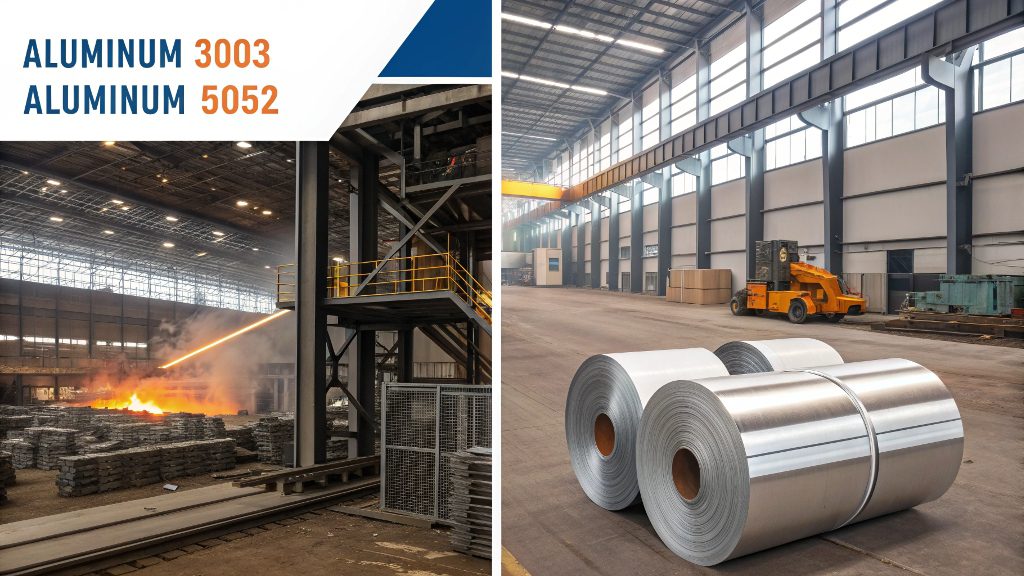
The "best" aluminum is the one that meets your product's requirements without being over-engineered. We find that about 80% of the aluminum stamping projects we handle can be successfully made from either 3003 or 5052 aluminum. These two alloys cover a very wide range of applications, from simple brackets to complex electronic enclosures.
Deep Dive: 3003 vs. 5052
While both are great for stamping, they have key differences. I always explain these to my clients so they can make a confident choice.
-
Aluminum 3003: This is the workhorse. It’s one of the most common aluminum alloys we use. It is very easy to form, which means less stress on the stamping tools and a lower chance of parts cracking during production. It also has very good corrosion resistance. However, it is not very strong. It’s perfect for parts like kitchenware, decorative trim, and simple electronic brackets.
-
Aluminum 5052: This is a step up in performance. It offers significantly higher strength than 3003. This makes it a go-to choice for parts that need to be more durable, like automotive components, marine hardware, and chassis for electronics. The tradeoff is that it is less formable than 3003 and costs more, sometimes up to 20% more.
How to determine aluminum alloy type?
You might have an existing part but no documentation. How can you figure out what alloy it is made from? This can be difficult without lab equipment.
The most reliable way to determine an aluminum alloy type is through X-Ray Fluorescence (XRF) analysis. This is a non-destructive method where a handheld device can give you the exact chemical composition of the material. Most professional suppliers, like us at Worthy, have these tools.
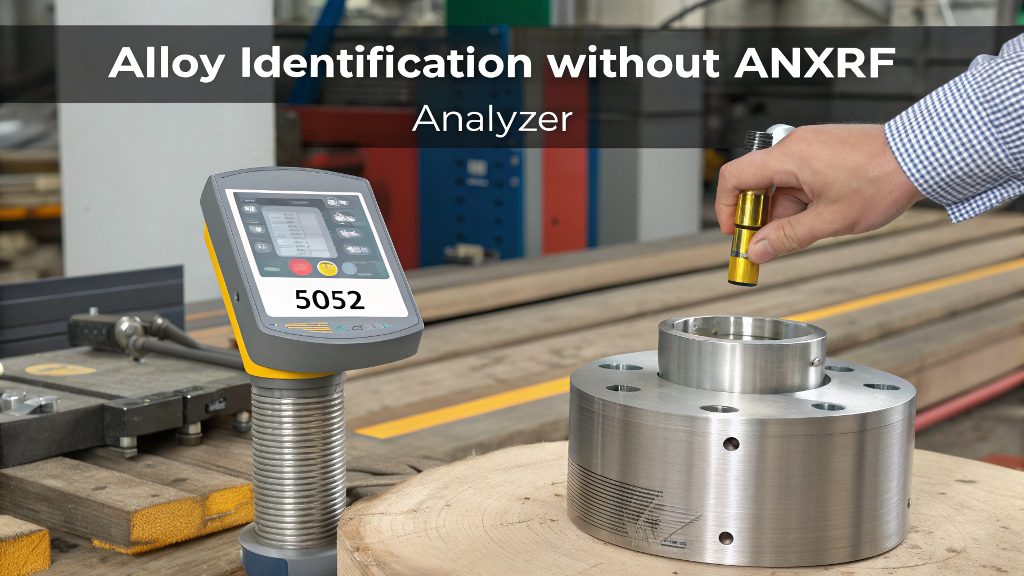
I remember a new client from Canada, Mark, who wanted us to replicate a part he was sourcing elsewhere. His previous supplier was gone, and he had no drawings. He just sent us a sample. We used our XRF analyzer and found it was 5052 aluminum. He thought it was a more common, cheaper alloy. This discovery explained why his previous parts performed so well. We were then able to quote accurately and produce parts that met his expectations exactly. Without the analyzer, we would have been guessing.
Methods for Alloy Identification
If you don't have access to an XRF analyzer, there are some less precise methods you can try, but these are not always reliable.
- Check for Markings: Look very closely at the part. Sometimes, the alloy series number (like "6061") is stamped or etched onto the surface, especially on raw material stock.
- Hardness Testing: Different alloys have different hardness ratings. You can use hardness testing files or a Rockwell hardness tester. By comparing the result to known standards, you can get a good idea of the alloy family. For example, 6061 is much harder than 3003.
- Chemical Spot Test: You can use specific chemical reagents that react differently with various alloying elements, like copper or magnesium. This is a more complex method and requires proper safety precautions.
For business purposes, where accuracy is critical, I strongly recommend a professional analysis. A wrong guess could lead to product failure.
What is the best material for metal stamping?
You may wonder if aluminum is even the right choice. Is there a better overall material for metal stamping? Again, the answer depends entirely on your project's needs.
There is no single "best" material for all metal stamping. Steel is chosen for strength and low cost, aluminum for its light weight and corrosion resistance, and copper or brass for their electrical conductivity. The best material is the one that perfectly matches your application's requirements.
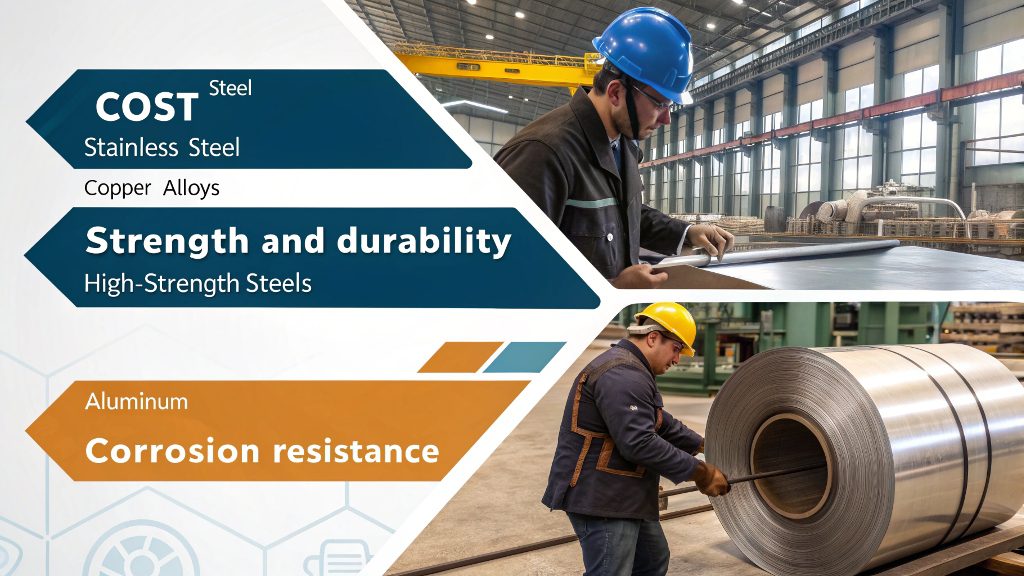
At my company, we stamp parts from over 100 different materials. The choice always comes down to a balance of four key factors. An aerospace part has very different priorities than a clip for a consumer product. Understanding this balance is key to choosing not just the right aluminum, but the right metal overall.
The Big Four: Factors for Material Selection
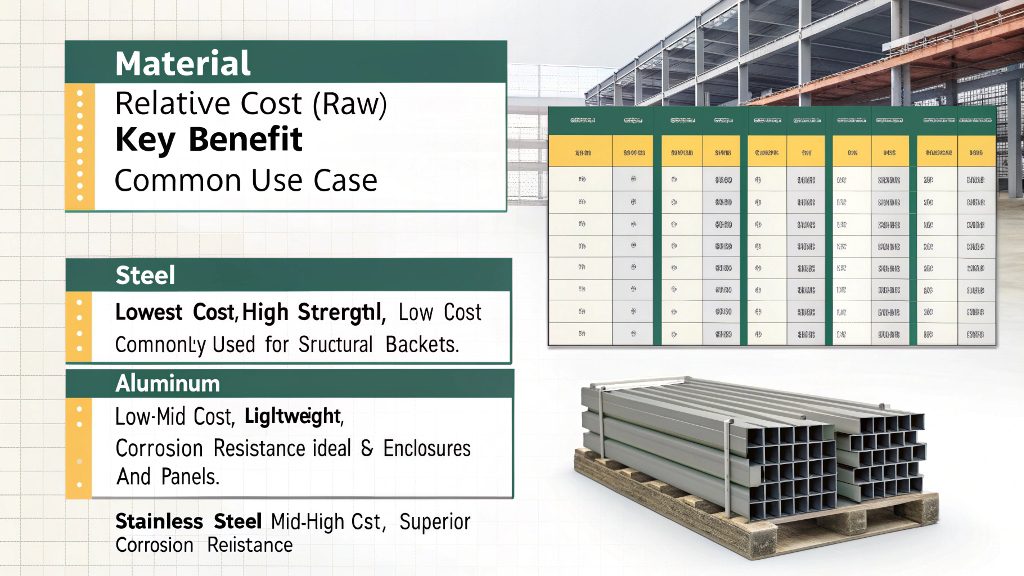
- Cost: Cold-rolled steel is often the cheapest option. Stainless steel and copper alloys are typically much more expensive. Aluminum sits somewhere in the middle, offering a great balance of properties for its price.
- Strength & Durability: If your part needs to withstand heavy loads, a high-strength steel or certain stainless steel grades might be necessary. Some aluminum alloys, like 6061-T6, are very strong, but heat-treated steel is stronger.
- Weight: This is where aluminum shines. It has an excellent strength-to-weight ratio, about one-third the weight of steel. This is critical for automotive, aerospace, and portable electronic applications where reducing weight is a top priority.
- Corrosion & Conductivity: For parts exposed to moisture, stainless steel and aluminum are excellent choices. If your part needs to conduct electricity, like a terminal or connector, copper or brass are the clear winners.
Conclusion
Choosing the right aluminum alloy, or any metal, comes down to understanding your project's needs for strength, cost, weight, and environment. A clear choice ensures a successful product.