
How Tight Can Tolerances Get in Precision CNC Machining?
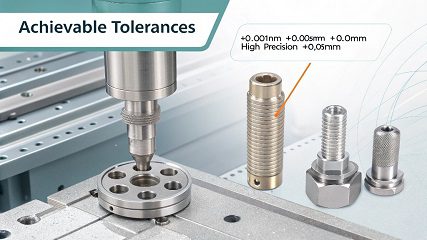
Struggling to define achievable tolerances for your parts? Specifying tolerances that are too tight can lead to wasted time and high costs. Let's clarify what is realistically possible.
The tightest CNC machining tolerances can theoretically approach 0.001mm, but this is extremely difficult and costly to achieve in practice. A more realistic high-precision tolerance is about +/-0.005mm to +/-0.01mm, while a standard, high-quality tolerance is typically held at +/-0.05mm for most applications.
Getting the right tolerance is a balancing act. You need your parts to function perfectly, but you also need them to be affordable and delivered on time. Over-specifying a tolerance that isn't necessary is one of the quickest ways to increase costs and production time. After 30 years in this business, I've seen it happen many times. The key is understanding what factors influence precision and what you can realistically expect. Let's dive deeper into the specifics so you can make better-informed decisions for your next project.
What is the tolerance limit for CNC?
Chasing the ultimate precision for your parts? This can quickly increase your budget and push back deadlines. Knowing the real-world limits helps you make much smarter engineering decisions.
The theoretical limit for CNC machining can get close to 0.001mm, but this is rarely practical for production. The realistic limit for most high-precision work is closer to +/-0.005mm. Anything tighter requires specialized controls, equipment, and significant cost increases.
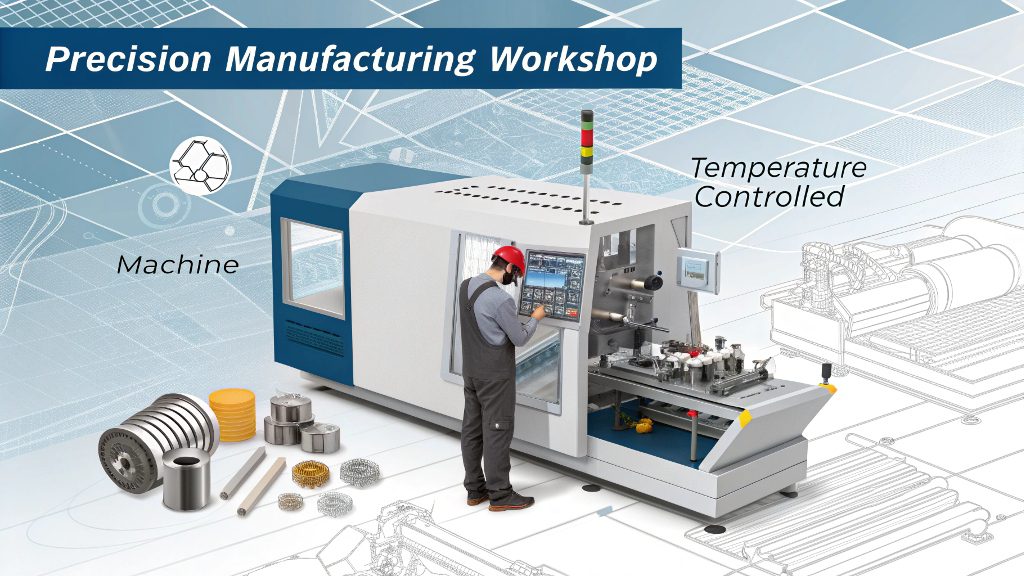
In my experience, the "limit" is not just one number. It's a combination of different factors working together. I remember a client who needed a critical component with a tolerance of just 0.003mm. To achieve this, we had to use our best 5-axis machine in a temperature-controlled room and even account for the heat the machine generated during operation. The process was slow and meticulous, which made the part very expensive. It shows that while we can push the limits, it's not practical for every job.
Here are the key factors that define the true limit:
- Machine Capability: The quality, age, and calibration of the CNC machine are the most important factors. High-end 5-axis machines can achieve tighter tolerances than standard 3-axis machines.
- Material Choice: Different materials react differently. Soft metals like aluminum can be machined precisely, but they also expand and contract more with temperature changes. Harder materials like tool steel are more stable but cause more tool wear.
- Tooling: The cutting tool itself wears down over time, which affects precision. For tight tolerance work, we have to change tools more frequently and use high-quality, sharp cutters.
Understanding these factors helps explain why pushing for the absolute limit isn't always the best approach.
What is the tolerance for CNC precision?
Are you defining "precision" in your designs? Using the right tolerance ensures your parts fit and function correctly without over-engineering them. Let's define what CNC precision and standard tolerances mean.
CNC precision tolerance typically falls between +/-0.01mm and +/-0.025mm. This is for parts needing a high degree of accuracy. For general applications, a standard tolerance of +/-0.05mm to +/-0.127mm is common, cost-effective, and suitable for most parts.
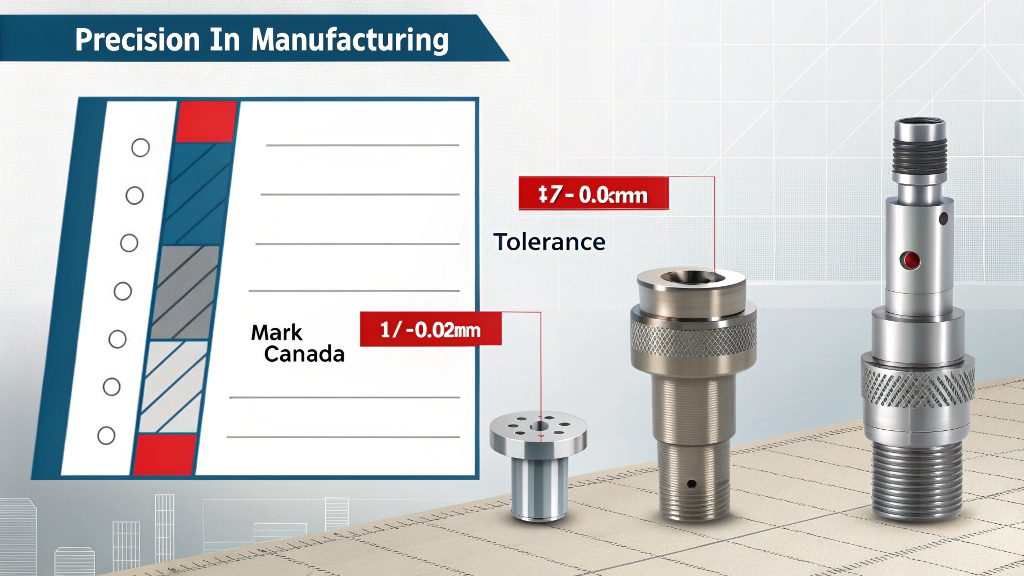
The term "precision" can mean different things to different people. For us at Worthy, it's about consistently meeting the specifications on your drawing. We consider anything tighter than our standard +/-0.05mm tolerance to be in the precision category. A customer from Canada, Mark, often sends us drawings for parts used in industrial machinery. Some features on his parts require a precision fit, so he will specify a tolerance of +/-0.02mm on a specific hole diameter. The rest of the part, however, can use our standard tolerance. This is a smart way to design. It lowers the overall cost because we can focus our efforts and machine time only on the critical features that need it. This hybrid approach is very efficient.
Here’s a simple breakdown of tolerance levels:
| Tolerance Level | Typical Range (mm) | Common Applications |
|---|---|---|
| Standard | +/- 0.05 to 0.125 | General parts, enclosures, brackets, non-critical fits |
| Precision | +/- 0.01 to 0.025 | Mating parts, bearing fits, high-performance components |
| High-Precision | +/- 0.005 or less | Aerospace, medical devices, optical instruments |
By specifying precision tolerances only where they are needed, you ensure functionality while keeping your project on budget.
How precise of a tolerance can CNC equipment create?
Worried your CNC machine shop can't hit your specs? The machine itself is a huge part of the equation. Let's look at what the equipment is truly capable of creating.
High-end, well-maintained CNC equipment can create tolerances as precise as +/-0.005mm. Some specialized machines can achieve even tighter results. However, the machine's condition, the operator's skill, and the operating environment all play a critical role in achieving this level of precision.
The capabilities of CNC equipment can vary widely. A brand-new, top-of-the-line 5-axis milling machine is like a surgical tool—it can make incredibly small and precise cuts. In contrast, an older 3-axis machine might be better suited for parts with more standard tolerances. At our facility, we invest in good equipment and maintain it carefully because we know it directly impacts the quality we deliver to customers like you. But the machine is only part of the story. The skill of the machinist is just as important. An experienced machinist knows how to compensate for tool wear, manage cutting speeds, and understand the unique properties of the material they are working with.
Here are three elements that determine equipment precision:
1. Thermal Stability
Machines heat up during operation, and this heat can cause the machine frame and the workpiece to expand by tiny amounts, affecting precision. We manage this by keeping our shop at a stable temperature and using machine coolant systems.
2. Spindle and Axis Accuracy
The machine's spindle must be perfectly balanced, and the X, Y, and Z axes must move with extreme accuracy without any backlash or vibration. Regular calibration and maintenance are essential to ensure this.
3. Machine Rigidity
A heavy, rigid machine frame absorbs vibrations from the cutting process. Less vibration means a smoother surface finish and the ability to hold tighter tolerances.
So, when you ask about equipment precision, it's about the machine's quality, maintenance, and the environment it operates in.
What are the realistic tolerances for machining?
Designing a part and not sure what tolerance to specify? Choosing an unrealistic number can cause problems later. Let's talk about what makes a tolerance realistic for most projects.
For most metal parts, a realistic and cost-effective tolerance is +/-0.05mm. For plastics, +/-0.1mm is a safe standard. Tighter tolerances are achievable but should only be specified for critical features, as they will increase both cost and manufacturing time.
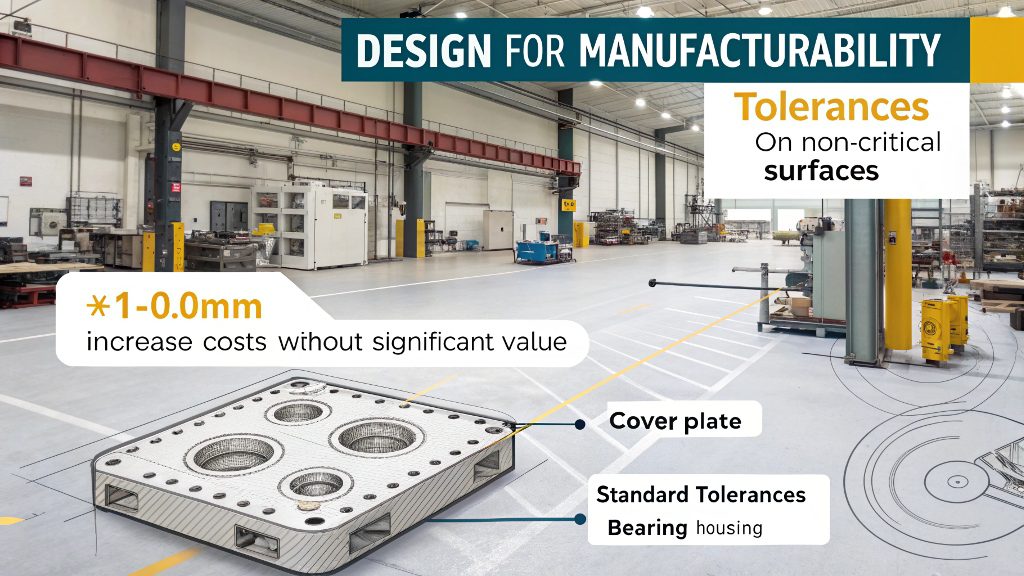
One of the biggest lessons I've learned is the importance of "design for manufacturability." This means designing parts that are not only functional but also easy and affordable to make. A huge part of this is choosing realistic tolerances. I often talk with customers who specify a very tight tolerance, like +/-0.01mm, across an entire part. When I ask why, they sometimes say they just wanted to ensure high quality. While the intention is good, this approach makes the part unnecessarily expensive. We can often save them 30-50% on cost just by relaxing the tolerances on non-critical surfaces. A realistic tolerance is one that meets the functional needs of your part without adding unnecessary cost.
Consider these factors when choosing a tolerance:
- Part Function: Does this feature mate with another part? Does it house a bearing? If so, it needs a tighter tolerance. If it's just a cover plate, a standard tolerance is fine.
- Material: Softer materials like plastics are less dimensionally stable than metals like steel. You should allow for a looser tolerance on plastic parts.
- Cost: The relationship between tolerance and cost is not linear. Going from +/-0.1mm to +/-0.05mm might increase cost slightly. Going from +/-0.05mm to +/-0.01mm could double it.
At Worthy, we can hold tolerances down to +/-0.005mm when needed, but we always encourage our customers to use our standard of +/-0.05mm wherever possible. It's the most reliable and cost-effective solution for quality parts.
Conclusion
Understanding CNC tolerances helps you design better, more cost-effective parts. While very tight precision is possible, a standard tolerance of +/-0.05mm is realistic and efficient for most projects.