
How Does Industrial Laser Cutting Work for Sheet Metal Projects?
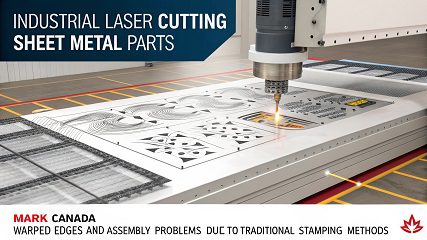
Need precise sheet metal parts? Traditional cutting is slow and can cause damage. Industrial laser cuttingoffers a fast, accurate, and non-contact solution for your projects.
Industrial laser cutting uses a high-powered, focused laser beam to melt, burn, or vaporize sheet metal. A computer directs the laser's path to create precise cuts and complex shapes. This non-contact process is fast, accurate, and works on materials like steel, aluminum, and stainless steel.
I remember a client, Mark from Canada, who was struggling with parts for his engineering machinery. The enclosures he needed had very specific and complex cutouts. Before he came to us, his old supplier's stamping method left warped edges and couldn't hold the tight tolerances. He was frustrated because these defects were causing assembly problems down the line. We showed him how our laser cutters work. Understanding the process can really change how you approach your projects. Let's break down exactly how this technology works and why it’s a game-changer for sheet metal.
How does laser metal cutting work?
Wondering how light cuts through metal? This uncertainty can make choosing the right process difficult. It’s a focused process of melting metal with a laser and removing it.
Laser metal cutting works by focusing a powerful laser beam onto a tiny spot on the metal sheet. The intense heat melts or vaporizes the material. A jet of assist gas, like nitrogen or oxygen, then blows the molten metal away, leaving a clean, precise cut.
To really understand it, let's look at the main parts of the system. The process is very controlled and automated. First, a computer program, using your CAD file, tells the machine exactly where to cut. The laser beam itself is generated inside the machine and guided by mirrors. It travels to a cutting head that has a special lens. This lens focuses all the laser's power onto a single point, smaller than a pinhead. This concentration of energy is what melts the metal almost instantly. At the same time, a stream of gas is shot through the nozzle along with the laser. This "assist gas" pushes the molten metal and vapor out of the cut, preventing it from re-solidifying and leaving a messy edge. This is what makes the cut so clean.
Here is a breakdown of the key components:
| Component | Function | Why It Matters for Quality |
|---|---|---|
| Laser Source | Generates the high-energy light beam (e.g., Fiber or CO2). | The power determines the cutting speed and the thickness of the metal we can cut. |
| CNC Controller | The computer that reads the design and controls the cutting head's movement. | This ensures every part is cut exactly to your design with incredible accuracy. |
| Cutting Head | Focuses the laser beam and directs the assist gas. | A high-quality head is key for achieving tight tolerances, as fine as +/- 0.005". |
| Assist Gas | Clears away molten material and protects the lens. | The type of gas used (e.g., Nitrogen, Oxygen) affects the edge quality and finish. |
Can a laser cutter cut sheet metal?
Unsure if a laser can handle your specific sheet metal? This hesitation can limit your options. Laser cutters are not only capable, they excel at cutting many metal types.
Absolutely. Laser cutters are ideal for sheet metal. They can precisely cut a wide range of materials, including stainless steel, carbon steel, aluminum, brass, and copper. The process is fast and creates smooth edges, making it a preferred method in modern fabrication for its versatility and quality.
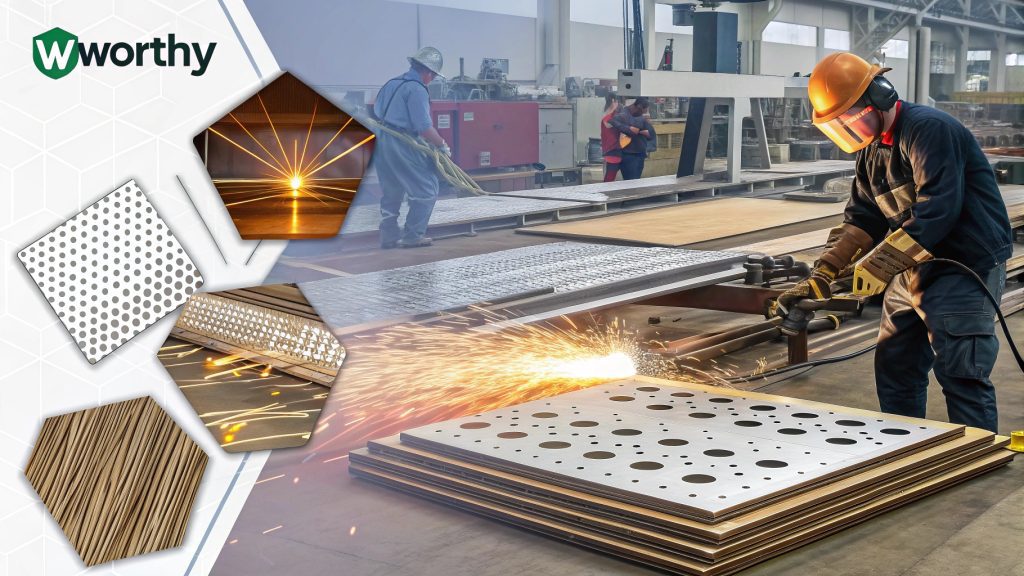
At my company, Worthy, we work with over 100 different materials, and laser cuttingis our go-to method for most sheet metal projects. It’s perfect for the common materials used in industrial applications. We regularly cut carbon steel, all grades of stainless steel, and various aluminum alloys. We can also handle more specialized metals like copper, brass, and even titanium. The key is matching the right laser settings and assist gas to the specific material. For example, aluminum is highly reflective, so it requires a high-powered fiber laser to cut it efficiently without the beam bouncing off. For stainless steel, we use high-pressure nitrogen as an assist gas. This pushes the molten metal out and prevents oxidation, resulting in a clean, silver, weld-ready edge. Our machines can typically handle sheet thicknesses from 0.024” up to 0.250”, and we can accommodate thicker requests as well.
Here’s a quick look at some common materials and our approach:
| Material | Key Consideration for Laser Cutting | Typical Application |
|---|---|---|
| Carbon Steel | Can be cut quickly with oxygen for a sharp, oxide edge. | Structural brackets, machinery frames. |
| Stainless Steel | Use Nitrogen for a clean, non-oxidized, burr-free edge. | Food-grade equipment, medical devices, architectural panels. |
| Aluminum | High power is needed due to reflectivity. Fiber lasers are best. | Aerospace components, electronic enclosures, automotive parts. |
| Copper / Brass | Also highly reflective; requires careful power management. | Electrical components, decorative elements. |
How do industrial lasers work?
What's the difference in an industrial laser? Without this knowledge, you might not see its value. They are powerful systems designed for non-stop, high-precision manufacturing work.
Industrial lasers work by generating a highly concentrated beam of light within a resonator. This beam is then amplified and directed by mirrors and lenses to the cutting head. Unlike smaller lasers, they are designed for high power, speed, and reliability in demanding production environments.
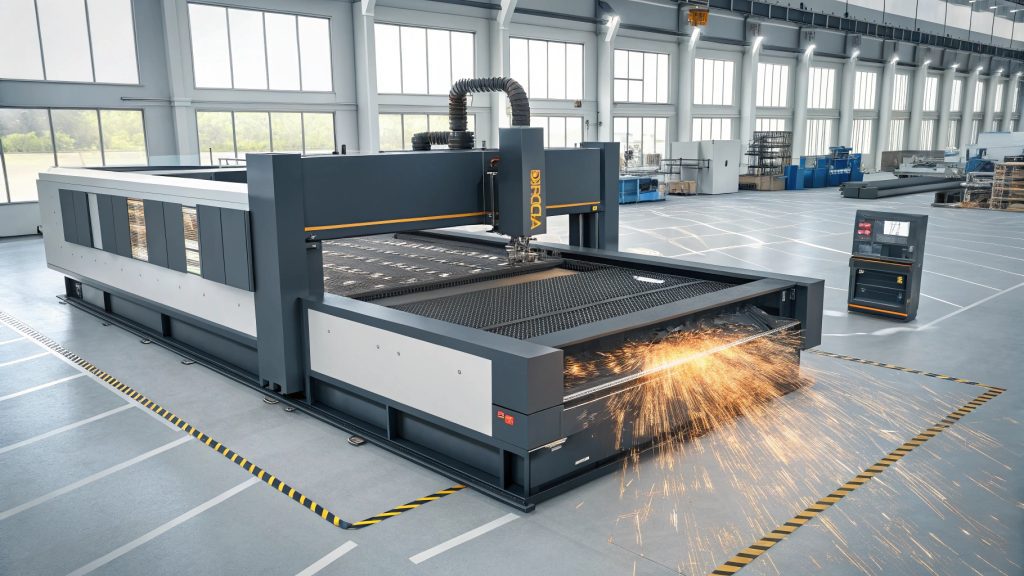
An industrial laser cutting machine is much more than just the laser itself. It's a complete system built for industrial-scale production. The power source is a major difference; we're talking about kilowatts of power, strong enough to cut through thick metal sheets 24/7. These machines are also built on massive, rigid frames to ensure stability. This stability is critical for preventing vibrations that could ruin the cutting accuracy.
A robust gantry system moves the cutting head over the metal sheet at high speeds, sometimes several meters per second, while maintaining incredible precision. To handle the immense heat generated, there are also sophisticated cooling systems that keep the laser and optics at a stable temperature. This reliability is why we can confidently offer a standard lead time of just 3 business days. It’s this combination of power, speed, and precision that separates an industrial machine from a hobby laser.
Here is a simple comparison:
| Feature | Industrial Laser Cutter | Hobby Laser Cutter |
|---|---|---|
| Power | High (1kW - 20kW+) | Low (40W - 150W) |
| Cutting Speed | Very Fast | Slow |
| Materials | All metals, thick gauges | Thin wood, plastic, some very thin metal |
| Precision | Very High (e.g., +/- 0.005") | Moderate |
| Operation | Continuous (24/7) | Intermittent |
| Cost | High Investment | Low Cost |
What is a process using an industrial laser to cut metals or other materials in fabrication?
Looking for the name of this cutting method? Using incorrect terms can cause confusion with suppliers. This process is known simply as laser cutting, a vital fabrication service.
The process of using an industrial laser to cut materials is called laser cutting. It is a thermal cutting process categorized under sheet metal fabrication. It uses a computer-controlled laser to accurately cut designs from sheet metal, offering superior precision, speed, and design flexibility over other methods.
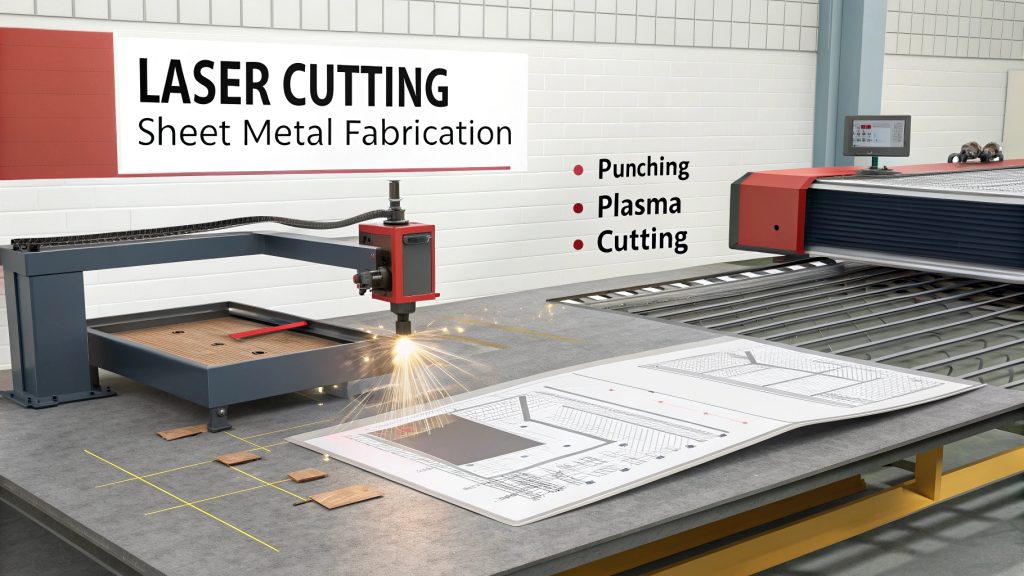
Laser cutting is a specific service within the larger world of sheet metal fabrication. Fabrication is the whole process of turning a sheet of metal into a final product. This often involves multiple steps. For instance, with our client Mark, we didn't just cut his parts. After laser cutting the flat patterns for his machinery enclosures, we moved them to our press brakes for bending. Then, our welding team assembled the different pieces.
Laser cutting was the critical first step because it created the perfect foundation. Its non-contact nature meant the high-strength steel wasn't stressed or distorted before bending. This is a huge advantage over punching, which can create stress around the holes. Compared to plasma cutting, laser cutting is much more precise and creates a smoother edge, reducing the need for secondary finishing work.
Here’s how it stacks up against other common cutting methods:
| Method | Precision | Edge Quality | Best For |
|---|---|---|---|
| Laser Cutting | Highest | Excellent | Complex shapes, tight tolerances, fine details. |
| Plasma Cutting | Good | Good (some dross) | Thick, conductive metals at high speed. |
| Waterjet Cutting | Very High | Excellent | Heat-sensitive materials, very thick materials. |
| Punching | High | Good (some rollover) | Standard shapes and holes in high volume. |
Conclusion
Laser cutting is a fast, precise, and versatile process for sheet metal. It delivers clean cuts and complex shapes, making it the ideal choice for high-quality custom parts.