
How Does 5-Axis CNC Compare To Wire EDM For Complex Geometries?
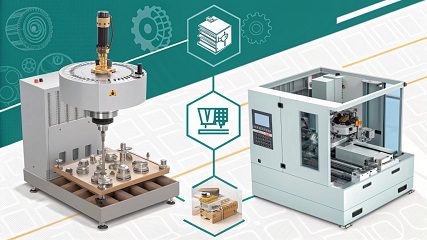
Are you trying to choose the best manufacturing method for a complex part? Making the wrong choice can lead to delays and higher costs, so understanding your options is key.
For truly complex, three-dimensional parts with undercuts and multiple faces, 5-axis CNC machining is superior. It uses a cutting tool that can move along five different axes simultaneously. Wire EDM is better suited for creating intricate two-dimensional profiles and patterns through hard, conductive materials.
Choosing between these two powerful technologies can be confusing. They both create amazing parts, but they work in very different ways. To pick the right one for your project, you need to look closer at what each method does best. Let's break down the details so you can make a smart decision for your next part.
What is an advantage and disadvantage of the 5-axis CNC machine?
You need a complex part made in one operation, but the setup seems daunting. Getting it wrong means wasting materials and time, a risk you don't want to take.
The biggest advantage of 5-axis CNC is its ability to machine intricate shapes on multiple faces in a single setup, boosting accuracy and speed. A primary disadvantage is the high initial cost of the machine and the complex programming that requires a skilled operator.
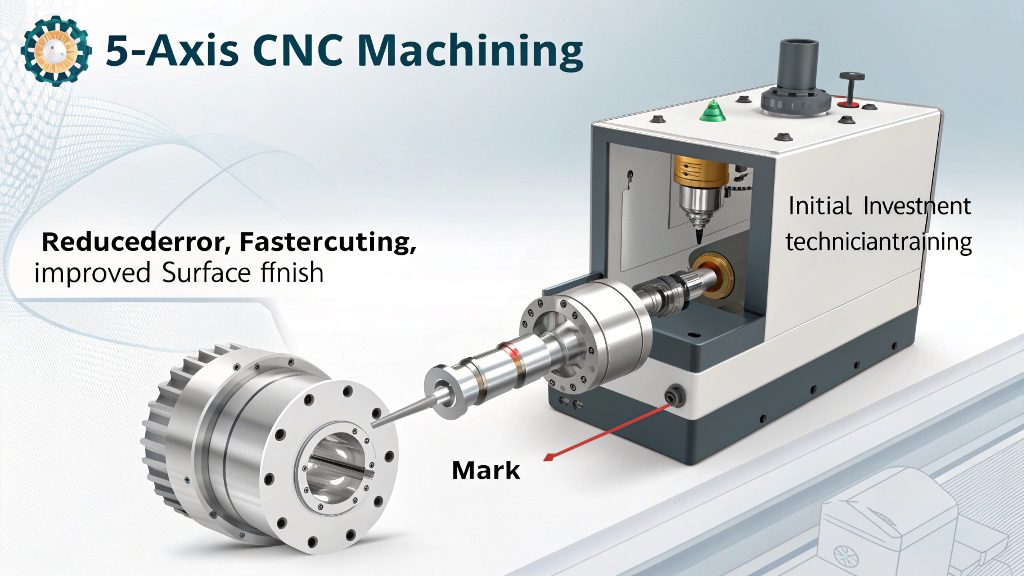
Let's dive deeper into why this matters. The single setup advantage is huge. Every time you have to unclamp and reposition a part, you introduce a small chance of error. By machining all the faces at once, 5-axis machines avoid this, leading to much better accuracy. It also means we can use shorter, more rigid cutting tools. This allows us to cut faster and achieve a smoother surface finish. I remember a customer from Canada, Mark, who had a product that required several different parts to be assembled. We helped him redesign it into a single, complex part that could be made on our 5-axis machine. This saved him huge amounts on assembly time and improved the final product's strength.
Of course, the technology isn't without its challenges. The machines themselves, along with the required CAM software, represent a significant investment. Finding and training technicians who can program these machines correctly is also crucial. It's not something you can learn overnight.
| 5-Axis CNC Machining | Description |
|---|---|
| Advantage: Single Setup | Reduces fixture errors, improves accuracy, and cuts down on total production time. |
| Advantage: Complex Geometry | Can create undercuts, angled holes, and complex curves that are impossible with 3-axis machines. |
| Disadvantage: High Cost | The initial investment in the machine, software, and training is very high. |
| Disadvantage: Programming | Requires advanced CAM software and highly skilled programmers to avoid tool collisions and errors. |
Which is better wire cut machine or EDM machine?
You hear the term "EDM" but then also "Wire EDM" and get confused. Choosing between them is impossible if you don't know the difference, potentially leading to a misquoted project.
Wire EDM, or wire cut, is a specific type of Electrical Discharge Machining (EDM). The question isn't which is better, but which tool is right for the job. Wire EDM uses a wire to cut 2D profiles, while Sinker EDM uses a shaped electrode to create 3D cavities.
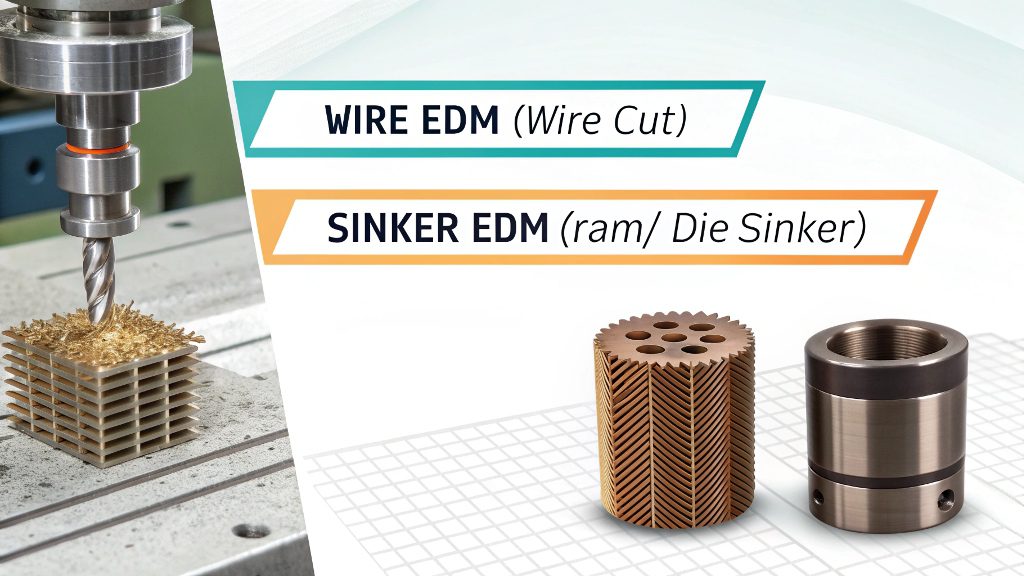
It's helpful to think of it this way. Wire EDM works like a very precise, high-tech bandsaw. It uses a thin, electrically charged brass wire to cut a path completely through a piece of conductive material. This is perfect for making things like extrusion dies, punches, or parts with very intricate internal shapes, as long as the cut goes all the way through.
Sinker EDM, on the other hand, is more like pressing a stamp into a material. We first machine a custom electrode in the shape of the cavity we want to create. This electrode is then slowly lowered into the workpiece, and electrical sparks erode the material, creating a perfect inverse of the electrode's shape. This is the only way to create features like blind keyholes, sharp internal corners inside a pocket, or detailed molds for plastic injection. Understanding this difference is key for clear communication with your supplier.
| Feature | Wire EDM (Wire Cut) | Sinker EDM (Ram/Die Sinker) |
|---|---|---|
| Process | A thin wire cuts a path through the material. | A shaped electrode sinks into the material. |
| Geometry | Creates 2D profiles and through-cuts. | Creates 3D cavities and blind features. |
| Example Use | Cutting gears, keys, extrusion dies. | Creating molds, complex blind pockets. |
| Electrode | A continuous spool of brass wire. | A custom-machined graphite or copper electrode. |
What are the limitations of wire EDM?
You have a part made from a very hard metal and think Wire EDM is the only answer. But if you design the part without knowing the process's limits, it might be impossible to make.
The main limitation of Wire EDM is that the cut must go all the way through the part; it cannot create blind pockets or holes. The material must also be electrically conductive, and the process is generally slower than conventional CNC machining for simpler shapes.
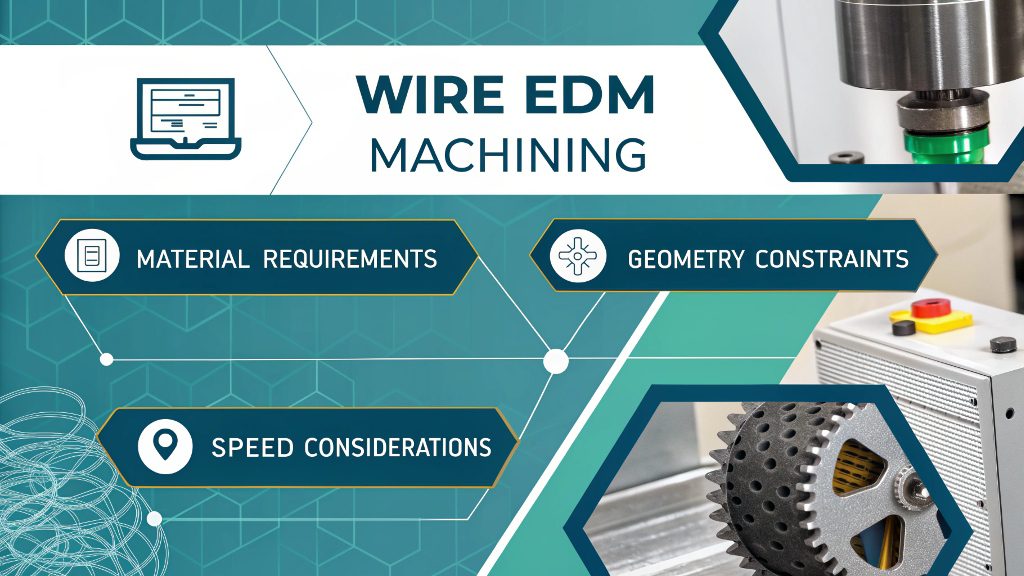
Thinking about these limitations during the design phase can save you a lot of trouble. First and foremost, if your material doesn't conduct electricity, Wire EDM is not an option. This rules out plastics, most ceramics, and composites like carbon fiber. Second, the wire has to enter one side of the material and exit the other. This "through-cut" requirement is the biggest geometric constraint. You simply cannot make a pocket that stops halfway through the material. Another point is speed. While incredibly precise, Wire EDM erodes material particle by particle, which can be a slow process, especially on very thick parts. Finally, you can't get a perfectly sharp internal corner. The wire itself is round, so the smallest internal corner radius you can achieve is the radius of the wire plus the spark gap.
-
Material: Must be electrically conductive.
-
Geometry: Only through-cuts are possible. No blind features.
-
Speed: Can be slower than other machining methods.
-
Corners: Cannot create perfectly sharp internal corners.
-
Waste: The material cut out (the slug) is usually scrap.
Knowing this helps you design for manufacturability. If you need a blind feature, you know to choose 5-axis CNC milling instead.
How accurate is a 5-axis CNC machine?
You need a part with extremely tight tolerances for a critical application. You know 5-axis CNC is precise, but can you really trust it to meet your specs every time?
A well-maintained, high-quality 5-axis CNC machine can be incredibly accurate, easily holding tolerances of +/- 0.005" (0.127 mm). At Worthy Hardware, our advanced machines and processes allow us to achieve even tighter precision, including tolerances below +/- 0.001" on request.
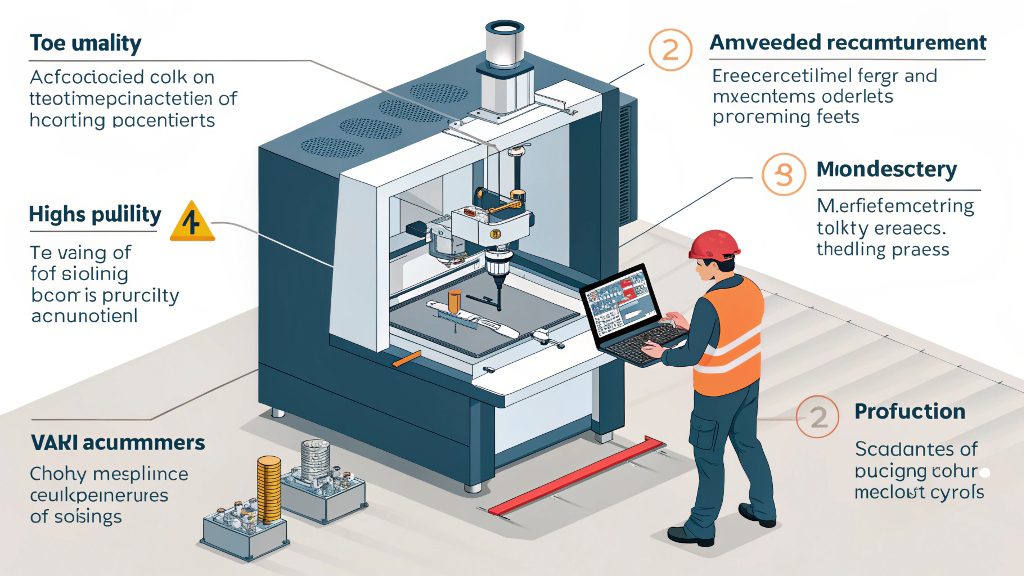
Several factors contribute to this incredible accuracy. The quality and rigidity of the machine itself are paramount. Our investment in top-tier equipment is a big part of our capability. But the machine is only one piece of the puzzle. The skill of the programmer, the quality of the cutting tools, the type of material being cut, and even the temperature of the workshop all play a role. The single-setup nature of 5-axis machining is a huge factor, as it eliminates the potential for human error that comes from moving a part between different machines or setups.
For my customers in demanding fields like aerospace, medical, and electronics, this level of precision isn't just nice to have; it's a requirement. We take this very seriously. Our engineering team reviews every design and your GD&T callouts to ensure we can meet the specified tolerances. We also have a rigorous 100% inspection process to verify that every part we ship is perfect. This commitment to quality gives customers like Mark the confidence that their parts will work exactly as intended.
| Tolerance Level | Our Capability | Common Applications |
|---|---|---|
| Standard | +/- 0.005" (0.127 mm) | General industrial parts, automotive brackets. |
| Precision | Below +/- 0.001" | Medical devices, aerospace components, electronics. |
Conclusion
For complex 3D shapes, 5-axis CNC is the clear winner. For intricate 2D profiles through hard materials, Wire EDM excels. Always choose the process that fits your part's geometry.