
How to Design Parts with Perfect Edge Treatments for 5-Axis CNC Machining?

Struggling with imperfect edges on your 5-axis machined parts? This common issue can ruin precision. Let's explore how to achieve those perfect edge treatments.
Achieving perfect edge treatments in 5-axis CNC machining primarily hinges on using high-precision 5-axis equipment and meticulously optimizing the machining process. Design considerations, material choice, and toolpath strategy also play vital roles in ensuring superior edge quality and overall part accuracy.
Getting those edges just right is a big deal in CNC machining, especially with complex 5-axis work. I've seen many designs come through my shop, Worthy Hardware, and the difference between a good part and a great part often comes down to the details, like edge finishing. You want your parts to look professional and function perfectly. So, let's break down how we can make that happen for your projects. We'll look at some key questions that pop up all the time.
How to design parts for CNC machining?
Designing parts for CNC machining seems easy, but common mistakes can lead to high costs and poor quality. Let's make your designs CNC-friendly from the start.
To design parts for CNC machining effectively, focus on Design for Manufacturability (DFM) principles. This includes selecting appropriate materials, specifying reasonable tolerances, simplifying geometry where possible, and considering features like internal radii, wall thickness, and hole depths for optimal machining.
When I talk to clients like Mark Chen, who need high-quality parts at competitive prices, DFM is a topic we often discuss. Designing for CNC machining isn't just about what looks good on screen; it's about what can be made efficiently and accurately. Here at Worthy Hardware, my engineers often help customers refine their designs.
Key DFM Considerations for CNC Machining
| Feature | Recommendation | Why it Matters for Edges & General Machining |
|---|---|---|
| Material Choice | Select based on application and machinability. | Softer materials are easier on tools, affecting edge finish. |
| Tolerances | Specify only as tight as necessary. | Tighter tolerances, especially on edges, increase machining time and cost. We can hold +/- 0.005" standard, and even sub +/- 0.001" when needed. |
| Internal Radii | Use radii larger than the cutting tool's radius. | Prevents sharp internal corners that are hard to machine and can affect edge integrity. |
| Wall Thickness | Avoid excessively thin walls. | Thin walls can vibrate, leading to poor surface finish and edge quality. |
| Hole Design | Prefer standard drill sizes; limit depth-to-diameter ratios. | Affects tool wear and stability, which can impact edge quality around holes. |
| Edge Breaks | Specify if sharp edges need to be broken/deburred. | By default, we break and deburr sharp edges, but specific requirements for edge chamfers or radii should be clearly defined in the design. This is crucial for perfect edge treatments. |
Thinking about 5-axis machining specifically, these DFM principles are even more critical. The ability to approach the part from multiple angles means we can create complex edge features, but the design must support this. For instance, ensure there's enough clearance for the tool and spindle. My first insight is always that high-precision 5-axis equipment makes achieving these designs easier, and my second is that an optimized machining process, born from a good design, is key.
What are the disadvantages of 5-axis machining?
5-axis machining offers amazing capabilities, but it's not without its downsides. Understanding these can help you decide if it’s right for your project and budget.
The main disadvantages of 5-axis machining include higher initial machine investment, more complex programming, potentially longer setup times, and the need for highly skilled operators. These factors can contribute to a higher per-part cost if not managed effectively.

While 5-axis machining, like the services we offer at Worthy Hardware, can produce incredibly complex parts with fewer setups and better surface finishes, it's important to be aware of its challenges. The machines themselves are expensive, which is a cost that machine shops have to factor in. The programming for 5-axis is significantly more complex than for 3-axis. This means it takes more time and requires specialized CAM software and skilled programmers. My team and I have spent years honing these skills.
Breaking Down 5-Axis Disadvantages
-
Complexity in Programming:
- Creating toolpaths that avoid collisions while achieving the desired geometry, especially for intricate edge treatments, requires expertise. This is where optimizing the machining process, one of my key insights, becomes vital.
-
Cost:
- Higher machine cost, software cost, and skilled labor mean the hourly rate for 5-axis machining is generally higher. However, for complex parts that would otherwise require multiple setups on a 3-axis machine, 5-axis can sometimes be more cost-effective overall.
-
Skilled Labor:
- Operating and setting up a 5-axis machine demands a higher skill level. Finding and retaining such talent can be a challenge for some shops.
-
Setup Time:
- While 5-axis can reduce the number of setups, the initial setup for a complex job can still be time-consuming due to the precision required.
Despite these points, for parts requiring complex contours, undercuts, or specific edge profiles, the benefits often outweigh the drawbacks. The ability to machine five sides of a part in a single setup greatly improves accuracy and reduces the risk of errors from re-fixturing, which is especially important for achieving perfect edge treatments. Using high-precision 5-axis equipment, as I always recommend, helps mitigate potential quality issues that might arise from these complexities.
How to reduce CNC machining cost?
、
Worried about CNC machining costs blowing your budget? Smart design choices and clear communication with your supplier can significantly cut expenses without sacrificing quality.
、
To reduce CNC machining costs, simplify your design, choose cost-effective materials, relax tolerances where possible, design for standard tooling, and increase order quantities. Clear communication with your machining partner about critical features also helps optimize the process.
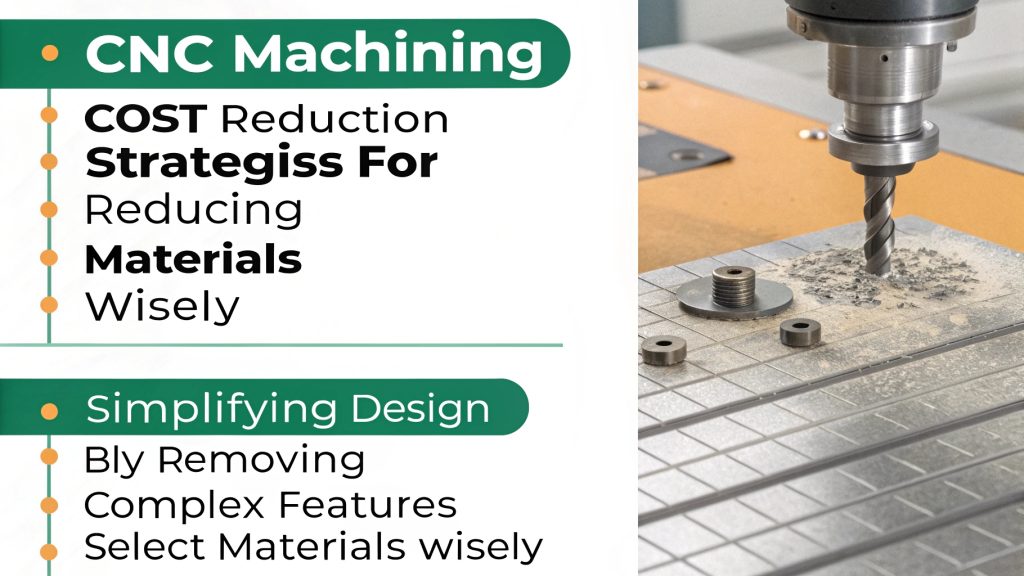
Every client, including those like Mark Chen who are sensitive to pricing, wants to know how to save money on CNC machining. It’s a common conversation I have. At Worthy Hardware, we aim for competitive pricing, and a big part of that is working with clients to optimize their designs for cost-effectiveness.
Here are some practical steps:
Strategies for Cost Reduction
| Strategy | Detail | Impact on Edge Treatments & Overall Cost |
|---|---|---|
| Simplify Design | Remove unnecessary complex features, sharp internal corners, or very thin walls. | Simpler edges are faster and cheaper to machine. Complex edge profiles will inherently cost more. |
| Material Selection | Opt for materials with good machinability if application allows. | Easier-to-machine materials reduce tool wear and machining time. |
| Tolerance Optimization | Specify tight tolerances only on critical features. | Looser tolerances on non-critical edges can significantly reduce machining time and inspection. Our standard is +/- 0.005", but tighter is possible where essential. |
| Standardize Features | Use standard hole sizes, thread sizes, and corner radii. | Avoids custom tooling, reducing setup and tool costs. For edges, standard chamfers or radii are cheaper than custom profiles. |
| Minimize Setups | Design parts that can be machined in as few setups as possible. | 5-axis machining excels here, potentially reducing overall cost for complex parts despite a higher hourly rate. This is key for consistent edge treatments around a part. |
| Increase Order Quantity | Larger batches reduce per-unit setup costs. | We handle everything from prototypes to mass production, but higher volumes always offer better per-part pricing. |
| Communicate Clearly | Clearly indicate critical vs. non-critical features on drawings. | Helps us focus precision where it's needed, potentially saving time on less critical edges. |
My insight about optimizing the machining process is directly relevant here. A well-thought-out process, often starting with design input from experienced engineers like mine, is fundamental to cost reduction. For edge treatments, this might mean discussing whether a specific radius is truly necessary or if a standard chamfer would suffice, or how to design the part so the desired edge can be machined efficiently.
How much does 5-axis CNC machining cost per hour?
Curious about the hourly rates for 5-axis CNC machining? It’s not a simple number, as many factors influence the final cost you'll see on a quote.
5-axis CNC machining hourly rates can vary widely, typically from $75 to $200+ per hour. This depends on machine sophistication, location, operational overhead, part complexity, programming time, and the level of precision required. It's best to get quotes for specific parts.
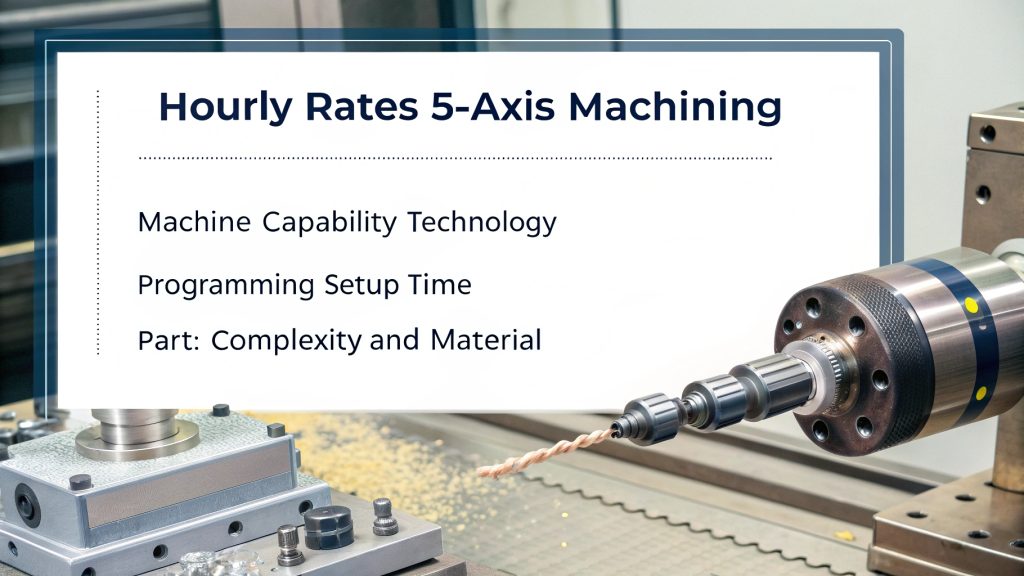
When clients ask about hourly rates for 5-axis machining, I explain that it's a bit like asking "how much does a car cost?" There's a wide range. At Worthy Hardware, we provide custom quotes because each part is unique. The cost isn't just about the machine running; it's a comprehensive figure.
Factors Influencing 5-Axis Hourly Rates:
-
Machine Capability & Technology:
- More advanced, higher-precision 5-axis machines (like the ones I believe are crucial for top quality) have higher acquisition and maintenance costs, thus higher hourly rates. Our machines can handle parts up to 80” x 48” x 24”.
-
Programming & Setup Time:
- Complex parts, especially those with intricate edge treatments, require significant programming and careful setup by skilled technicians. This time is factored into the overall cost. My engineers often assist in optimizing designs to reduce this.
-
Part Complexity & Material:
- More complex geometries or difficult-to-machine materials (like some stainless steels or superalloys) increase machining time and tool wear, impacting cost. We machine over 100+ materials.
-
Required Tolerances & Surface Finish:
- Tighter tolerances (we can achieve sub +/- 0.001") and finer surface finishes (standard is 125 Ra or better, but we offer 50+ finishing options) demand more machine time and careful process control, increasing costs. Achieving perfect edges often falls into this category.
-
Operational Overheads:
- Shop location, labor costs, software licenses, and quality control measures (like our 100% inspection) all contribute to the hourly rate.
-
Cycle Time:
- Ultimately, the per-part cost is what matters. A higher hourly rate on a 5-axis machine might be offset by its ability to complete a complex part faster and with fewer setups than multiple operations on less capable machines, especially for intricate edge work.
So, while I can't give a flat hourly rate, I can assure you that our focus is on providing value. This means leveraging our high-precision equipment and optimized processes to deliver the quality you need, including perfect edge treatments, in the most efficient way possible.
Conclusion
Achieving perfect edges in 5-axis CNC machining requires high-precision equipment, optimized processes, and smart DFM. This ensures quality parts and manages costs effectively for your projects.