
How Do Different Cutting Methods Compare: Laser vs. Waterjet vs. Plasma?

Choosing the wrong cutting method causes delays and wastes money. This can lead to project failures and hurt your business. Understanding these methods ensures you get the right parts on time.
The best cutting method depends on your needs. Laser cutting is great for speed and precision on thinner metals. Waterjet is perfect for thick materials and anything heat-sensitive. Plasma is a cost-effective option for cutting thick conductive metals.
I talk with customers like Mark from Canada all the time. He needs quality parts from China but can't afford delays or defects. He once told me, "Sandra, I just need to know which process is right for my part. I don't have time for mistakes." This is a common problem. Choosing between laser, waterjet, and plasma cutting can be confusing. Each method has its own strengths and weaknesses. It is important to know these differences to avoid costly errors and ensure your project is a success from the start. Let's break them down so you can make an informed decision every time.
What is the difference between laser cutting and plasma cutting?
Are you cutting thick metal? Plasma is often cheaper, but laser offers better precision. This choice can be tough when you need to balance your budget with quality requirements.
Laser cutting uses a focused beam of light for high-precision cuts, ideal for thinner metals up to 20mm. Plasma cutting uses superheated, ionized gas. It's faster and cheaper for thick conductive metals but has lower precision.
When you look at laser versus plasma, the biggest factors are precision and heat. A laser beam is very fine, which allows us to achieve tolerances as tight as ±0.2mm. This is perfect for parts that need to fit together perfectly, like in electronics or automotive assemblies. The heat-affected zone (HAZ) is also very small.
Plasma cutting, on the other hand, works by creating an incredibly hot plasma arc. This process is very powerful and can slice through thick steel plates easily. However, the precision is much lower, usually around ±1mm. It also creates a larger HAZ, which can change the properties of the metal near the cut. We had a client who initially chose plasma for some brackets to save money. But the holes were not precise enough, and they had to spend extra time grinding the edges. For their next order, they switched to laser cutting. The parts cost a bit more upfront, but they saved on labor and had no assembly issues.
| Feature | Laser Cutting | Plasma Cutting |
|---|---|---|
| Precision | High (±0.2mm) | Low (±1mm) |
| Metal Thickness | Up to 20mm | 0mm to 120mm |
| Speed | Fast on thin materials | Fast on thick materials |
| Heat Affected Zone | Minimal | Significant |
| Best For | Intricate designs, tight tolerances | Thick conductive metals, cost-savings |
What is the difference between laser cutting and water jet cutting?
Do you need to cut a material that can't take the heat? Or a very thick metal plate? Laser cutting is fast, but waterjet cutting is more versatile and gentle.
Laser cutting uses heat, which can warp sensitive materials. Waterjet cutting uses a high-pressure stream of water with an abrasive. It generates no heat, making it perfect for thick materials (over 100mm), plastics, or composites.
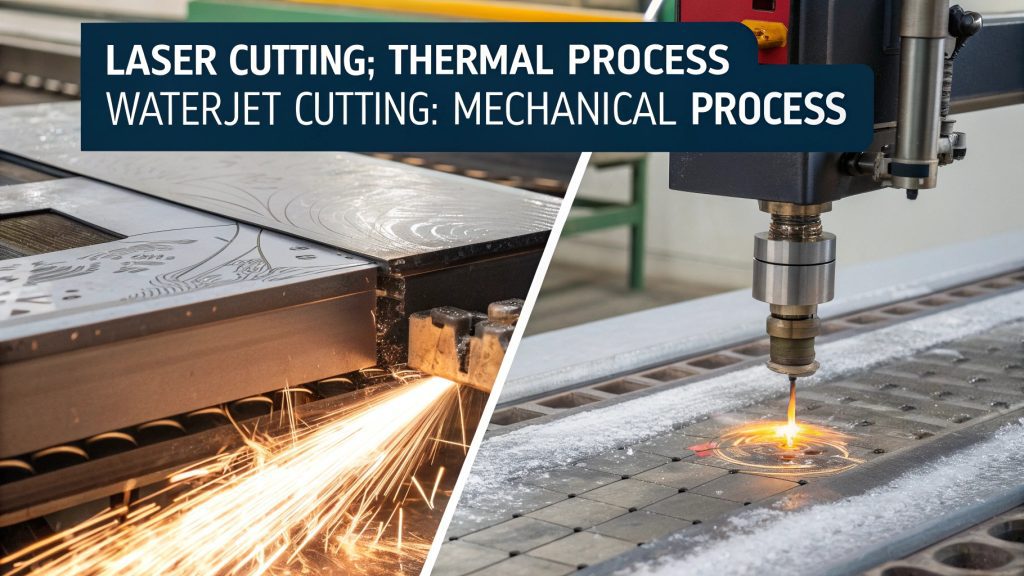
The key difference here is heat. Laser cutting is a thermal process. It melts and vaporizes the material. This is very efficient, but it's not suitable for everything. For example, some plastics can release toxic fumes, and thin metals can warp. I remember working on a project for a medical company. The part was made from a special polymer that could not be exposed to high temperatures. Laser cutting was not an option. We used our waterjet machine instead.
Waterjet cutting is a mechanical process. It uses erosion to cut through materials. This "cold cutting" process means there is absolutely no HAZ. This is critical for industries like aerospace, where the material's structural integrity cannot be compromised. Waterjet is also our go-to for very thick materials. While our lasers handle metal up to 20mm, our waterjet can cut materials up to 100mm thick or more. The trade-off is speed. Waterjet cutting is much slower than laser cutting, so it's better for prototypes or small-batch production where quality is the top priority.
| Feature | Laser Cutting | Waterjet Cutting |
|---|---|---|
| Process | Thermal (Heat) | Mechanical (Erosion) |
| Applicable Materials | Metals, some plastics, wood | Almost any material |
| Heat Affected Zone | Yes (small) | No |
| Precision | High (±0.2mm) | Very High (±0.1mm) |
| Best For | Speed, mass production | Heat-sensitive materials, very thick materials |
What is the difference between jet plasma and laser?
Are you trying to balance your budget with project specifications? Plasma is a low-cost choice for thick plates, but laser cutting gives you clean, precise edges right off the machine.
The main difference is the energy source. Laser uses a focused light beam for high-precision cuts on many materials. Plasma uses a jet of superheated gas for fast, low-cost cutting on electrically conductive metals, especially thick ones.
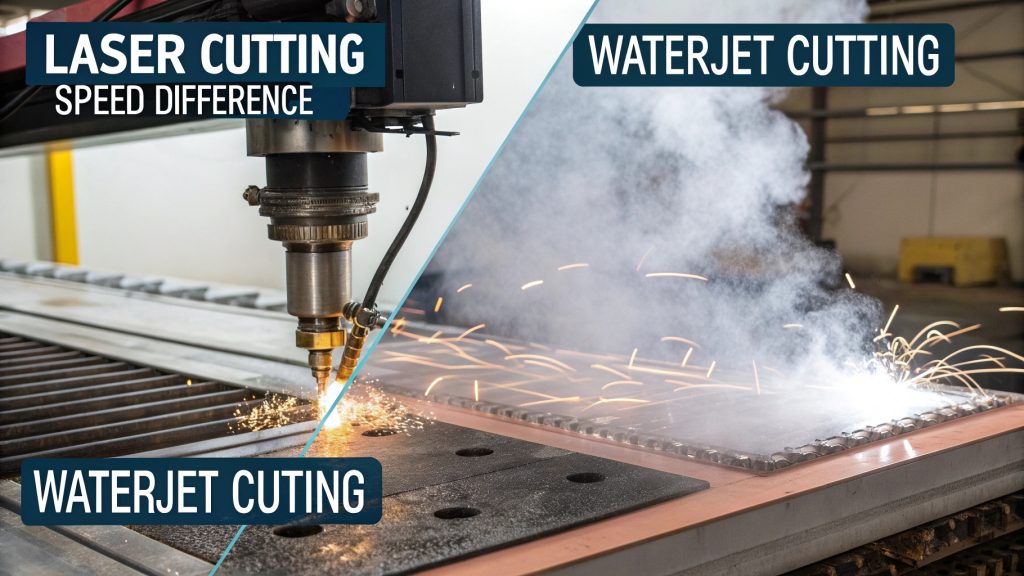
I often explain this to customers as a choice between upfront cost and final cost. Plasma cutting systems are less expensive to run, especially when cutting thick steel. This can make the price per part seem very attractive. However, plasma cutting often leaves behind a rough edge with dross, which is re-solidified metal. This dross needs to be removed in a secondary operation, like grinding. This adds labor costs and time to your project. So the "cheaper" part ends up costing you more.
Laser cutting, by contrast, produces a very clean, smooth edge that is often ready to use without any finishing. For a customer like Mark, who sells the parts to his own customers, appearance and quality are key. Sending him a part that needs extra work is not an option for us. We believe in 100% inspection. Using a laser for parts that require a fine finish or tight tolerances ensures the final cost is the true cost. There are no surprise expenses for cleanup later. It’s about delivering a finished, high-quality component from the start.
| Factor | Laser Cutting | Plasma Cutting |
|---|---|---|
| Energy Source | Light (Photon) Beam | Ionized Gas (Plasma) |
| Edge Finish | Smooth, clean | Rougher, may have dross |
| Secondary Ops | Rarely needed | Often requires grinding/cleanup |
| Material Scope | Broad (Metals, some non-metals) | Conductive metals only |
| Primary Advantage | Precision and Finish Quality | Cost and Speed on Thick Metal |
What is the difference between plasma cut and waterjet cut?
Are you cutting very thick metal? Both plasma and waterjet can get the job done. But the final part quality and material options are completely different between the two methods.
Plasma cutting is fast and cheap for conductive metals but creates a heat-affected zone and has lower precision. Waterjet is slower but can cut almost any material without heat, delivering higher precision and a smoother edge.
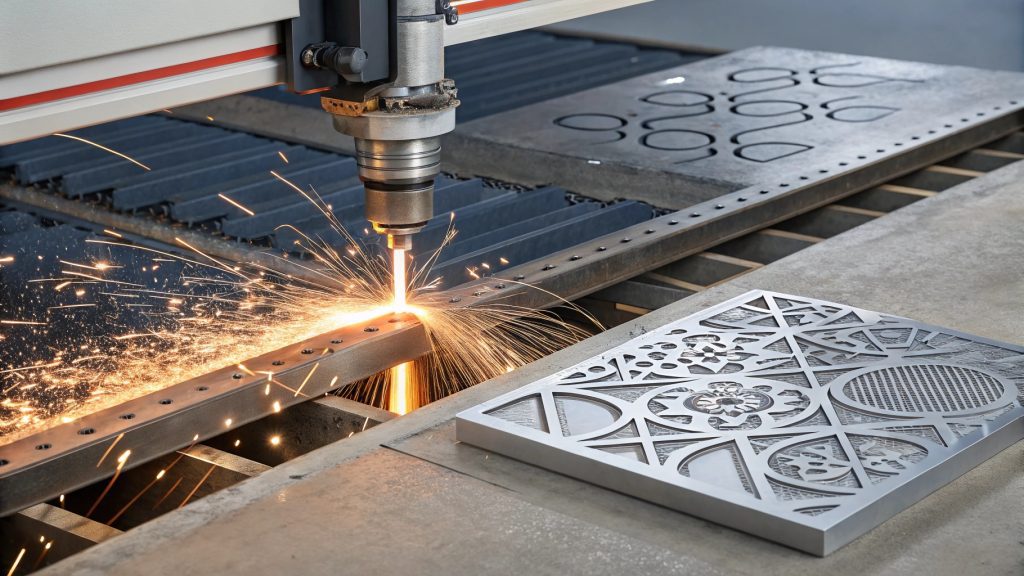
This is an interesting comparison because both methods are great for thick materials. The choice comes down to two things: material type and the need for precision without heat. Plasma cutting only works on materials that conduct electricity, so it's limited to metals. Waterjet, on the other hand, can cut almost anything you can think of—metal, stone, glass, plastic, foam. It's incredibly versatile.
The biggest technical difference is the HAZ. I had a client in the aerospace industry who needed to cut thick titanium parts. Plasma could have cut the thickness, but the heat would have altered the metal's properties, which was unacceptable for their application. Waterjet was the only solution because it’s a cold process. It preserved the material's integrity completely. While waterjet is slower, its precision is superior (±0.1mm vs. plasma's ±1mm). For high-stakes applications where there is no room for error or material changes, waterjet is the clear winner, even if it takes more time. Plasma is better for general fabrication of thick steel where a little heat and less precision are acceptable.
| Feature | Plasma Cutting | Waterjet Cutting |
|---|---|---|
| Process | Thermal (Heat) | Mechanical (Erosion) |
| Material Scope | Conductive metals only | Nearly any material |
| Precision | Low (±1mm) | Very High (±0.1mm) |
| Edge Finish | Good, some dross | Excellent, smooth |
| Best For | Cost-effective thick metal cutting | Precision cutting on any material, no HAZ |
Conclusion
Choosing the right cutting method is simple when you know the facts. It depends on your material, thickness, and need for speed versus precision. We can help you decide.