
What Are The Best Practices For CNC Machining Galvanized Steel Parts?
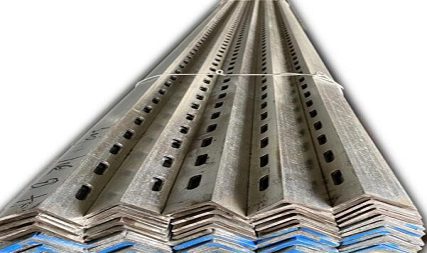
Struggling with machining galvanized steel? Mistakes can lead to rust and wasted parts. Learn the best practices here to get durable, quality results every time.
The best practices for CNC machining galvanized steel involve using sharp tools, correct speeds and feeds suitable for both steel and zinc, managing heat, and crucially, applying a protective finish to machined areas afterwards to restore rust protection where the zinc was removed.
Getting these details right makes a big difference. You need to understand the material itself before you can machine it properly. Let's explore galvanized steel more closely. This understanding helps ensure your final parts meet your expectations for quality and longevity.
What is the principle of galvanizing and its applications?
Need strong rust protection but worried about the cost? Galvanizing offers a great solution, but how does it really work? Understand its basics to see if it fits your project needs.
Galvanizing applies a protective zinc coating to steel or iron. This zinc acts as a physical barrier and also provides sacrificial protection (galvanic protection) to prevent the underlying steel from rusting, even if scratched. It’s widely used in construction, automotive, and outdoor gear.
Let's dive deeper into how galvanizing protects steel. First, the zinc coating creates a tough physical barrier. It seals the steel off from moisture and oxygen in the air, which are the main ingredients needed for rust to form. Think of it like a raincoat for the steel.
Second, and maybe more importantly, zinc offers 'sacrificial' protection. Zinc is more reactive than iron (steel). If the coating gets scratched or damaged, exposing the steel underneath, the zinc around the scratch will corrode instead of the steel. It sacrifices itself to protect the base metal. This is a huge advantage over just paint, which only offers barrier protection.
Because of this excellent corrosion resistance, galvanized steel is used everywhere:
- Construction: Structural beams, roofing sheets, gutters, support columns.
- Automotive: Car bodies, frames, chassis components.
- Utilities: Electrical transmission towers, pipes, guardrails.
- Agriculture: Fencing, irrigation systems, farm equipment.
- Everyday Hardware: Nuts, bolts, washers, brackets.
Understanding this helps us know why managing the zinc layer during machining is so important.
What is the process of making galvanized steel?
Ever wonder how steel gets that tough zinc coat? Knowing the manufacturing process helps understand the material's properties before machining. Let's look simply at how it's made.
Typically, steel is thoroughly cleaned (degreasing, pickling in acid, fluxing) to remove all surface contaminants like oil, rust, and scale. Then, it's dipped into a bath of molten zinc (around 450°C/840°F) in a process called hot-dip galvanizing. The zinc metallurgically bonds with the steel.
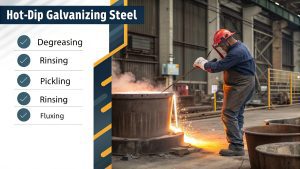
The most common method is hot-dip galvanizing1. The process starts with meticulous cleaning. If the steel surface isn't perfectly clean, the zinc won't stick properly.
- Degreasing: Removes grease, oil, and dirt using an alkaline or acidic solution.
- Rinsing: Washes off the degreasing solution.
- Pickling: Dips the steel in dilute acid (like hydrochloric or sulfuric acid) to remove mill scale and rust.
- Rinsing: Washes off the acid.
- Fluxing: Applies a flux solution (often zinc ammonium chloride) to remove any remaining oxides and prevent new ones from forming before dipping. This also helps the molten zinc wet the steel surface.
After cleaning, the steel part is completely immersed in a kettle of molten zinc. While submerged, the iron in the steel reacts with the zinc to form a series of zinc-iron alloy layers, metallurgically bonded to the steel base. The outermost layer is typically pure zinc. This layered structure provides exceptional toughness and adhesion. The part is then withdrawn, excess zinc drains off, and it cools. Sometimes, parts are quenched in water or air-cooled.
What is the best steel for CNC machining?
Choosing the wrong steel makes machining difficult, slow, and costly. Need parts machined easily and accurately? Find out which steels generally work best with CNC machines for efficient production.
Lower carbon steels (like 1018 Mild Steel) and specific free-machining steels (like 12L14 or 1144) are generally considered the best for CNC machining. They are softer, produce smaller, more manageable chips, and cause less tool wear, resulting in faster cycles and better finishes.
Why are these steels easier to machine? Low carbon steels2 contain less carbon (typically 0.05% to 0.25%), making them softer and more ductile than medium or high carbon steels. This means cutting tools can slice through them more easily with less force and wear. They tend to produce long, stringy chips, but speeds and feeds can be adjusted.
Free-machining steels3 go a step further. They have small amounts of elements like sulfur, lead, bismuth, selenium, or tellurium added. These additives do two main things:
- They help the metal chips break off into small, easily managed pieces instead of long strings.
- They can act as internal lubricants, reducing friction between the cutting tool and the workpiece.
This leads to significantly faster machining speeds, longer tool life, and often smoother surface finishes. 12L14 is very popular for high-volume production due to its excellent machinability, but the lead content can be a concern in some applications.
Here's a quick comparison:
| Steel Type | Machinability Rating (Approx. vs 1212 Steel = 100%) | Key Characteristics | Common Use Cases |
|---|---|---|---|
| 12L14 (Free-Machining) | ~140-160% | Excellent chip breaking, low friction (contains lead) | High-volume screw machine parts |
| 1018 (Low Carbon) | ~70% | Soft, ductile, weldable, good formability | General structural, shafts |
| 1045 (Medium Carbon) | ~55% | Stronger, harder, less ductile | Gears, axles, bolts |
| 4140 (Alloy Steel) | ~65% | High strength, toughness | Machine components, tooling |
| 304 Stainless Steel | ~45% | Corrosion resistant, work hardens rapidly | Food processing, chemical |
While galvanized steel is usually based on machinable low-carbon steel, the zinc coating itself presents unique challenges we need to manage during CNC operations.
What is the manufacturing process of GP sheet?
You might see "GP Sheet" listed in material specifications. What does it mean? Understanding this common type of galvanized steel helps you specify and source correctly for your projects.
GP sheet stands for Galvanized Plain sheet. It refers to standard hot-dip galvanized steel sheets produced on a continuous line. Coils of steel sheet are unrolled, cleaned, annealed (if needed), passed through a molten zinc bath, cooled, and then recoiled or cut into sheets.
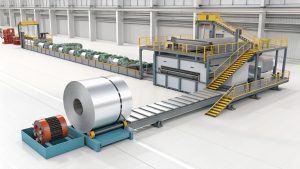
The manufacturing of GP sheet is usually done on a large scale using a continuous galvanizing line. Unlike dipping individual fabricated parts (batch galvanizing), this process handles long, continuous coils of steel sheet efficiently.
- Uncoiling: A large coil of rolled steel sheet is placed at the start of the line and unwound.
- Welding: The end of one coil is welded to the start of the next to keep the process running without stopping.
- Cleaning: The steel strip passes through cleaning stages similar to batch galvanizing (degreasing, pickling, rinsing) to ensure the surface is perfectly prepared.
- Annealing (Optional but common): The strip might pass through a furnace to heat-treat the steel, softening it and improving its forming properties if required for the final application.
- Zinc Pot: The cleaned (and possibly annealed) strip passes down into and through a bath of molten zinc. Rollers guide the strip through the pot.
- Air Knives: As the strip emerges vertically from the zinc bath, precisely controlled jets of air (air knives) blow off excess molten zinc. Adjusting these knives controls the final thickness and uniformity of the zinc coating4.
- Cooling: The coated strip travels up a cooling tower or through a cooling section.
- Passivation/Finishing: Often, a chemical passivation treatment5 (like chromating) or an acrylic coating is applied to prevent early white rust formation during storage and transit.
-
Recoiling/Cutting: The finished galvanized steel strip is either recoiled or cut into standard sheet lengths.
GP sheets are the starting point for many products that are later formed, stamped, or sometimes machined.Conclusion
CNC machining galvanized steel works well. Use sharp tools, manage heat, and always re-protect cut areas. This ensures durable, corrosion-resistant parts for your projects.
Need precision CNC machined galvanized steel parts? At Worthy Hardware, we understand the best practices. We ensure quality from start to finish, including necessary post-machining treatments. Contact me, at [email protected] or visit www.worthyhardware.com to discuss your project.
-
Explore this link to understand the hot-dip galvanizing process in detail, including its benefits and applications. ↩
-
Discover the advantages of low carbon steels in machining and how they compare to other steel types. ↩
-
Explore this link to understand how free-machining steels enhance productivity and tool life in machining processes. ↩
-
Discover the methods and benefits of zinc coating in galvanizing, crucial for enhancing steel durability. ↩
-
Learn about chemical passivation treatment and its importance in preventing rust on galvanized steel products. ↩