
When Should You Choose Plastic Over Metal For CNC Machined Components?

Struggling with material choice? The wrong pick costs time and money. Learn when plastic is the smarter, more cost-effective option for your CNC parts.
You should choose plastic over metal for CNC machined parts when you need electrical insulation, lower weight, or reduced costs. Plastics also offer good chemical resistance for specific applications.
Choosing the right material is a big decision for any CNC machining project. It affects performance, cost, and even the manufacturing process itself. Many people default to metal, but plastics offer some great advantages. I want to help you see when plastic might be the perfect fit for your components. Let us explore this more.
What plastic is best for CNC machining?
Picking a plastic can feel overwhelming. There are so many options. Choose the wrong one, and your part might not work as expected. So, let us look at some good choices.
Commonly machined plastics like Delrin (Acetal), Acrylic, Nylon, and PEEK offer a range of properties. The "best" one depends on your specific needs for strength, temperature resistance, and cost.
When I talk to clients like Mark Chen, who owns a company in Canada, he is always looking for quality but also good value. He often asks about material options. For plastics, the choice really comes down to what the part needs to do. There is no single "best" plastic for everything. But, some are very popular for CNC machining because they are easy to work with and offer useful properties.
Popular Plastics for CNC Machining
Different plastics have different strengths. Here are a few common ones we use at Worthy:
-
Delrin (Acetal): This is a great all-around plastic. It is strong, stiff, and has low friction. This makes it good for bearings, gears, and parts that slide. It also resists moisture well. We often recommend Delrin when a customer needs a durable, stable plastic part. It machines beautifully, giving a smooth finish.
-
Acrylic (PMMA): If you need a clear part, acrylic is a top choice. It is often used as a lightweight, shatter-resistant alternative to glass. Think of display cases or transparent covers. It machines well, but you need to be careful to avoid cracking or melting. The optical clarity is its main selling point.
-
Nylon: Nylon is known for its toughness and wear resistance. It is also quite flexible. This makes it good for parts that need to absorb impact or move. However, nylon can absorb moisture, which might change its size a bit. We consider this when designing parts.
-
PEEK (Polyether Ether Ketone): This is a high-performance plastic. It is very strong, stiff, and can handle high temperatures. It also resists harsh chemicals. PEEK is more expensive, so we use it for demanding applications. Think of aerospace, medical, or industrial parts that face tough conditions. My insight here is that while metal is strong, PEEK offers a lightweight alternative with impressive strength.
Here is a simple table to compare them:
| Plastic | Key Properties | Common Uses | Machinability |
|---|---|---|---|
| Delrin(Acetal) | Strong, stiff, low friction, moisture resistant | Gears, bearings, fixtures | Excellent |
| Acrylic (PMMA) | Clear, rigid, UV resistant | Lenses, displays, light pipes | Good |
| Nylon | Tough, wear-resistant, good chemical resistance | Bushings, rollers, wear pads | Good |
| PEEK | High strength, high temp, chemical resistant | Medical, aerospace, seals | Moderate |
We machine all these plastics and many more. Our experience helps us guide customers to the best choice for their specific needs and budget.
What factors should be taken into consideration when selecting stock for CNC machining?
Choosing material stock is a critical step. If you overlook key factors, your final parts might fail or cost too much. So, it is important to think carefully.
Key factors include mechanical properties (like strength and hardness), the operational environment, machinability, dimensional stability, and overall cost. Your part's end-use is very important.
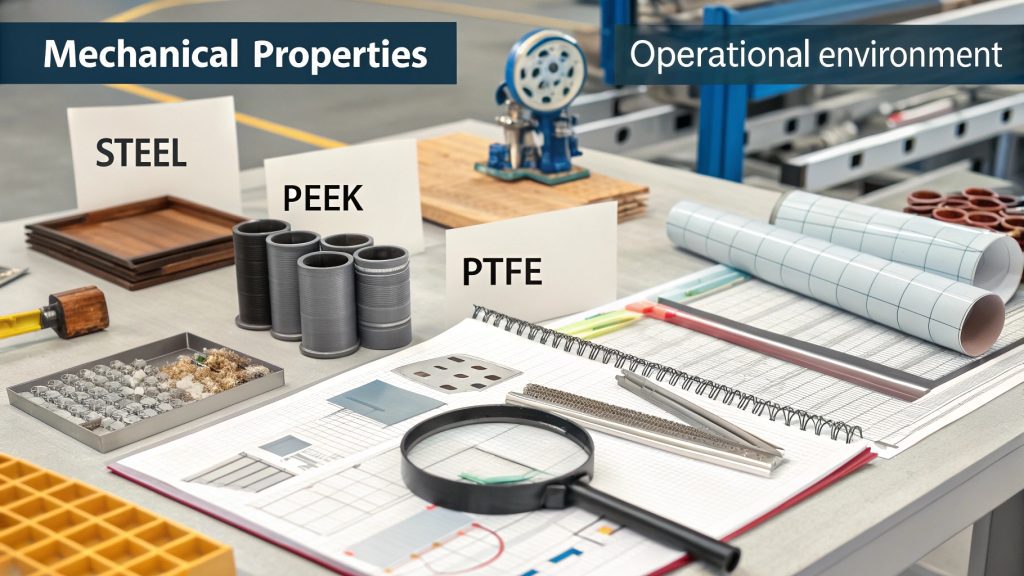
When I first started in this business, I learned quickly that material selection is not just about picking the cheapest option. It is about finding the best value for the specific application. A part that fails in the field because the wrong material was chosen is far more expensive in the long run. Let us look at these factors more closely.
Key Considerations for Material Selection
Thinking about these points will help you choose wisely:
-
Mechanical Properties:
-
What strength does the part need? Does it need to be stiff or flexible? Will it face impact or wear?
-
For example, if a part needs to hold a heavy load, a strong metal like steel or a high-strength plastic like PEEK might be needed. My insight is that many plastics offer surprising strength-to-weight ratios.
-
-
Operational Environment:
- Will the part be exposed to high temperatures, chemicals, or moisture?
- Plastics like PTFE (Teflon) are great for chemical resistance. Some metals corrode easily. Plastics generally offer good insulation, which is vital in electrical applications. This is a big advantage for plastics.
-
Machinability:
- How easy is the material to cut and shape?
- Some materials, like certain stainless steels or superalloys, are tough to machine. This increases machining time and cost. Many plastics, like Delrin or ABS, machine very easily. We, at Worthy, have experience with over 100 materials, so we can advise on this.
-
Dimensional Stability:
-
Will the material keep its shape under different conditions? Temperature changes and moisture can make some materials expand or shrink.
-
This is especially important for precision parts. We can hold very tight tolerances, like +/- 0.001 inches, but the material must be stable enough.
-
-
Cost:
- What is the raw material cost? What is the machining cost?
- Plastic raw materials are often cheaper than metals. And, if they machine faster, the overall part cost can be lower. This is a key point for customers like Mark Chen, who looks for competitive pricing.
-
Weight:
- Is weight a concern?
- Plastics are much lighter than most metals. This is a huge benefit for aerospace, automotive, and even consumer products where reducing weight saves energy or makes handling easier. This is another area where my insight about plastics being lighter than metal comes into play.
Considering these factors together ensures the chosen material is fit for purpose and cost-effective. We often help our customers improve their designs and save costs by carefully selecting materials.
What are two major concerns when machining plastic materials?
Machining plastics seems easy, but it has its challenges. If you are not careful, you can end up with bad parts. So, knowing the concerns helps prevent problems.
Two major concerns when machining plastics are managing heat buildup, which can cause melting or warping, and ensuring effective chip removal, as plastic chips can be stringy or sticky.
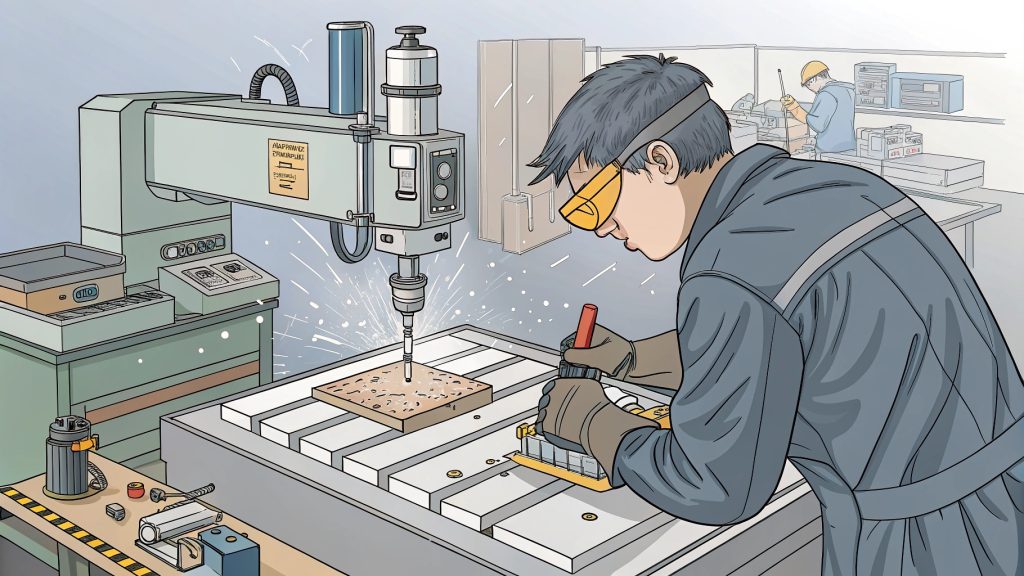
I remember a project early in my career where we were machining a complex polycarbonate part. We ran into issues with melting because we did not manage the heat well enough. It was a learning experience! Since then, we have perfected our techniques for plastics.
Overcoming Plastic Machining Challenges
Let us look deeper into these concerns and how to handle them:
-
Heat Buildup and Management:
-
The Problem: Plastics do not conduct heat well. My insight is that their good insulation properties work against us here. The heat generated by cutting stays in the cutting zone. This can cause the plastic to melt, gum up the tool, or warp the part. The part might also deform after machining as it cools if internal stresses are created.
-
The Solution:
-
Sharp Tools: Use very sharp cutting tools specifically designed for plastics. Dull tools generate more friction and heat.
-
Correct Speeds and Feeds: Higher spindle speeds and appropriate feed rates can help. Sometimes, a faster feed rate moves the heat away with the chip.
-
Coolants: Air or mist coolants are often used. Liquid coolants can sometimes cause issues with certain plastics or absorb into them, so selection is key. At Worthy, our engineers have rich experience with this.
-
Depth of Cut: Smaller depths of cut can also help reduce heat.
-
-
-
Chip Control and Evacuation:
-
The Problem: Plastic chips can be very different from metal chips. Some plastics produce long, stringy chips that can wrap around the tool or the part. Others produce soft, gummy chips that can pack into flutes or stick to the machined surface. Poor chip evacuation leads to a bad surface finish and can even break tools.
-
The Solution:
-
Tool Geometry: Tools with wider flutes and polished surfaces help chips flow out more easily.
-
Chip Breakers: Sometimes, specific tool geometries or cutting strategies are needed to break chips into smaller pieces.
-
Coolant/Air Blast: A strong air blast can be very effective at clearing chips away from the cutting area.
-
Machining Strategy: Climb milling often helps with chip removal and surface finish in plastics compared to conventional milling.
-
-
A third, related concern is thermal expansion. Plastics expand and contract more with temperature changes than metals. This needs to be considered for tight tolerance parts. We might machine parts in a temperature-controlled environment or allow for this expansion in our programming. Our ability to hold tolerances down to +/- 0.001 inches means we pay close attention to these details.
What are the best materials for CNC?
Everyone wants the "best" material for their project. But "best" really depends on what you need the part to do. So, there is no single answer.
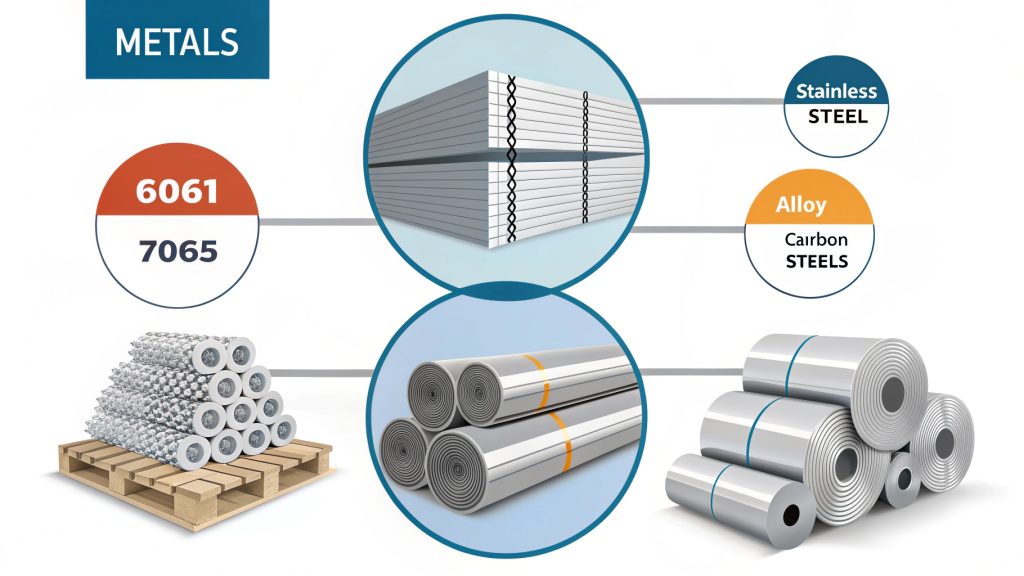
The "best" CNC materials are those that meet your project's specific requirements for strength, function, environment, and cost. Popular choices include aluminum and steel for metals, and Delrin and acrylic for plastics.
When customers ask me this, I usually start by asking them more questions about their application. A material that is perfect for an aerospace component will be overkill and too expensive for a simple bracket in a consumer product. My insight is that both plastics and metals have their place as "best" depending on the situation.
Choosing the Right Material Category
Let's look at common good choices in both metals and plastics:
-
Metals:
-
Aluminum (e.g., 6061, 7075): This is probably the most popular CNC machining metal. It has a great strength-to-weight ratio, is easy to machine, and resists corrosion well. It is also relatively affordable. We machine a lot of aluminum parts at Worthy for all sorts of industries.
-
Steel (e.g., Stainless Steel, Alloy Steel, Carbon Steel): Steel offers higher strength and hardness than aluminum. Stainless steel is great for corrosion resistance and medical applications. Tool steels are very hard and used for tooling. Machining steel can be more challenging and slower than aluminum, which affects cost.
-
Brass: Easy to machine, good for electrical conductivity, and has a nice appearance. Often used for fittings, connectors, and decorative parts.
-
Titanium: Very strong, lightweight, and excellent corrosion resistance, especially at high temperatures. It is more expensive and harder to machine, so it is used in high-performance applications like aerospace and medical implants.
-
-
Plastics:
-
Delrin (Acetal): As mentioned, it is a workhorse plastic. Strong, low friction, stable. Great for mechanical parts. It is one of my go-to recommendations when cost and performance are both important.
-
ABS: Good impact resistance, toughness, and easy to machine. Often used for enclosures, prototypes, and consumer products. It is also quite affordable.
-
Polycarbonate (PC): Very tough and impact-resistant, also transparent. Stronger than acrylic but more prone to scratching. Used for machine guards, visors, and durable clear parts.
-
Nylon: Tough and wear-resistant. Good for gears, bearings, and structural parts that need some flexibility.
-
My insight is that plastics really shine when you need light weight, electrical insulation, or specific chemical resistance, often at a lower cost than comparable metals.
-
Here is a quick comparison:
| Feature | Metals (General) | Plastics (General) |
|---|---|---|
| Strength | High to Very High | Low to High |
| Weight | Heavier | Lighter |
| Cost (Material) | Moderate to Very High | Low to High |
| Machinability | Varies, can be difficult | Generally Easier |
| Conductivity | Electrically Conductive | Electrically Insulative |
| Corrosion Resistance | Varies, can be poor | Generally Good to Excellent |
| Temperature Resistance | Generally Higher | Generally Lower (PEEK is an exception) |
At Worthy Hardware, we machine over 100 different materials, including all the ones listed above. Our engineers can help you navigate these choices to select the truly "best" material for your budget and application, ensuring your parts perform as expected. We pride ourselves on helping customers improve designs and save costs.
Conclusion
Choose plastics for CNC parts for good insulation, less weight, and lower costs. They offer great alternatives to metal for many applications.
My Name: Sandra Gao
My email: [email protected]
Link to my website: www.worthyhardware.com
Brand Name: Worthy
Country: China.