
What Are the Best Surface Finishing Options for Acrylic CNC Machined Parts?

Dull, unfinished acrylic parts after machining? This can spoil the look and feel of your product. The right surface finish is key to making them shine.
The best surface finishing options for acrylic CNC machined parts include flame polishing for clear, smooth edges, mechanical polishing or buffing for larger surfaces, vapor polishing for optical clarity, painting for color, and creating a frosted or matte look through sanding. Flame polishing is very common.
You've got your freshly machined acrylic part, but it might not have that perfect, professional look yet. How do you take it from a raw component to a finished product that impresses? There's a bit more to it than just the machining itself. Let's explore what you need to know to choose the best finish. Keep reading to find out more.
What is the standard surface finish for CNC?
Unsure about what to expect from a standard CNC finish? This confusion can lead to mismatched expectations. Knowing the baseline helps you plan for any extra steps.
The standard surface finish for CNC machined parts is typically an "as-machined" finish. For metals, this is often around 125 Ra micro-inches or better. Acrylic might be smoother but will still show tool marks without additional finishing.
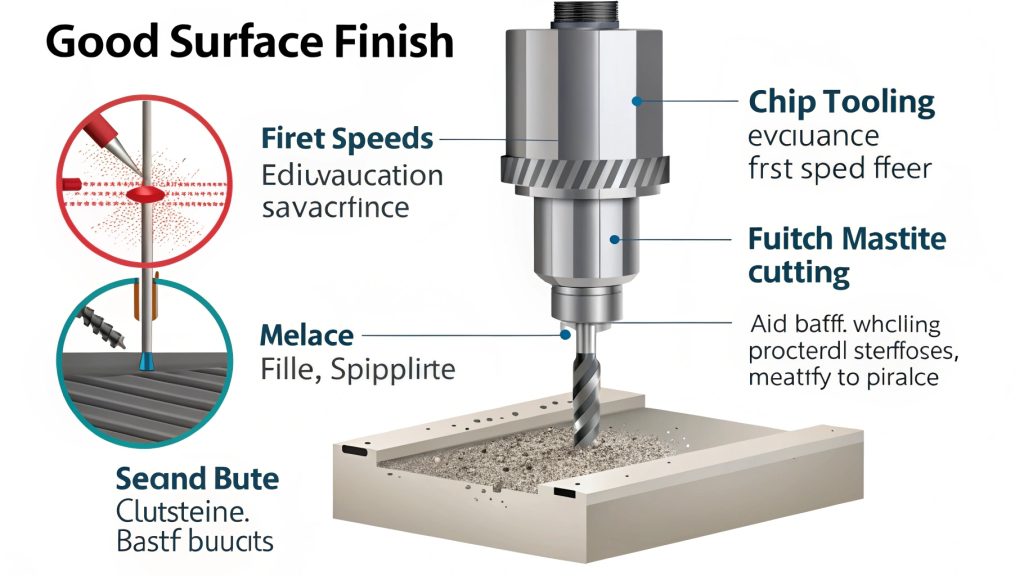
When we talk about a "standard" surface finish in CNC machining, we usually mean the "as-machined" state. This is the surface texture left on the part right after the cutting tools have done their work. There are no extra polishing or finishing steps involved at this stage. We measure surface roughness using a value called Ra, which stands for Roughness Average.
A common standard for metal parts, like the ones I often produce at Worthy Hardware, is around 125 Ra µin (or 3.2 Ra µm). For acrylic, the as-machined finish can naturally be smoother than many metals. However, you'll still likely see faint tool marks or witness lines. This is perfectly normal. If you need a very smooth, optically clear, or decorative finish on your acrylic part, the as-machined surface is just the starting point. You'll need to consider additional finishing processes, which we'll discuss.
What is the best sealant for CNC machines?
Worried about your CNC machine's longevity and performance? Neglecting its protection can lead to costly damage. Proper sealants are vital for machine care, not the parts themselves.
When talking about "sealants for CNC machines," we usually mean products to protect the machine's components—like way covers, enclosures, and seals—from coolant, chips, and dirt. This ensures the machine runs well, indirectly helping part quality.
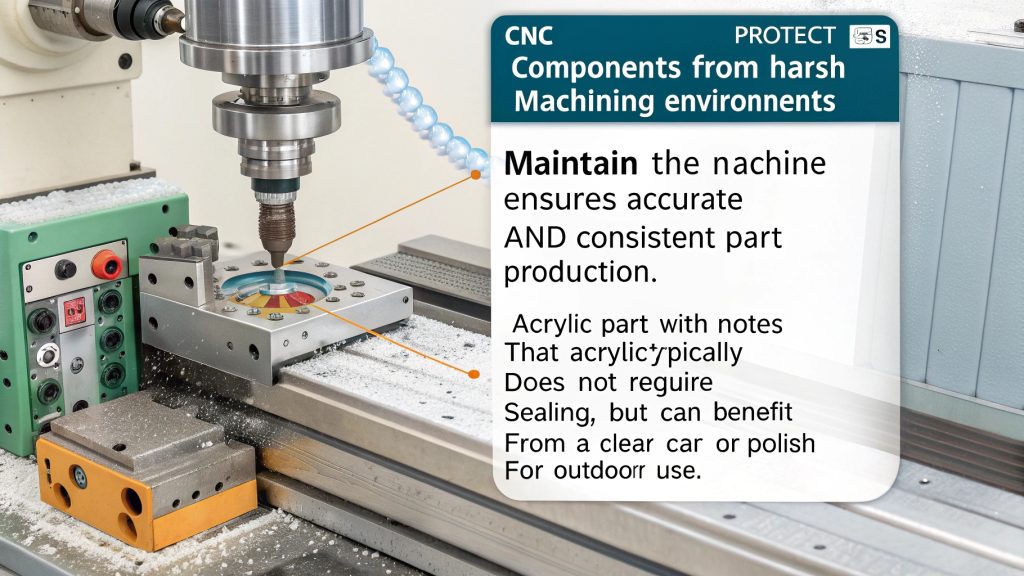
This question is interesting because it often refers to protecting the CNC machine itself, rather than the parts being made. A CNC machine has many moving parts, guide ways, and sensitive electronics. To keep it running accurately and for a long time, these components need protection from the harsh machining environment – things like cutting fluids, metal chips, or acrylic dust. So, "sealants" in this context could be the seals on way covers, gaskets on enclosure doors, or even compounds used to seal joints in the machine's structure to prevent leaks. Keeping the machine in top condition is important because a well-maintained machine produces better parts with more consistent finishes.
If you're thinking about "sealing" the acrylic part after machining, that's a different story. For acrylic, you might apply a clear coat or a specific polish that offers some protection against scratches or UV light, especially if the part is for outdoor use. But generally, we don't "seal" acrylic in the same way we might seal wood or porous stone. The focus is more on achieving the desired aesthetic finish.
How to get better surface finish in machining?
Struggling with rough or unsatisfactory surface finishes on your machined parts? This can make your parts look unprofessional. Optimizing your machining process is the first crucial step.
To achieve a better surface finish directly from machining, use sharp, appropriate tooling (especially for acrylic), correct spindle speeds and feed rates, effective chip evacuation (like an air blast for acrylic), and ensure your CNC machine is rigid and well-maintained.
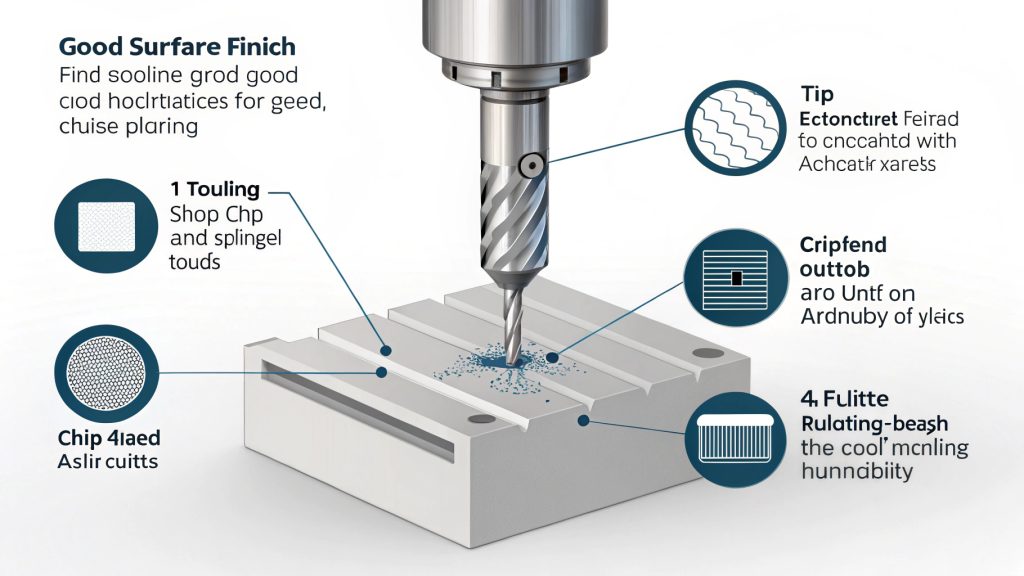
Getting a good surface finish starts right with the machining process itself. Before we even think about post-machining treatments, there are several things I focus on.
First, tooling is critical. For acrylic, I always use very sharp tools, often single-flute or two-flute cutters specifically designed for plastics. These tools should have polished flutes to help with chip ejection.
Second, speeds and feeds must be just right. With acrylic, you typically want high spindle speeds but moderate feed rates. If you feed too slowly, the material can melt; too fast, and you might get chipping or a rough cut.
Third, chip evacuation is super important. Acrylic chips can be sticky, especially if there's any heat buildup. An air blast directed at the cutting area is very effective in clearing chips and cooling the tool and material. This prevents chips from being re-cut or melting onto the surface.
Finally, the machine's condition plays a big role. A rigid machine with minimal vibration will always produce a better finish. These steps ensure the "as-machined" surface is as good as possible, making subsequent finishing operations easier.
What is the best acrylic for CNC?
Choosing the wrong type of acrylic for your CNC project? This can lead to machining headaches and poor results. Selecting the right material is fundamental for success.
**Cast acrylic is generally the best choice for CNC machining. It has lower internal stress, machines more cleanly, and is less prone to melting or chipping compared to extruded acrylic. It also polishes to a higher clarity
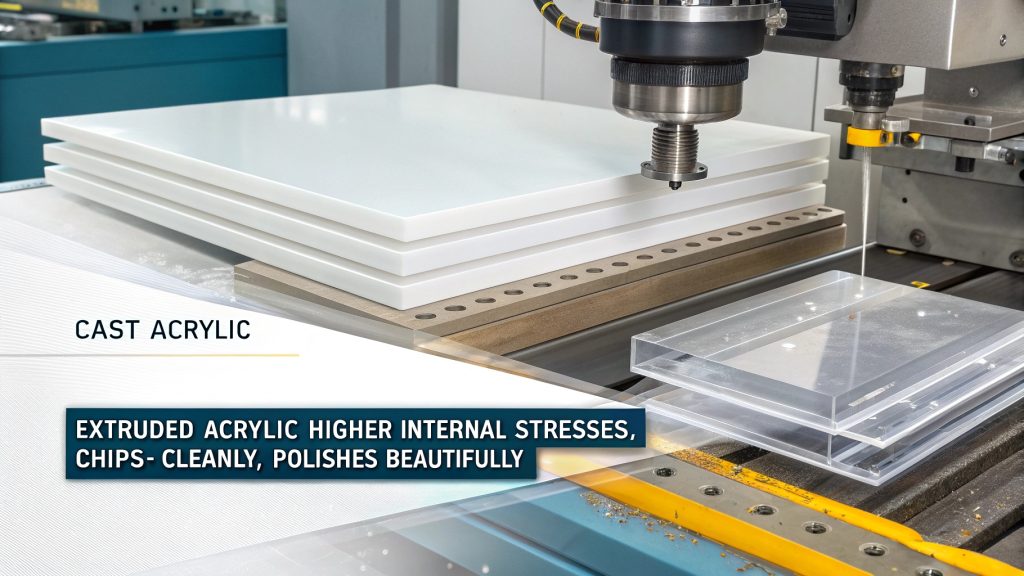
When it comes to CNC machining acrylic, not all acrylic sheets are created equal. In my experience, cast acrylic is usually the superior choice. The manufacturing process for cast acrylic results in a material with lower internal stresses. This makes a big difference during machining. It tends to chip cleanly, is less likely to melt or gum up on the cutting tool, and generally provides a smoother machined edge. Cast acrylic also polishes beautifully, achieving a very high level of clarity.
On the other hand, extruded acrylic is made by pushing molten acrylic through a die. This process can introduce more internal stress. Extruded acrylic is often a bit softer, has a lower melting point, and can be more prone to gumming during cutting. It might also be more susceptible to stress-cracking, especially if exposed to certain solvents or during operations like flame polishing if not done carefully. While extruded acrylic can be more dimensionally consistent in thickness and is sometimes less expensive, for applications requiring intricate machining or high-quality polished finishes, I almost always recommend cast acrylic to my clients.
Here's a quick comparison:
| Feature | Cast Acrylic | Extruded Acrylic |
|---|---|---|
| Internal Stress | Low | Higher |
| Machinability | Excellent, clean chips | Fair, can melt or gum |
| Polishing | Polishes to higher clarity | Good, but may show stress |
| Thickness Tol. | Less consistent | More consistent |
| Cost | Generally higher | Generally lower |
| Impact Resistance | More resistant to impact | Can be more brittle |
For most CNC projects where finish quality is important, investing in cast acrylic pays off.
What Are The Most Common Ways I Finish Acrylic Parts?
Your machined acrylic part looks okay, but not quite "wow"? A plain finish might not meet your customer's vision. Specific finishing techniques elevate acrylic to a professional standard.
In my workshop, the most common ways to finish acrylic parts include polishing (especially flame polishing for edges), mechanical buffing, painting for custom colors, creating a frosted effect by sanding, and silk-screening for branding or details.
Once the acrylic part is machined, there are several ways I help my clients get that perfect final look. Flame polishing is incredibly popular, and often my first suggestion for clear edges. It involves quickly passing a hot, precise flame over the machined edge. The heat melts the acrylic just enough to flow and create a smooth, glossy, and transparent surface. It's fast and effective. For larger flat surfaces or when flame polishing isn't suitable (perhaps due to intricate internal features or the risk of inducing stress in extruded acrylic), mechanical polishing or buffing is the way to go. This involves using a series of progressively finer abrasives and polishing compounds with buffing wheels. It takes more time but can achieve a brilliant, distortion-free shine. Sometimes, for ultra-high clarity, vapor polishing is used, where a solvent vapor smooths the surface.
Beyond clear finishes, painting is common if a specific opaque color is needed. We use paints formulated for plastics. Sanding can create a beautiful frosted or matte finish, which diffuses light nicely. For branding or adding graphics, silk screening or digital printing directly onto the acrylic works very well. And while it's more of a fabrication step, heat bending is frequently done after machining to form the acrylic into specific shapes for enclosures or displays. Each of these methods serves a different purpose, but flame polishing is definitely a frequent request for its speed and the beautiful clear edge it produces.
Conclusion
Acrylic parts offer great versatility. With the right machining and finishing, like flame polishing or buffing, they look fantastic and meet diverse application needs.