
What Are The Best Practices For Knurling Aluminum Parts?

Getting rough, uneven knurls on aluminum? This ruins parts and wastes material. Proper techniques ensure perfect results every time, saving you frustration and cost.
The best practices for knurling aluminum involve choosing the right knurling tools, using appropriate speeds and feeds, and ensuring good lubrication. These steps prevent material tearing and deliver clean, functional knurls consistently.
Achieving a good knurl on aluminum can seem tricky. I've seen many people struggle with it. But if you understand a few key things, it becomes much easier. Let's look deeper into how you can get great results with your aluminum parts.
Can aluminum be knurled?
Wondering if aluminum is suitable for knurling? Its softness can be a concern for many. But yes, with the right approach, you can achieve excellent knurls.
Yes, aluminum can be successfully knurled. While its characteristic softness presents challenges like material buildup, proper tool selection and technique ensure clean, well-defined patterns for grip or aesthetics on aluminum parts.
Based on my experience, aluminum is definitely a material we can knurl. However, we need to respect its properties.
Aluminum's Suitability for Knurling
Aluminum is a popular material in many industries because it's lightweight and resists corrosion. But when it comes to knurling, its characteristics really affect the process. It is much softer than steel. This means it can sometimes deform, tear, or get a "mushy" look if you are not careful. Some aluminum alloys are better for knurling than others. For example, I've found that 6061 aluminum is often used because it machines relatively well and takes a decent knurl. Harder aluminum alloys generally produce crisper knurls.
Challenges with Knurling Aluminum
The main challenge I've encountered is aluminum's tendency to be "gummy." This means the aluminum material can stick to the knurling tool wheels. When this happens, it can cause a messy, incomplete knurl. You might see material build-up on the tool, which then mars the workpiece. This is a primary reason why lubrication is so incredibly important when knurling aluminum.
Also, using too much pressure, especially with form knurling, can distort the part instead of forming a clean knurl. I've seen parts, particularly those with thin walls, bend slightly if the pressure isn't set just right for softer aluminum grades.
Benefits of Knurling Aluminum
Despite these challenges, knurling aluminum offers very good benefits. A knurled surface provides excellent grip. This is very useful for handles, knobs, thumb screws, or any part that needs to be held or turned by hand. Knurling can also significantly improve the appearance of a part. It gives a professional, textured, and finished look that many customers appreciate.
What are the methods of knurling?
Different knurling methods exist, each with pros and cons. Are you using the best one for aluminum? Understanding these methods helps you choose wisely for better results.
The primary knurling methods are cut knurling and form knurling. Cut knurling removes material to create the pattern, while form knurling displaces material. For aluminum, cut knurling often yields cleaner results.
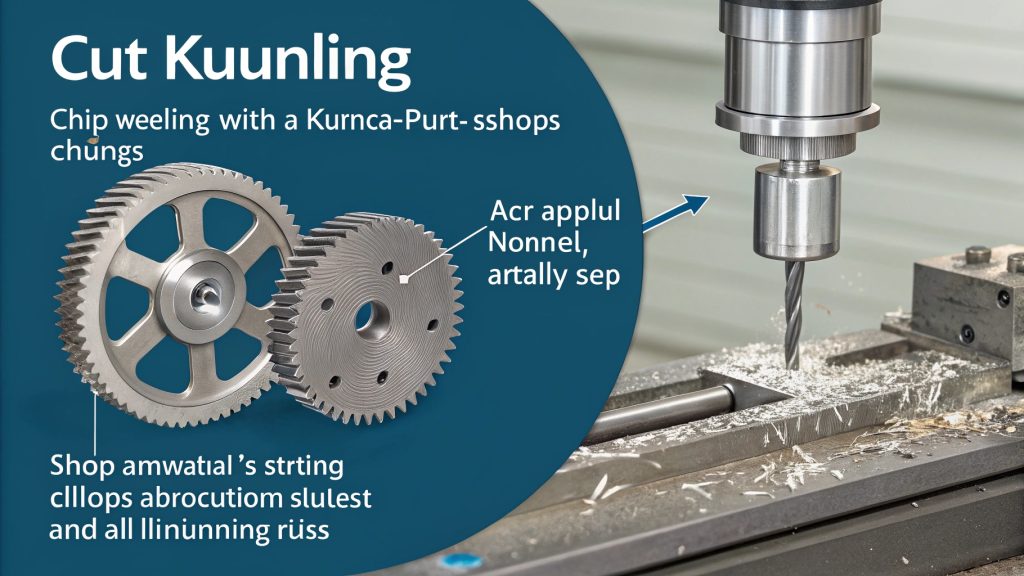
When we talk about putting a knurl on a part, there are mainly two ways to do it in a machine shop: cut knurling and form knurling. Each method uses different types of tools and works differently on the material. It's very important to know the difference, especially when working with a softer material like aluminum. I find that many problems with what we call mashed knurls come from using the wrong method or incorrect settings for the chosen method on aluminum.
Cut Knurling
Cut knurling uses tools with sharp-edged wheels that actually cut into the material. This process removes small chips of material, much like other machining operations such as turning or milling. For aluminum, this can be very good. It tends to produce a cleaner, sharper knurl because the material is being sheared away cleanly. There is generally less stress on the part because the tool is cutting, not just pushing material around. This means there's less chance of distorting the aluminum, especially on smaller diameter or thin-walled parts. We often prefer this for precision applications.
Form Knurling (Pressure Knurling)
Form knurling, also known as pressure knurling, uses wheels that press into the material. These wheels don't have sharp cutting edges. Instead, they displace the aluminum to create the raised pattern. This method does not remove material; it essentially moves it around. It can work-harden the surface a little bit, which can be a benefit. However, with aluminum, there's a higher risk of material flowing unevenly or building up on the wheels if the pressure, speed, or lubrication isn't absolutely perfect. It can sometimes lead to a slightly rougher finish if not controlled well.
Comparing Methods for Aluminum
| Feature | Cut Knurling | Form Knurling |
|---|---|---|
| Material Action | Removes material (chips) | Displaces material (no chips) |
| Finish on Aluminum | Generally cleaner, sharper, more defined | Can be good, but higher risk of material buildup |
| Part Stress | Lower, less likely to distort workpiece | Higher, can distort thin or soft aluminum parts |
| Tool Pressure | Requires less pressure than form knurling | Requires significant pressure |
| Ideal For | Precision knurls, cleaner look on aluminum | Stronger materials, some work hardening effect |
For my operations at Worthy Hardware, if a customer needs a very crisp and clean knurl on an aluminum part, we often lean towards cut knurling, provided the part geometry allows it.
What is the ISO standard for knurling?
Standards ensure consistency in manufacturing globally. Does an ISO standard specifically dictate knurling practices? Knowing this helps in specifying and achieving the desired knurl quality.
While a single, overarching ISO standard for all knurling aspects is less common, DIN 82 is a widely referenced German standard. It defines knurl patterns (like diamond or straight), pitch, and tolerances, ensuring uniformity.

When we make parts for customers in different countries, like we do at Worthy Hardware exporting to North America, Europe, and Japan, everyone needs to understand the specifications in the same way. Standards help us do this.
For knurling, standards define important things like the shape of the knurl, how far apart the ridges are (the pitch), and how deep they should be. This means a knurl specified using a standard in one country should look and feel the same as one made to that standard in another country.
Importance of Standards in Knurling
Using standards is key for quality and communication. If a customer sends a drawing with a knurl specified, like "DIN 82 - RGE 1.0," we know exactly what they mean. This avoids confusion and ensures the customer gets what they expect. It defines the pattern (RGE is a male diamond knurl, raised points, 30-degree helix angle) and the pitch (1.0 mm). This precision helps in quoting, manufacturing, and inspection.
Key Aspects Defined by Knurling Standards (e.g., DIN 82)
Commonly referenced standards like DIN 82 cover several important details for knurls:
-
Knurl Patterns: The most common are diamond patterns (e.g., RGE for raised diamond, RGV for depressed diamond) and straight patterns (RAA for straight axial). The standard specifies the angles for diamond patterns and the orientation for straight ones.
-
Pitch (t): This is a critical dimension. It's the distance between two adjacent crests of the knurl. For straight knurls, it's measured parallel to the axis. For diamond knurls, it's measured perpendicular to the grooves. Common pitches might be 0.5 mm, 0.8 mm, 1.0 mm, 1.2 mm, 1.5 mm, etc.
-
Module (m): Sometimes, especially in contexts related to gears, a module is used. However, for general machine knurling, pitch (t) is much more common in specifications.
-
Tooth Profile and Depth: The standard also implies characteristics of the tooth form and the resulting depth, although exact depth can vary with material and process.
-
Tolerances: While not always explicitly tight, standards provide a baseline for acceptable variations in pitch and overall appearance.
How Standards Help with Aluminum Knurling
For aluminum, following a standard is very helpful. It guides you in choosing the right knurling tool (e.g., a tool with wheels matching the specified pitch and pattern). If a drawing calls for a specific DIN 82 knurl, you can select appropriate tooling. This greatly reduces guesswork.
It also helps prevent issues like the mashed knurls because you are working towards a recognized specification. This makes our quality control process much more straightforward too, as we have a clear benchmark.
What are the tips for knurling?
Want to avoid common knurling problems like tearing or uneven patterns on aluminum? Simple mistakes can lead to poor results. These tips will help you achieve perfect knurls.
Key tips for knurling aluminum include using very sharp tools, correct speeds and feeds, and ample, consistent lubrication. A rigid machine setup is vital, and always perform a test run on scrap material first.
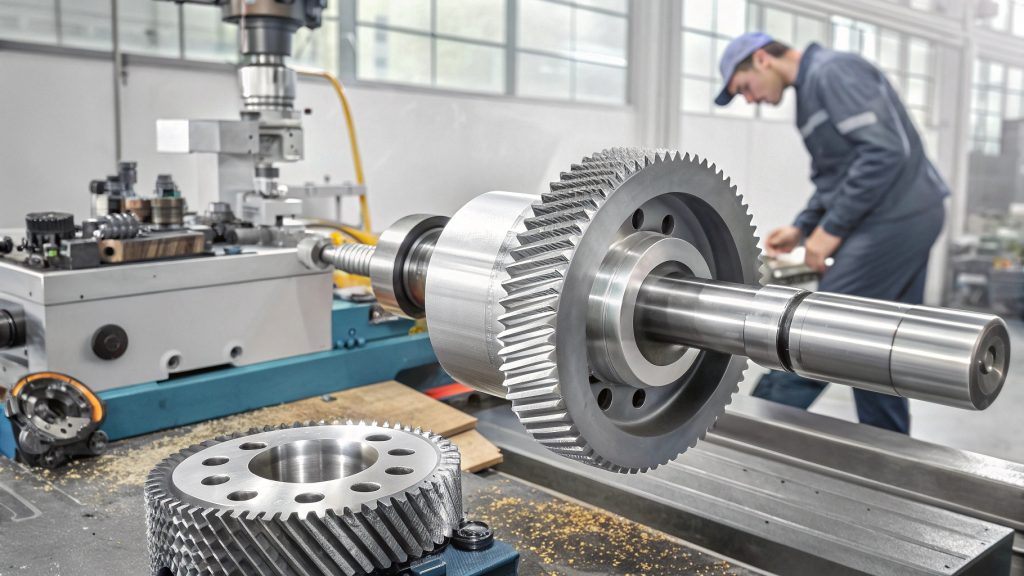
Over the years, I've learned that getting a good knurl on aluminum comes down to a few important practices. My own insight highlights that choosing the right tool and setting the correct machining parameters are the most critical factors to avoid issues like mashed knurls.
Tip 1: Choosing the Right Knurling Tool
This is absolutely fundamental. For aluminum, you must use very sharp knurling wheels.
-
Wheel Material: High-Speed Steel (HSS) wheels can work, especially if they are new and sharp. However, for consistent results and longer tool life, I often recommend carbide knurling wheels when working with aluminum, even though they cost more. They stay sharper for longer.
-
Pattern and Pitch: The pattern (e.g., diamond, straight) and pitch (coarseness) must be suitable for aluminum. A very fine pitch might clog easily with the gummy aluminum chips. Sometimes a slightly coarser pitch can be more forgiving on softer aluminum grades.
-
Tool Holder: Ensure your knurling tool holder is robust, rigid, and aligns perfectly perpendicular to the workpiece axis (for straight knurls) or correctly for angled patterns. Any play or misalignment will cause problems. I always tell my team here at Worthy Hardware, "The tool and its setup are half the job, especially with a tricky material like aluminum."
Tip 2: Setting Correct Machining Parameters
This is the other part of my core insight. You can have the best tool, but if your speeds and feeds are wrong for aluminum, you'll get a poor result.
-
Spindle Speed: Generally, use slower spindle speeds for knurling aluminum compared to steel. Too high a speed can cause the aluminum to tear, overheat, or build up excessively on the wheels. Start slow and observe.
-
Feed Rate: A steady, moderate feed rate is usually best for lathe knurling. If you feed too slowly, the tool might rub and work-harden the surface without forming a proper knurl. If you feed too fast, it can overload the tool, distort the part, or create a shallow, incomplete knurl.
-
Pressure/Depth of Cut: For form knurling, apply enough pressure for the knurls to form fully but not so much that you significantly deform the aluminum workpiece or cause excessive material flow. For cut knurling, the depth of cut per pass needs to be appropriate for the tool and material. Make multiple light passes if necessary.
Tip 3: The Crucial Role of Lubrication
Never, ever knurl aluminum dry. I cannot stress this enough. Aluminum is a "gummy" material. Without good lubrication, aluminum particles will quickly stick to the knurling wheels. This causes the dreaded a mashed, ugly, and non-functional knurl. Use a good quality cutting fluid or a specialized lubricant for aluminum. It should be applied generously and continuously to help wash away any small particles, keep the tool cool, and reduce friction.
Tip 4: Machine Rigidity and Test Runs
Your lathe or turning center must be rigid. Any vibration or chatter in the machine or setup can directly affect the knurl quality, leading to uneven or wavy patterns. Ensure the workpiece is held securely in the chuck or collet.
Before knurling your actual expensive part, always perform a test run on a piece of scrap material of the same aluminum alloy. This simple step allows you to fine-tune your speeds, feeds, pressure, and check the lubrication. This is a practice I always insist on with my engineers, and it saves a lot of time, material, and headaches in the long run.
Conclusion
Mastering aluminum knurling involves correct tools, precise parameters, and good lubrication. Follow these best practices from Worthy Hardware for consistent, high-quality results on your aluminum parts.