
What is the best metal for CNC machining projects?
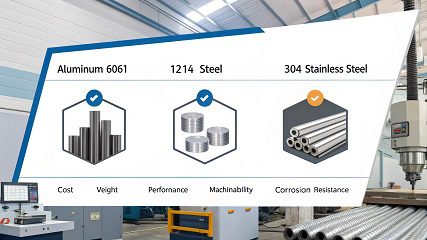
Choosing the wrong metal for your project is frustrating. It can lead to poor performance, blown budgets, and production delays. You need a clear answer to move forward confidently.
The best metal for CNC machining depends on your project's needs. For a great balance of cost, weight, and performance, Aluminum 6061 is a top choice. For high machinability, 12L14 steel is excellent, while 304 stainless steel offers superior corrosion resistance.
Choosing the right metal is more than just picking one from a list. You have to think about many different factors. These include the final application, the required strength, weight limits, and of course, your budget. Each metal offers a unique combination of properties, and understanding them is key to making the best decision for your specific part. Let's break down the most common choices to help you find the perfect fit for your project.
What is the best steel for CNC machining?
You need the strength of steel, but picking the right grade can be confusing. The wrong choice makes machining difficult, which drives up your costs and extends your project timeline.
For general-purpose CNC machining, 12L14 free-machining steel is often the best choice. It allows for fast cutting speeds and an excellent surface finish, which helps lower costs. For applications needing corrosion resistance, 304 stainless steel is a very popular and effective option.
When we talk about the "best" steel, it really comes down to what you want to achieve with your part. Over my nearly 30 years in this business, I've seen customers need steel for all sorts of reasons, from simple structural components to complex, high-performance parts. The choice of steel directly impacts the machining process and the final part's function. For example, some steels are prized for their extreme hardness, while others are chosen for their ability to resist rust. To make it clearer, let's compare a few common options we work with every day at Worthy Hardware.
| Steel Type | Key Property | Best Use Case | Machinability |
|---|---|---|---|
| 12L14 Free-Cutting | Excellent Machinability | High-volume, low-stress parts, shafts, fittings | Excellent (100%) |
| 304 Stainless Steel | Corrosion Resistance | Medical devices, food processing, kitchenware | Fair (45%) |
| 4140 Alloy Steel | High Tensile Strength | Gears, bolts, machine tool components | Good (65%) |
As you can see, if your main goal is to produce a large number of parts quickly and affordably, 12L14 is fantastic. The added lead and sulfur make chips break away cleanly, reducing tool wear and allowing us to run our machines much faster. However, if your part will be exposed to moisture or harsh chemicals, the corrosion resistance of 304 stainless steel is essential, even though it's tougher and slower to machine. For parts that need to withstand heavy loads, like gears, a strong alloy steel like 4140 is the right choice. Our engineers can help you balance these trade-offs to select the steel that delivers the performance you need at the best possible price.
What metal is used in CNC machines?
Have you ever wondered what makes CNC machines so rigid and precise? The material used to build the machine itself is a key factor in the quality of the parts it produces.
Industrial CNC machines are primarily built from cast iron and steel. Cast iron is used for the machine base and frame because of its excellent ability to damp vibrations. Steel is used for high-strength components like the spindle and guide rails that require stiffness.
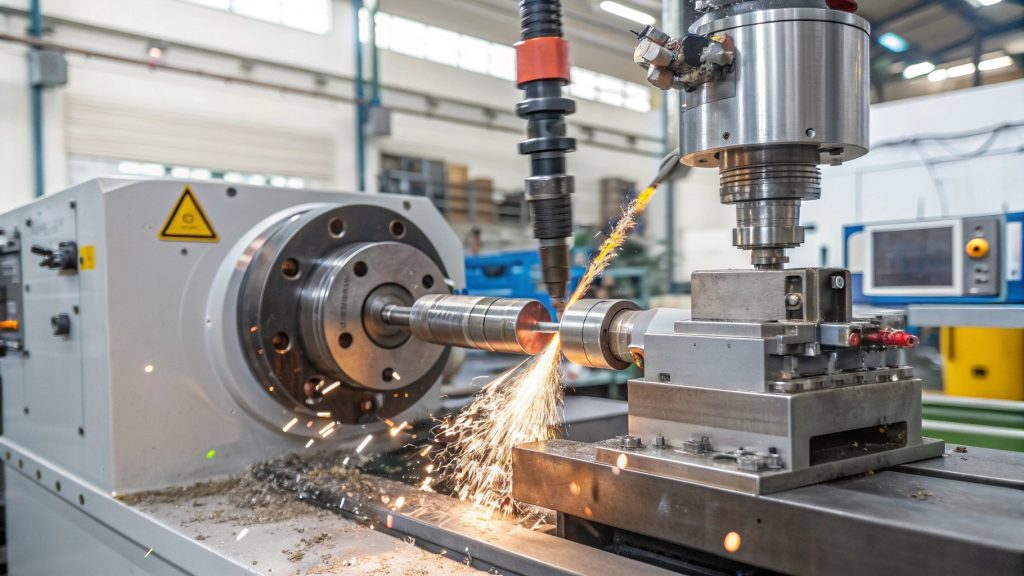
The stability of a CNC machine is the foundation of its accuracy. If the machine's frame vibrates or flexes during operation, it's impossible to hold tight tolerances. That's why the choice of material for the machine itself is so critical. The heavyweights of the industry, the machines we use for high-precision and high-volume production, rely on very specific materials to deliver consistent results.
The main star is cast iron. It's used for the largest parts of the machine, like the bed and column. Why cast iron? Because it contains graphite, which is fantastic at absorbing vibrations. When a cutting tool is slicing through metal at high speed, it creates a lot of vibration. A cast iron frame soaks up that energy, keeping the machine stable and the cut precise. This is how we can confidently machine parts to tolerances of +/- 0.005" or even tighter, down to +/- 0.001" when required.
Then you have steel. Steel is used for the parts of the machine that are under high stress and need to be extremely stiff, but not necessarily as bulky as the frame. Think about the spindle that holds the tool, or the linear guide rails that the moving parts slide on. These components need the high tensile strength and rigidity of steel to operate without deforming.
For some lighter-duty or desktop CNC machines, you might see aluminum frames. While aluminum is lighter and cheaper, it just doesn't offer the same level of vibration damping or rigidity as cast iron. For the professional, industrial-grade parts our customers in the aerospace, medical, and automotive sectors demand, a heavy, stable machine made from cast iron and steel is non-negotiable.
What is the best material for CNC frame?
Are you thinking about the foundation of a CNC machine? The frame is its backbone. A weak or unstable frame will lead to inaccurate parts, tool chatter, and wasted material.
For industrial CNC machine frames, cast iron is the best material. Its superior vibration damping and high compressive strength create the stable foundation needed for precision machining. Steel is a strong second choice, especially for gantry-style machine designs.
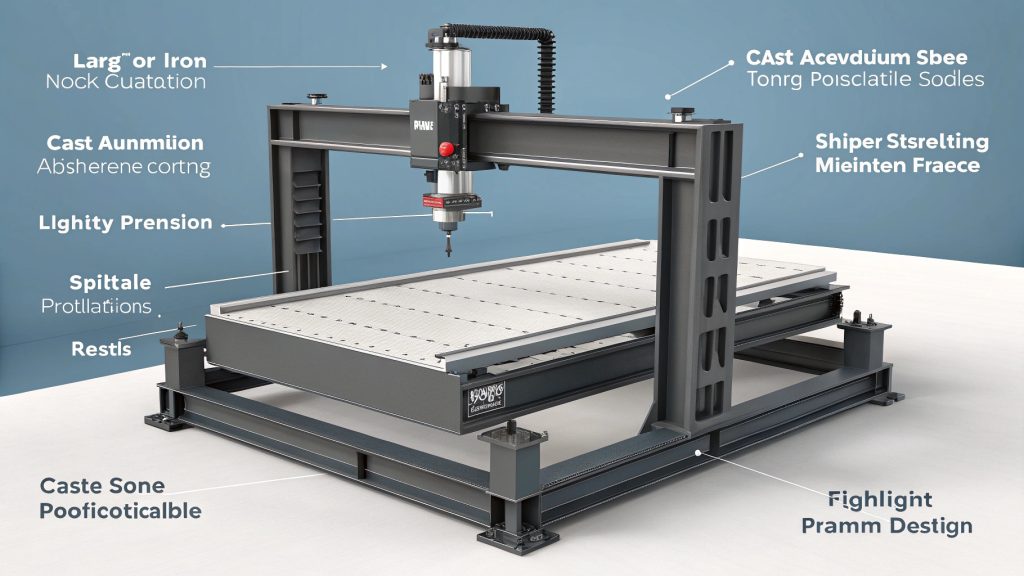
The frame carries the entire load of the machine and must resist the powerful forces generated during cutting. Its job is to provide a rock-solid, unmoving base so that the cutting tool can be positioned with extreme accuracy. The material chosen for the frame directly influences the machine's ultimate capability and the quality of the parts it can produce. The choice isn't just about strength; it's about a property called damping, which is the ability to absorb vibrations.
Let’s look at the top materials and why they are chosen.
| Frame Material | Key Advantage | Ideal Machine Type |
|---|---|---|
| Cast Iron | Best vibration damping, high stability | High-precision industrial milling machines and lathes |
| Steel | High stiffness-to-weight ratio, strong | Large gantry routers, plasma cutters |
| Aluminum | Lightweight, low cost, easy to assemble | Hobbyist CNC routers, desktop machines |
Cast iron is the gold standard for the frames of high-precision milling machines and lathes. Its internal graphite structure acts like a sponge for vibrations, which is crucial for achieving a smooth surface finish and holding tight tolerances. We rely on machines with heavy cast iron frames at Worthy for all our precision work.
Steel, usually welded into a frame structure, is another strong option. It is very stiff and can be a good choice for large gantry-style machines where you need long, straight beams. However, it doesn't damp vibrations as effectively as cast iron.
Aluminum extrusions are very popular for DIY and hobby-level machines. They are lightweight and easy to bolt together. But for machining metals, an aluminum frame simply isn't rigid enough. It will flex under cutting forces, leading to poor accuracy. So, if you need professional-quality parts, you need them made on a machine with a professional-grade frame made of cast iron or steel.
What is the most machinable metal?
Do you want to reduce your machining time and lower project costs? Choosing a metal that is difficult to machine wears out tools faster and increases labor, which inflates your final bill.
Aluminum 6061 is one of the most machinable metals, prized for its softness and excellent chip formation. For steels, 12L14 free-cutting steel is designed specifically for machinability, allowing for very high cutting speeds and extending tool life, making it extremely efficient.
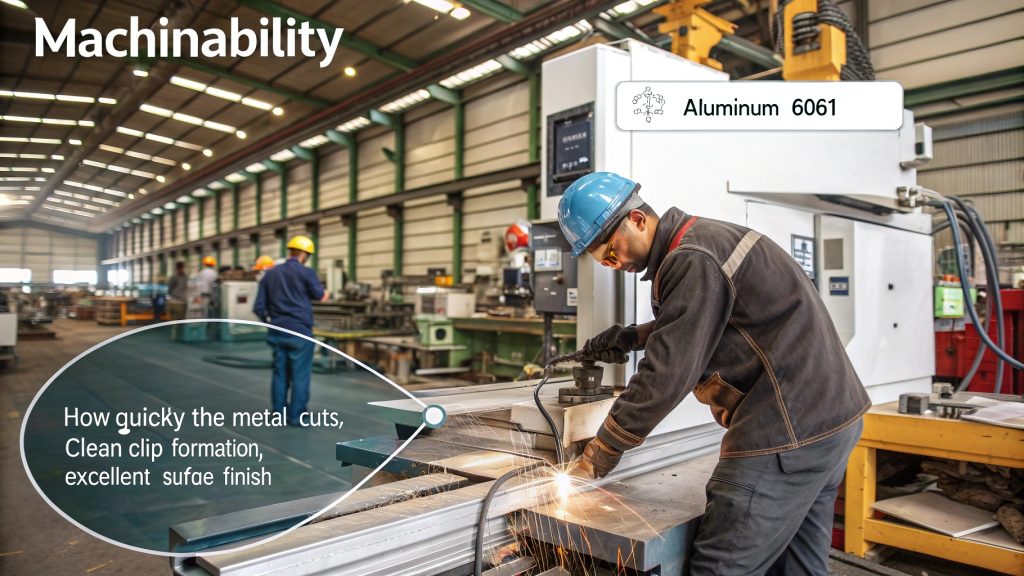
"Machinability" is a term we use a lot in our shop. It's not just about how soft a metal is. It's a measure of how easily it can be cut, how well the little pieces of scrap metal (we call them chips) break away, the quality of the surface finish we can achieve, and how much wear and tear it puts on our cutting tools. A metal with good machinability means we can run our machines faster, the tools last longer, and the final part looks great. This all translates into lower costs and quicker delivery times for you.
From all the 100+ materials we work with, a few stand out as being exceptionally easy to machine.
Aluminum 6061 is a huge favorite. I've seen it used in almost every industry, from consumer products to aerospace. It’s a joy to machine because it's soft enough to cut quickly, but the chips curl and break away cleanly. This prevents them from clogging up the tool, which is a common problem with other soft metals. This allows us to achieve a great surface finish, often 125 Ra or better, straight from the machine.
When a customer needs the strength of steel but wants to keep costs down, we often recommend 12L14 free-cutting steel. The "L" stands for lead, and it also has added sulfur. These elements act as internal lubricants and help the chips become very small and brittle. They break off instantly, which dramatically reduces heat and friction. We can machine 12L14 much faster than standard steels, which is a huge advantage for high-volume production runs.
When a customer's design allows for it, suggesting a highly machinable material is one of the first things our engineers do to help save them money.
Conclusion
The "best" metal isn't a single answer. It is always a balance between your project's cost, strength, and function. Aluminum 6061, 12L14 steel, and 304 stainless steel are excellent starting points.