
How Does Aluminum Compare to Stainless Steel for CNC Machining?

Struggling to pick between aluminum and stainless steel for your CNC parts? Making the wrong choice can cost you time and money. Understanding their differences helps you decide wisely.
Aluminum is generally faster and easier to CNC machine than stainless steel. Stainless steel, however, offers superior strength and corrosion resistance, making it the preferred choice for specific, demanding applications.
Choosing the right material for your CNC machining project is a very common question I get. Both aluminum and stainless steel are popular, but they have very different properties. It's important to know these differences to pick the best one for your specific parts. Let's look into this more to help you understand. We will explore some common questions people ask.
Is aluminum easier to machine than stainless steel?
Are machining challenges slowing down your production and increasing costs? Difficult materials can mean higher expenses and longer waits for your parts. Thankfully, aluminum often machines more easily than stainless steel.
Yes, aluminum is generally much easier and faster to machine than stainless steel. It requires less cutting force, causes less wear on cutting tools, and allows for significantly higher machining speeds and feeds.
When we talk about how easy a material is to machine, aluminum usually comes out on top compared to stainless steel. I've seen this many times in my workshop.
Key Machinability Factors
Several things make aluminum easier to work with. First, aluminum is softer than most stainless steels. This means cutting tools don't wear out as quickly. We can also run our CNC machines at higher speeds when cutting aluminum. This makes the process faster. Chip formation is another point. Aluminum chips are usually small and easy to manage.
Stainless steel, especially certain grades, can produce long, stringy chips that can tangle around the tool, or it can work-harden if not machined correctly. Also, aluminum conducts heat well, so the heat generated during cutting dissipates quickly. Stainless steel doesn't conduct heat as well, so heat can build up in the tool and workpiece.
Impact on Production
These differences directly affect production. Machining aluminum means shorter cycle times for each part. This naturally leads to lower machining costs because we use less machine time and our tools last longer. For example, I remember a project for a client, Mark. He needed some housings. We initially quoted using 304 stainless steel, but after discussing the application, we found 6061 aluminum would also work.
By switching to aluminum, we cut the cycle time per part by nearly 40%. Our cutting tools also lasted three times longer. Mark was very happy with the cost savings and the quick turnaround. This is a common experience when choosing aluminum for applications where its properties are sufficient.
| Feature | Aluminum (e.g., 6061-T6) | Stainless Steel (e.g., 304) |
|---|---|---|
| Relative Hardness | Lower | Higher |
| Tool Wear | Low | High |
| Cutting Speed | High | Low to Medium |
| Heat Dissipation | Good | Poor |
| Machining Cost | Lower | Higher |
What is the best material for CNC machine?
Are you feeling unsure about picking the "best" material for your CNC project? Choosing a material that isn't quite right can lead to parts that don't perform as expected. The truth is, the "best" material really depends on your specific application.
There is no single "best" material for CNC machining. The ideal choice depends on many factors. These include the required strength, corrosion resistance, weight, budget, and the final use of the part.
I often tell my customers that the "best" material is the one that best meets all their requirements for a specific part. It's a balance.
Application-Specific Needs
Think about what your part needs to do. If you need a high strength-to-weight ratio, aluminum (like 7075 grade) is excellent. This is why it's used a lot in aerospace and performance automotive parts. If your part will be in a harsh environment or needs to be very clean, like for food processing or medical devices, then stainless steel (like 316 grade) is usually a better choice because it resists corrosion very well.
Cost is also a big factor. Aluminum is generally less expensive, both for the raw material and for the machining time. If your part needs to conduct heat well, aluminum is great. If it needs to insulate, then stainless steel is better in that regard, though neither are true insulators.
Common CNC Machining Materials and Their Uses
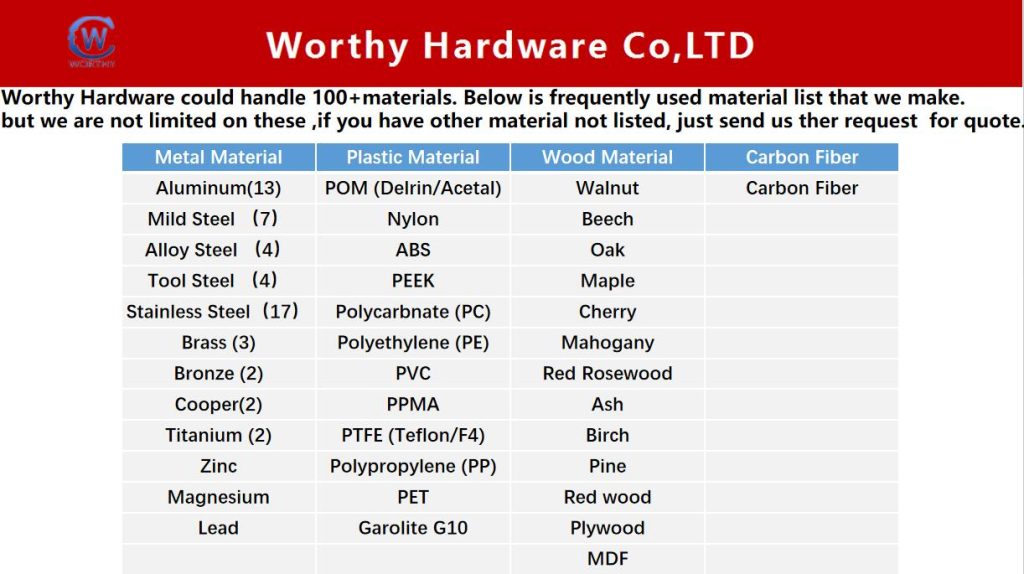
At Worthy Hardware, we machine many materials. Here are a few examples:
-
Aluminum (e.g., 6061, 7075): Very popular for jigs, fixtures, electronic enclosures, automotive components, and general-purpose parts. It's light and easy to machine.
-
Stainless Steel (e.g., 304, 316, 17-4PH): Used for medical instruments, food processing equipment, marine hardware, and parts needing high strength and wear resistance.
-
Carbon Steel (e.g., 1018, 1045): Good for strength and toughness where corrosion isn't a major concern, like shafts and gears.
-
Plastics (e.g., Delrin, Nylon, PEEK): Chosen for their light weight, chemical resistance, or electrical insulation properties.
Mark, one of my regular customers from Canada, often needs parts for industrial machines. Sometimes, 304 stainless steel is essential for him because of its durability, even though it costs more to machine. Other times, for things like equipment enclosures, 6061 aluminum is perfect and saves him money. It all comes down to the job the part has to do.
| Factor | Aluminum | Stainless Steel | Other Materials (Examples) |
|---|---|---|---|
| Primary Advantage | Lightweight, machinability | Strength, corrosion resistance | Varies (e.g., insulation for plastics) |
| Common Uses | Housings, automotive, aerospace | Medical, food, marine | Gears, insulators, prototypes |
| Relative Cost | Lower | Higher | Varies widely |
Which is better stainless steel or aluminum?
People often ask me, "Which is truly better, stainless steel or aluminum?" This debate can sometimes miss the main point, which is how well the material fits the specific job. "Better" is subjective; it’s really about fitness for purpose.
Neither stainless steel nor aluminum is universally "better." Aluminum stands out for its excellent machinability and light weight. Stainless steel offers superior strength, hardness, and corrosion resistance. The best choice depends on your priorities.
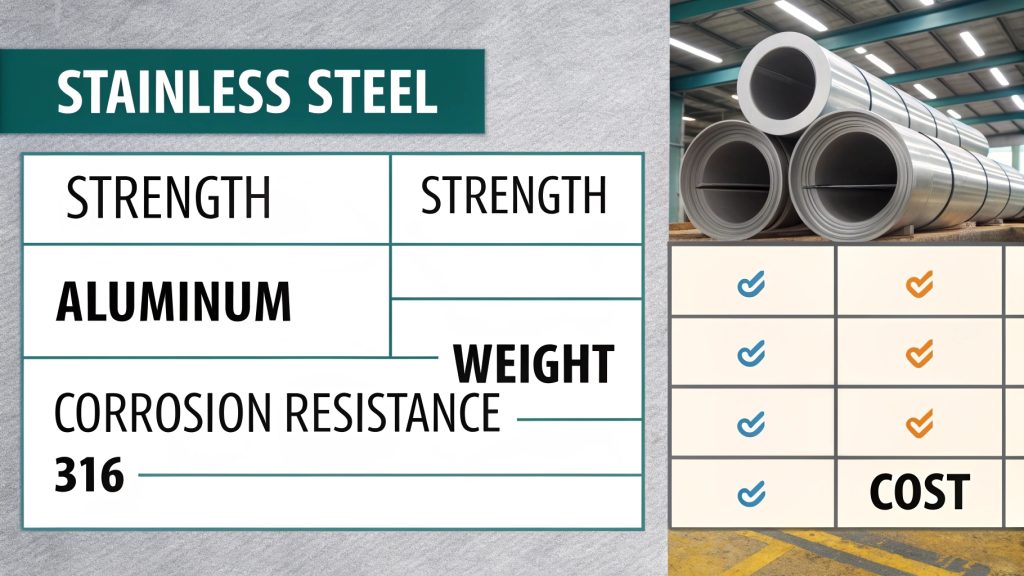
To decide which material is "better" for your project, we need to compare their key properties directly and see how they match your needs.
Comparing Core Properties
Let's look at the main differences.
-
Strength: Stainless steel is significantly stronger and harder than aluminum. If your part needs to withstand high loads or impacts, stainless steel is usually the way to go.
-
Weight: Aluminum is about one-third the weight of stainless steel. This is a huge advantage in applications where minimizing weight is critical, like in aircraft or portable equipment.
-
Corrosion Resistance: Most stainless steel grades, especially 316, offer excellent corrosion resistance against a wide range of chemicals and environments. Aluminum forms a natural protective oxide layer, which is good in many situations, but it can corrode in certain acidic or alkaline conditions.
-
Cost: Aluminum raw material is generally cheaper than stainless steel. As we've discussed, it's also cheaper to machine. So, for budget-sensitive projects, aluminum is often more attractive.
-
Thermal Conductivity: Aluminum conducts heat very well, much better than stainless steel. This makes it good for heat sinks or parts that need to dissipate heat quickly. Stainless steel's poor thermal conductivity can be an advantage if you need to contain heat.
-
Weldability: Both can be welded, but the techniques and ease differ. Aluminum can be trickier to weld consistently than many common stainless steel alloys.
When to Choose Which
So, when should you pick one over the other?
-
Choose Aluminum if: Weight reduction is a primary goal, you need complex machined features (easier to machine), good thermal conductivity is important, or your budget is tight.
-
Choose Stainless Steel if: You need high strength and durability, the part will be exposed to corrosive environments or high temperatures, high wear resistance is required, or hygiene is critical (like in food or medical applications).
I often advise clients like Mark on this. If he's making a prototype that needs to be light and quickly tested for fit and form, aluminum is a great, cost-effective choice. But if he needs a final production part for a machine that operates in a wet or chemically challenging environment, then stainless steel is the clear winner, even if it costs more initially. It will last longer and perform better in that situation.
| Property | Aluminum (e.g., 6061-T6) | Stainless Steel (e.g., 304) | "Better" For... |
|---|---|---|---|
| Density | Low (~2.7 g/cm³) | High (~7.9 g/cm³) | Aluminum (Lightweight needs) |
| Tensile Strength | Lower (e.g., ~310 MPa) | Higher (e.g., ~580 MPa) | Stainless Steel (Strength needs) |
| Corrosion Resistance | Good (forms oxide layer) | Excellent | Stainless Steel (Harsh environments) |
| Machinability | Excellent | Fair to Good | Aluminum (Complex, fast jobs) |
| Material Cost | Lower | Higher | Aluminum (Budget constraints) |
| Thermal Conductivity | High (~167 W/m·K) | Low (~16.2 W/m·K) | Aluminum (Heat dissipation) |
Can stainless steel be CNC machined?
Do you ever wonder if tough materials like stainless steel are even possible to CNC machine effectively? This common misunderstanding might make you avoid a material that could be perfect for your parts. The good news is, yes, stainless steel is definitely CNC machinable with the right approach.
Absolutely, stainless steel can be effectively CNC machined. It does require appropriate cutting tools, slower machining speeds, higher cutting forces, and good coolant use compared to aluminum, but it's a very common process in manufacturing.
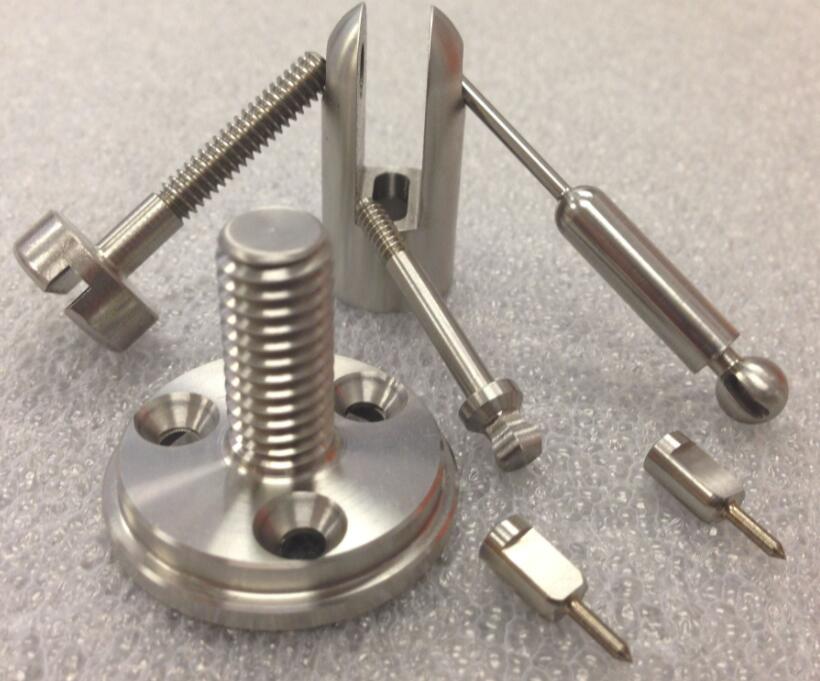
At Worthy Hardware, we machine stainless steel parts every day for various industries. While it presents more challenges than aluminum, it's entirely manageable with the right knowledge and equipment.
Challenges in Machining Stainless Steel
Stainless steel isn't as easy to machine as aluminum due to a few key characteristics.
-
Work Hardening: Austenitic stainless steels (like the common 304 and 316 grades) have a tendency to work harden. This means that as you cut the material, the area being cut actually becomes harder. This puts more stress on the cutting tool and can lead to premature tool failure if not managed.
-
Low Thermal Conductivity: As mentioned before, stainless steel doesn't conduct heat away from the cutting zone very well. This means the cutting tool tip gets very hot, which can reduce tool life and affect the surface finish.
-
Toughness and Ductility: Stainless steel is tough and often quite ductile. This requires more power from the CNC machine and can lead to a "built-up edge" (BUE) on the tool, where material from the workpiece welds itself to the cutting edge.
-
Tool Wear: Because it's harder and more abrasive than aluminum, stainless steel causes cutting tools to wear out faster.
Best Practices for CNC Machining Stainless Steel
Despite these challenges, we successfully machine stainless steel by following best practices:
-
Tooling: We use sharp, high-quality carbide cutting tools, often with specialized coatings (like TiAlN or AlCrN) designed for stainless steel. The geometry of the tool, such as positive rake angles, is also important.
-
Speeds and Feeds: We generally use lower cutting speeds compared to aluminum, but often pair this with consistent, positive feed rates. This helps to get under any work-hardened layer from a previous pass and reduces heat buildup.
-
Coolant: Abundant and high-pressure coolant is crucial. It helps to cool the tool and workpiece, lubricate the cutting action, and, very importantly, flush chips away from the cutting zone.
-
Machine Rigidity: A robust and rigid CNC machine and workholding setup are essential to handle the higher cutting forces involved with stainless steel without vibration.
I remember a particularly challenging job involving 316L stainless steel for a medical device component. We initially struggled with tool life and surface finish. After consulting with our tooling supplier and experimenting, we switched to a specific grade of coated carbide insert and carefully adjusted our cutting speeds and feed rates.
The improvement was immediate. It showed me again that even tough materials are very machinable when you apply the right techniques and experience.
Mark, who sometimes orders high-precision stainless parts, really appreciates that we can hold tight tolerances, like +/- 0.001", even on these more demanding materials. Our team's experience, like that of our 4 engineers, is key to solving these challenges and optimizing designs for cost-effective manufacturing.
Conclusion
Aluminum and stainless steel both play vital roles in CNC machining. Your specific application's needs for strength, weight, corrosion resistance, and cost will ultimately guide your best material choice.
If you're looking for high-quality CNC machined parts in aluminum, stainless steel, or a wide range of other materials, we at Worthy Hardware can help. We are a B2B wholesale supplier based in China, specializing in CNC machining services including milling, turning, 5-axis machining, and precision machining. We offer flexible delivery times and 100% inspection on all parts. Our engineers have rich experience in helping customers like Mark Chen improve designs and save costs. We export to Singapore, North America, Japan, Europe, Australia, and many other regions. Contact me, Sandra Gao, at [email protected] or visit www.worthyhardware.com to discuss your project.