
How Does Acetal Compare To Aluminum In CNC Machined Parts?

Choosing CNC materials is tricky. Pick wrong, and costs rise, or parts fail. I will help you understand Acetal versus Aluminum for your projects.
Acetal (Delrin/POM) offers good strength, sometimes similar to aluminum, and can be more affordable. Aluminum generally provides better toughness and a wider strength range, depending on the alloy chosen for your CNC machined parts.
You want the best material for your CNC machined parts. It is a big decision that affects performance and cost. Let us look deeper into how these two popular materials stack up. I think you will find the details below very helpful for making your choice.
LOOP START
How strong is Delrin compared to aluminum?
Need strong parts? Delrin and aluminum are common. But which one really gives the strength you need for your specific application?
Delrin (POM/Acetal) has impressive hardness, sometimes even more than 6061 aluminum. However, aluminum alloys generally offer better overall tensile strength and much greater toughness or impact resistance.
When I talk with customers, like Mark Chen from Canada, strength is always a key topic. Mark needs quality parts for his business but is also very mindful of costs. So, the strength-to-cost ratio is important. Acetal, which we often call Delrin or POM, has very good hardness. In some cases, its surface hardness can be similar to, or even a bit higher than, a common aluminum alloy like 6061. This makes it great for wear resistance. However, when we look at tensile strength – the ability to resist being pulled apart – aluminum alloys, especially higher-grade ones like 7075, are significantly stronger than Acetal.
More importantly, aluminum has much better toughness. This means aluminum can absorb more energy and deform before fracturing, while Acetal is more brittle and can snap under sudden impact. My insight here is that POM raw material is usually cheaper than 6061 aluminum. So, if the specific type of strength Acetal offers is enough for the application, it can be a more cost-effective choice than aluminum. We always discuss this balance at Worthy Hardware.
Can you CNC acetal?
Considering Acetal? Wondering if it machines well? Poor machinability means higher costs and delays for your custom CNC parts.
Yes, Acetal (Delrin/POM) is an excellent material for CNC machining. It cuts cleanly, holds tight tolerances, and produces a smooth surface finish, making it a favorite for many precision components.
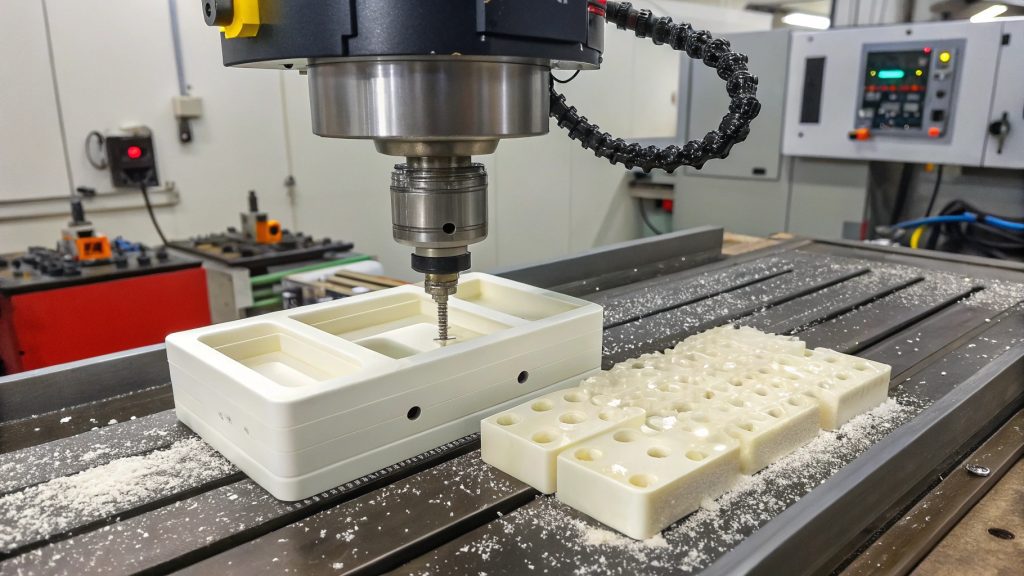
Absolutely, Acetal is one of my favorite plastics to CNC machine here at Worthy Hardware. It is very cooperative. It does not get gummy like some other plastics, and it chips nicely, which helps with tool life and surface finish. We can achieve very precise dimensions with Acetal. Our standard tolerance for plastics is +/- 0.010 inches, but we can often hold even tighter tolerances, sometimes down to sub +/- 0.001 inches, depending on the part geometry. This is crucial for customers like Mark who need reliable, custom CNC parts that fit perfectly every time.
Acetal also gives a naturally smooth, often glossy, finish right off the machine, which can sometimes eliminate the need for secondary finishing operations, saving costs. Because it machines so well and quickly, it often leads to lower machining times compared to some tougher metals. This efficiency is something we always strive for, especially with our high-volume CNC machining services. Its stability during machining is also a plus. I remember a project where we switched from another plastic to Acetal, and the scrap rate dropped significantly due to its better machinability.
What is the best Aluminium for CNC machining?
So many aluminum grades! Which one machines best? Choosing the wrong one can complicate your CNC project and increase expenses.
6061 aluminum is often called the best all-around choice for CNC machining. It offers excellent machinability, good strength, weldability, and corrosion resistance, making it very versatile for many applications.
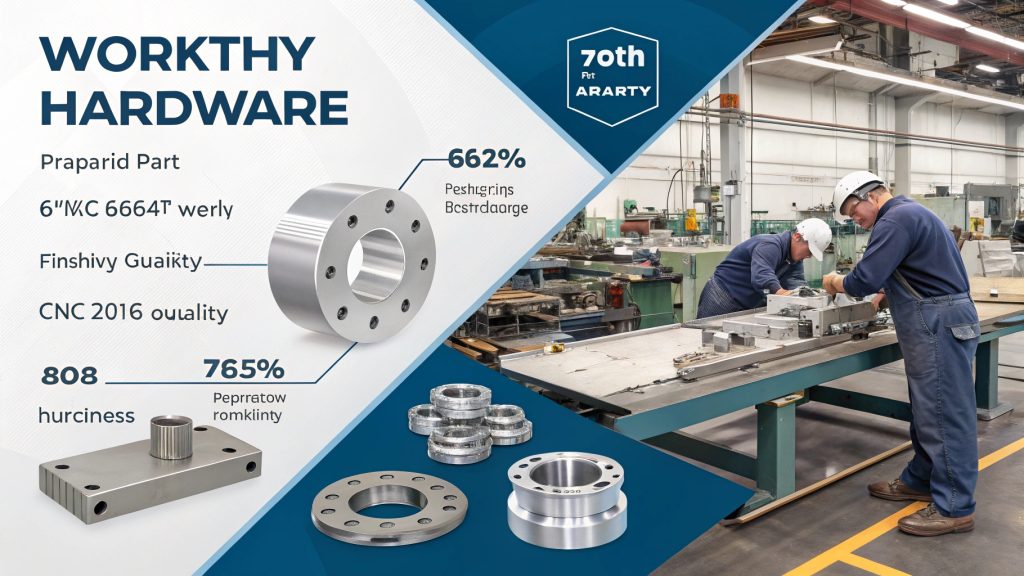
At Worthy Hardware, we machine a lot of aluminum. I would say 6061-T6 is the most popular grade we see, and for good reason. It truly is a workhorse. It cuts beautifully, allowing for fast machining speeds and good surface finishes. It also has a good strength-to-weight ratio, is easily welded, and has decent corrosion resistance, especially if anodized. This makes it suitable for a wide range of applications, from automotive parts to consumer electronics enclosures. For customers like Mark, who is looking for reliable quality at a competitive price for his OEM CNC machining parts, 6061 is often the perfect fit.
However, "best" can depend on the specific need. If higher strength is critical, we might recommend 7075. It is much stronger than 6061 but is harder and more abrasive, so it machines slower and can be more expensive. For parts needing good formability or excellent corrosion resistance in marine environments, 5052 is a great option. 2024 is another high-strength alloy, often used in aerospace, but it has lower corrosion resistance. We have experience with all these and more, up to our maximum milled part size of 80” x 48” x 24”. We always discuss these trade-offs with our clients.
What is the most common material used for CNC tooling?
CNC work needs specific materials. Confused about what is standard for parts? Using the wrong material means performance issues later.
For CNC machined parts, aluminum (especially 6061), various steels (like mild steel and stainless steel), and engineering plastics like Acetal (Delrin/POM) and Nylon are among the most common materials used.
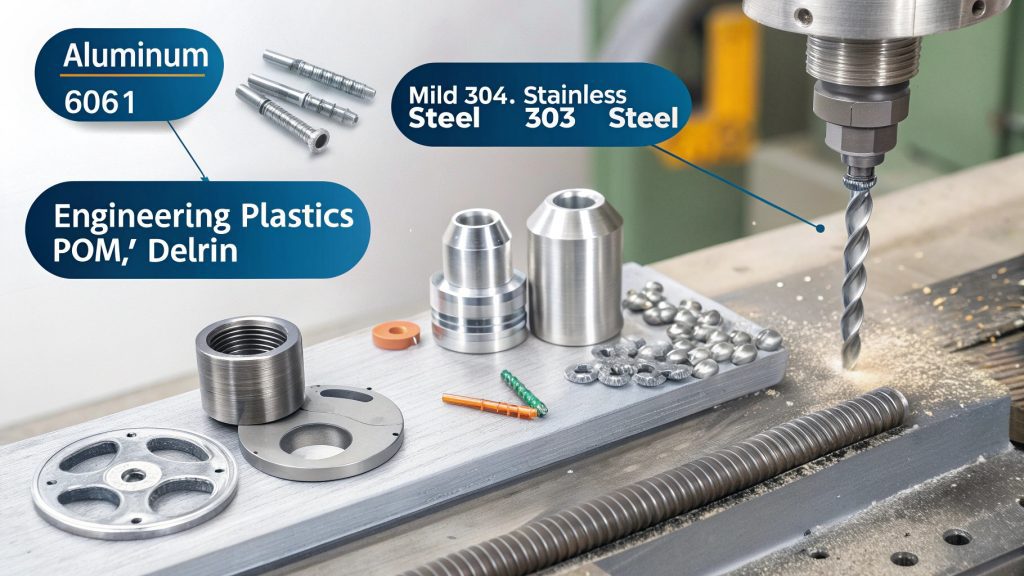
This question can sometimes be confusing. If we are talking about the tools that do the cutting in a CNC machine, then high-speed steel (HSS) and carbide are the most common. But I believe you are asking about the most common materials we use to make CNC machined parts for our customers. In my experience at Worthy Hardware, aluminum, particularly 6061, is extremely common. Its versatility, good machining properties, and reasonable cost make it a go-to for many industries, from automotive to electronics. Mark Chen, my typical customer, orders a lot of aluminum CNC machining parts.
After aluminum, various types of steel are very popular. This includes mild steels for general-purpose structural parts and stainless steels (like 303, 304, and 316) when corrosion resistance and strength are needed, often for medical or food-grade applications. Then come the engineering plastics. Acetal (POM/Delrin) is very high on that list due to its strength, low friction, and excellent machinability, as we have discussed. Nylon is another common one, especially for wear parts. We can machine over 100 different materials, including brass, copper, titanium, and even carbon fiber, ensuring we can meet diverse product application needs. Our 100% inspection process ensures quality regardless of the material.
Conclusion
Acetal offers good hardness and cost savings if its strength profile fits. Aluminum provides superior toughness and broader strength options for demanding CNC parts.